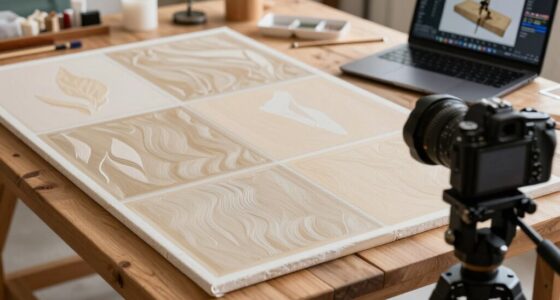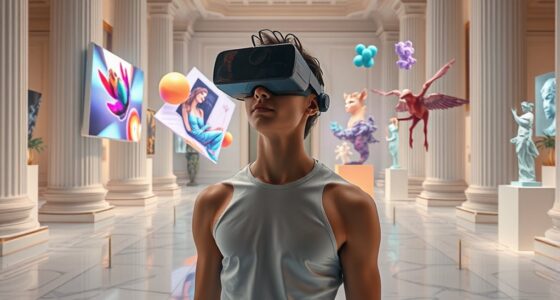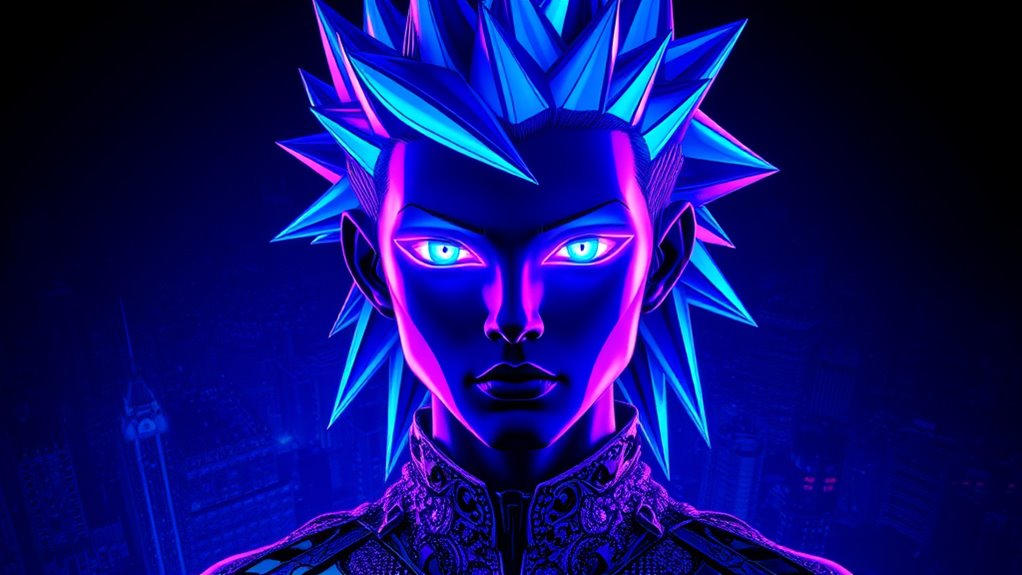

Virtual avatars as artistic personas let you creatively express your identity and cultural stories beyond physical limits. They act as flexible platforms for experimenting with styles, themes, and narratives, helping you challenge stereotypes and highlight diverse backgrounds. These digital identities enable you to connect globally, break societal barriers, and foster cultural understanding. By developing your avatar, you can refine your design skills and explore new artistic avenues. Exploring this further reveals how avatars transform artistic practice and cultural dialogue in powerful ways.

Get art and craft supplies delivered free — and shop member deals
- Fast, free delivery on millions of items
- Access to Prime Big Deal Days deals on October 6–7
- Prime Video, Amazon Music and more included
Key Takeaways
- Virtual avatars serve as customizable artistic identities that enable experimentation with diverse styles, themes, and narratives.
- They act as platforms for cultural expression, highlighting underrepresented identities and challenging stereotypes.
- Avatars facilitate global engagement, transcending physical and societal limitations to expand artistic reach.
- Creating digital personas fosters skill development, storytelling, and cultural awareness within artistic practices.
- Virtual avatars deepen audience connection, transforming visual art into meaningful cultural statements and social commentary.
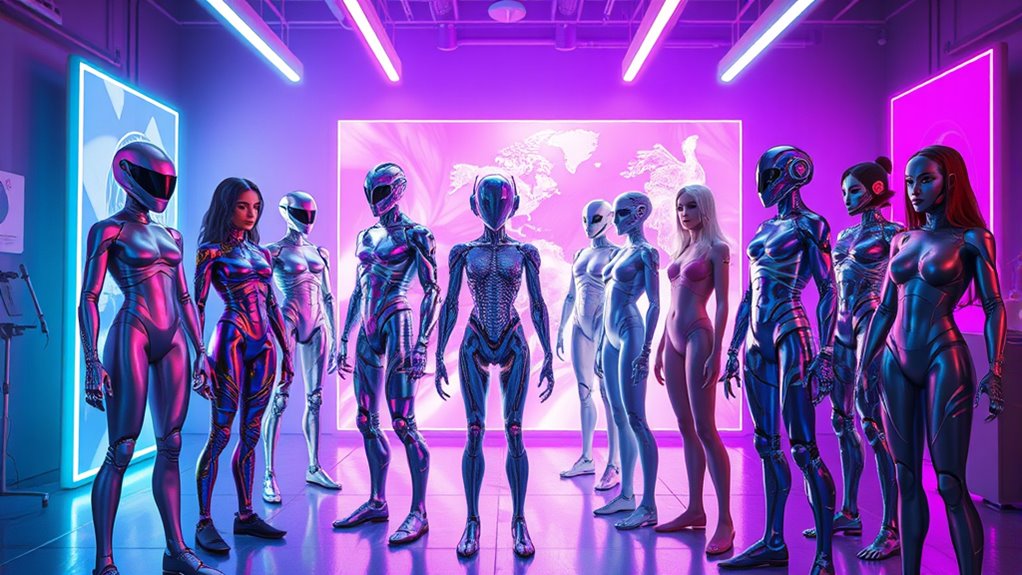
Virtual avatars have become powerful tools for artists to craft distinct personas that transcend physical limitations. When you create a digital identity through an avatar, you’re not just designing a visual representation; you’re shaping how others perceive you and how you express your artistic vision. These avatars serve as extensions of your creativity, allowing you to experiment with different styles, themes, and narratives without the constraints of the real world. As you develop your virtual persona, you engage in a dynamic dialogue between your inner ideas and their digital manifestation, giving you a flexible platform to push boundaries and explore new artistic territories.
Virtual avatars enable artists to explore creative identities beyond physical limits.
One of the most compelling aspects of virtual avatars is their ability to embody cultural representation. When you design an avatar, you have the opportunity to highlight diverse cultural elements, celebrating identities that may be underrepresented or misunderstood in mainstream media. Through your avatar, you can bring visibility to specific traditions, histories, and aesthetics, fostering a greater understanding and appreciation among your audience. This act of cultural representation isn’t just about visual accuracy; it’s about storytelling and context. Your avatar can challenge stereotypes or amplify voices that have historically been marginalized, making your art a powerful vehicle for social commentary and cultural dialogue.
Using a digital identity also means you can navigate different cultural spaces with ease. You’re free to adopt styles from various backgrounds, blending influences in ways that reflect your personal journey or artistic message. This flexibility enables you to create avatars that resonate with global audiences, breaking down geographical and cultural barriers. Furthermore, your avatar can serve as a symbol of inclusivity, demonstrating that cultural expression isn’t confined by physical or societal limitations. As you craft and share these personas, you’re contributing to a broader conversation about representation, identity, and belonging in the digital age. Additionally, embracing creative practice can help you develop the skills necessary to design more authentic and meaningful digital personas, fostering continuous growth in your artistic journey.
In essence, virtual avatars empower you to shape your artistic identity in ways that are both authentic and innovative. They offer a canvas where cultural narratives are woven into visual expressions, making your art more meaningful and impactful. By consciously designing your digital persona, you open up new avenues for cultural storytelling and engagement, connecting with viewers on a deeper level. Ultimately, your virtual avatar becomes more than just an image — it’s a cultural statement, a reflection of your artistic values, and a platform for expanding the horizons of creative expression.
virtual avatar creation software
As an affiliate, we earn on qualifying purchases.
As an affiliate, we earn on qualifying purchases.
Frequently Asked Questions
How Do Virtual Avatars Influence Real-World Artistic Trends?
Virtual avatars shape real-world artistic trends by expanding digital expression and pushing creative boundaries. You can experiment with new styles, identities, and cultural influences, making art more inclusive and innovative. These avatars inspire artists to explore diverse perspectives, influencing mainstream culture and sparking fresh trends. As a result, virtual avatars become powerful tools for cultural expression, ultimately transforming how art is created, shared, and perceived across society.
Can Virtual Avatars Replace Traditional Human Artists Entirely?
Imagine a world where digital impersonations blur the line between human and machine—can virtual avatars replace traditional artists entirely? While they excel in innovative art forms and creative collaboration, they lack the human touch, emotion, and intuition. You won’t fully replace artists, but you’ll witness a partnership—augmenting creativity rather than replacing it—making art richer and more diverse through the synergy of technology and human insight.
What Ethical Considerations Arise From Virtual Avatar Artistry?
You must consider ethical issues like consent dilemmas, where creators may not have control over how their avatars are used or represented. Cultural appropriation also raises concerns, as virtual avatars might borrow elements from specific cultures without proper respect or understanding. By addressing these issues, you guarantee that virtual avatar artistry remains respectful, transparent, and fair, fostering trust and integrity in this innovative digital art form.
How Do Virtual Avatars Impact Artist Identity and Authenticity?
You might wonder how virtual avatars impact your artist identity and authenticity. They blur the lines between your real self and your digital persona, creating authenticity challenges. As you craft digital personas, you risk losing genuine connection and individual uniqueness. Yet, these avatars also empower creative expression and broaden your reach. Balancing authenticity and innovation becomes essential, ensuring your true voice shines through amidst the digital transformation.
Are Virtual Avatars Accessible to Emerging Artists Worldwide?
Yes, virtual avatars are accessible to emerging artists worldwide, allowing you to explore digital expression and showcase cultural representation. With affordable tools and online platforms, you can create and customize avatars that reflect your unique identity and artistic vision. This accessibility empowers you to reach global audiences, break geographical barriers, and experiment with new creative styles, making virtual avatars a powerful resource for emerging artists everywhere.
As an affiliate, we earn on qualifying purchases.
Conclusion
As you explore virtual avatars as artistic personas, remember they’re like chameleons blending creativity with digital magic. They give you the power to reinvent yourself, break boundaries, and reach audiences in ways never before possible. Embrace these virtual personas as your artistic alter egos—your own digital canvas waiting to be painted with innovation. In this brave new world, your virtual avatar becomes the brush, and the possibilities are endless, just waiting for you to create.
digital art drawing tablet with stylus
As an affiliate, we earn on qualifying purchases.
As an affiliate, we earn on qualifying purchases.
customizable virtual avatar accessories
As an affiliate, we earn on qualifying purchases.
As an affiliate, we earn on qualifying purchases.
Fall Picks
fall essentials
As an affiliate, we earn on qualifying purchases.