
TL;DR

Get art and craft supplies delivered free with Prime
- Fast, free delivery on millions of items
- Prime Video, Amazon Music and more included
- Member-only deals all year
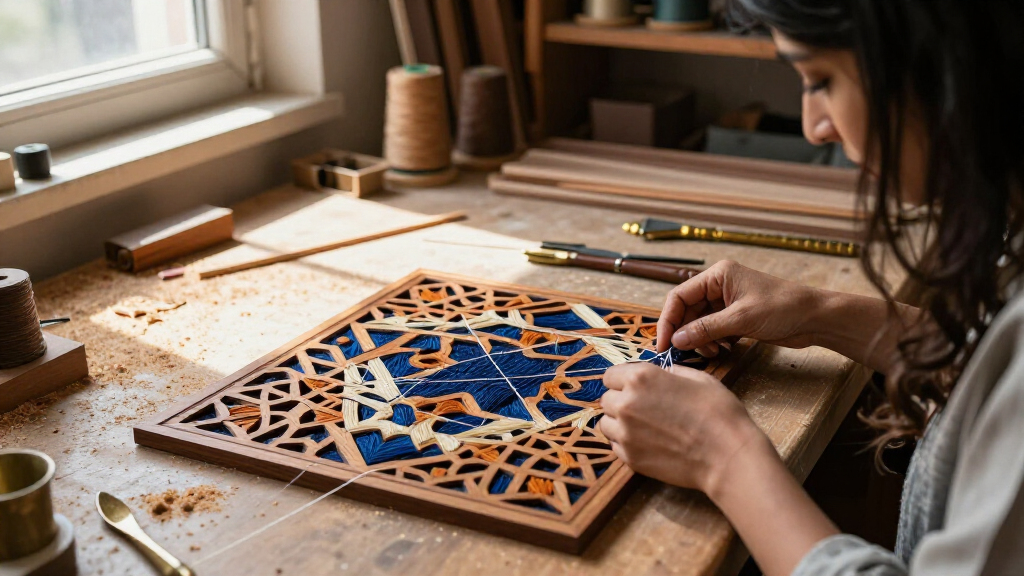
Nosheen Iqbal has created a series of detailed patterns that reinterpret Islamic ornamentation through wood and thread. This innovative approach highlights cultural craftsmanship and artistic expression.
Artist Nosheen Iqbal has developed a series of intricate patterns that reinterpret Islamic ornamentation through the meticulous use of wood and thread. This work highlights her skill in blending traditional cultural motifs with contemporary craftsmanship, drawing attention from the arts community and cultural institutions.
Nosheen Iqbal’s project involves translating classical Islamic geometric and floral motifs into detailed wood-carved and embroidered patterns. She employs a combination of traditional woodworking techniques and fine thread embroidery to achieve highly precise designs. The series has been exhibited in recent art shows, receiving praise for its craftsmanship and cultural significance.
Iqbal’s approach involves carefully studying historic Islamic art and ornamentation, then reproducing these motifs with a focus on meticulous detail and craftsmanship. Her work aims to preserve and reinterpret Islamic artistic heritage through modern artisanal methods, blending two distinct mediums to create a visual dialogue between tradition and contemporary artistry.
Cultural Preservation and Artistic Innovation
This development matters because it demonstrates how traditional Islamic art can be revitalized through contemporary craftsmanship, fostering cultural preservation while pushing artistic boundaries. Iqbal’s work highlights the importance of maintaining cultural heritage in a modern context, inspiring other artists to explore similar cross-medium reinterpretations. It also draws global attention to the intricate techniques involved in Islamic ornamentation, emphasizing the value of artisanal skills in contemporary art.wood carving tools for intricate designs
As an affiliate, we earn on qualifying purchases.
As an affiliate, we earn on qualifying purchases.
Islamic Art and Craftsmanship in Contemporary Practice
Islamic ornamentation has historically played a central role in religious and cultural architecture, characterized by geometric, floral, and calligraphic motifs. While traditional practices have been preserved in architectural and textile arts, contemporary artists like Iqbal are exploring new ways to reinterpret these motifs. Her work builds on a long history of Islamic decorative arts, integrating modern artisanal techniques with traditional designs. This approach aligns with a broader movement of cultural revival and innovation in Islamic art, which seeks to preserve heritage while adapting to modern artistic expressions.“My goal was to translate the intricate beauty of Islamic ornamentation into a tactile, three-dimensional form that respects tradition but also invites new appreciation.”
— Nosheen Iqbal
embroidery thread set for detailed patterns
As an affiliate, we earn on qualifying purchases.
As an affiliate, we earn on qualifying purchases.
Details of Technique and Future Exhibitions Still Unclear
It is not yet confirmed how widely Iqbal plans to showcase this series or if she intends to expand her techniques into other mediums. Specific details about upcoming exhibitions or collaborations remain unannounced, and her precise methods are still being documented for broader dissemination.Islamic geometric pattern stencils
As an affiliate, we earn on qualifying purchases.
As an affiliate, we earn on qualifying purchases.
Upcoming Exhibitions and Broader Cultural Impact
Nosheen Iqbal is expected to showcase her work in upcoming art festivals and gallery exhibitions, where her innovative fusion of Islamic ornamentation with wood and thread will be further explored. Art critics anticipate that her approach could inspire similar projects that blend traditional motifs with artisanal techniques, potentially influencing contemporary Islamic art practices and cultural preservation efforts.
As an affiliate, we earn on qualifying purchases.
Key Questions
What inspired Nosheen Iqbal to create this series?
According to Iqbal, her inspiration came from a desire to preserve and reinterpret Islamic decorative arts through modern artisanal techniques, blending tradition with contemporary craftsmanship.
What materials does Iqbal use in her patterns?
She uses traditional woodworking tools to carve the patterns into wood and employs fine embroidery threads to add detailed textile elements, creating a layered, tactile effect.
Are there plans to exhibit this work internationally?
While specific exhibitions have not yet been announced, Iqbal’s work has attracted attention from galleries and cultural institutions, and international showings are likely in the near future.
How does this work contribute to Islamic cultural heritage?
By translating traditional motifs into new mediums, Iqbal helps preserve Islamic artistic heritage while making it accessible and relevant to contemporary audiences.
Source: rss
Halloween Picks
halloween
As an affiliate, we earn on qualifying purchases.