
To make your gallery wall look intentional and cohesive, use a consistent spacing rule. Most designers recommend keeping gaps between frames around 2-3 inches, which creates a balanced and polished look. Measure carefully, mark your spots, and arrange frames on the floor first to visualize the layout. Regularly step back to check the overall design. Want to discover more expert tips to perfect your gallery wall? Keep exploring to learn all the secrets.
Key Takeaways
- Use a consistent spacing, typically 2-3 inches, between frames to create a structured and balanced layout.
- Arrange frames on the floor first to plan spacing and overall composition before hanging.
- Mark key points with painter’s tape to ensure precise, even gaps during installation.
- Measure and adjust spacing based on frame sizes and wall texture for visual harmony.
- Regularly step back and view the overall layout to maintain balance and cohesion.
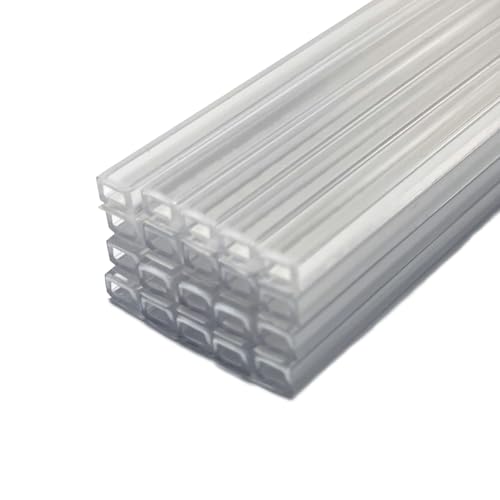
Framer Supply Solid Archival Frame Spacers – pH Neutral Peel-and-Stick Spacers for Picture Frames & Artwork Preservation (1/8" Clear, 100ft Bundle (20 x 5' Sticks), 20, Pack)
Available in multiple sizes and colors, each bundle includes 5-foot archival spacer sticks totaling either 60 or 100…
As an affiliate, we earn on qualifying purchases.
As an affiliate, we earn on qualifying purchases.
Why Consistent Spacing Creates a Cohesive Gallery Wall
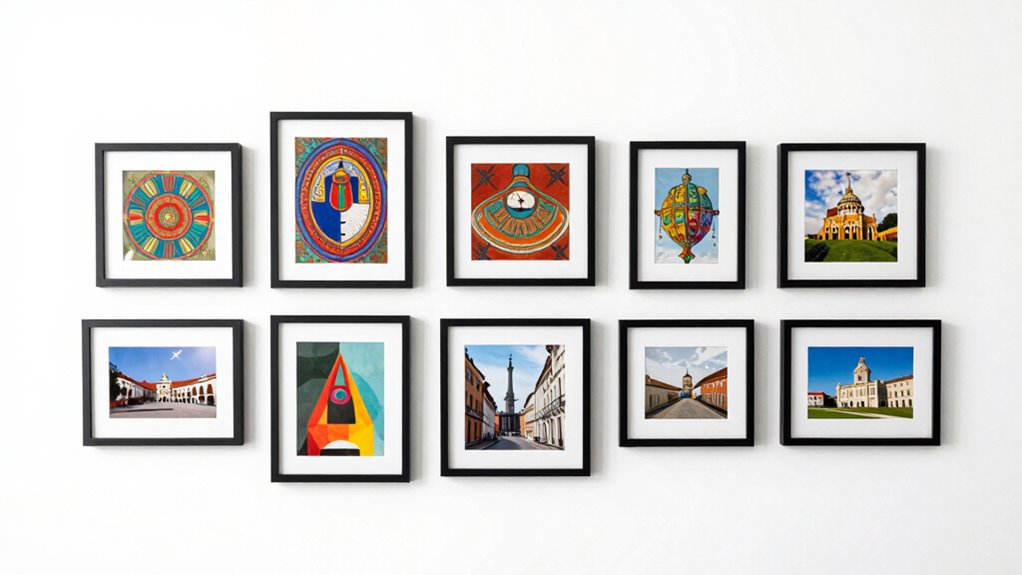
When you keep the spacing between your frames consistent, your gallery wall instantly looks more organized and polished. Consistent spacing creates a sense of harmony, making each piece feel intentional rather than random. It also highlights your careful frame selection and thoughtful color coordination. By aligning the gaps, you draw attention to the overall design, making it more cohesive. When frames are evenly spaced, the eye naturally moves smoothly across the wall, emphasizing the visual flow. This uniformity prevents clutter and chaos, giving your collection a refined appearance. Plus, it’s easier to balance different sizes and styles when spacing remains steady. Ultimately, consistent spacing elevates your gallery wall from a collection of pictures to a curated, stylish display.

Level Ruler Picture Hanging Tool with Built-in Level – Precision Frame Alignment Tool for Wall Decor, Easy & Accurate Hanging Guide for Photos, Artwork & Mirrors
3-in-1 Hanging Tool for Everyday Use – Combines a level, measuring ruler, and nail holder in one compact…
As an affiliate, we earn on qualifying purchases.
As an affiliate, we earn on qualifying purchases.
The Designer’s Secret Spacing Rule for Perfect Balance
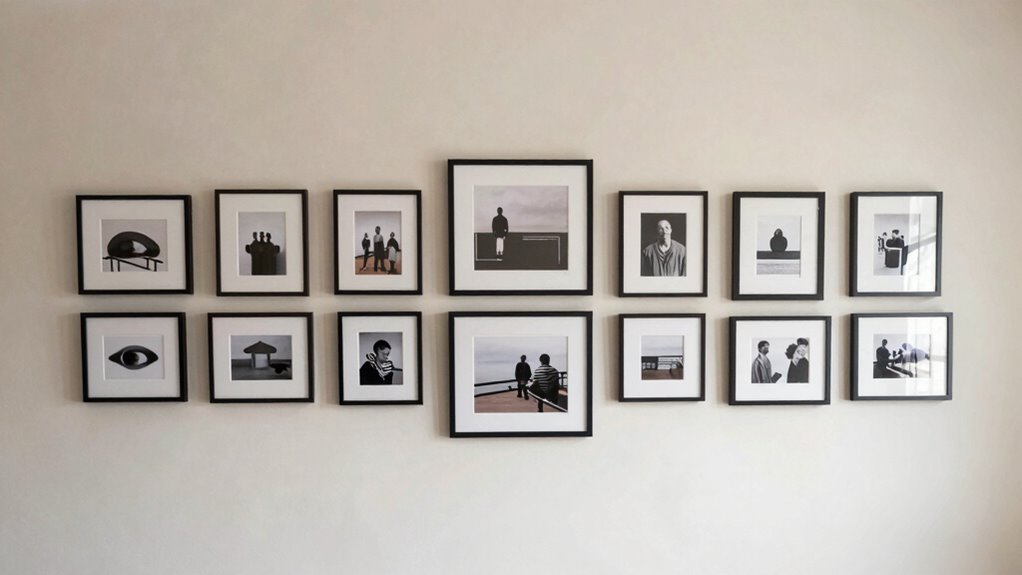
Behind every stunning gallery wall lies a secret that designers swear by: the perfect spacing balance. To achieve this, focus on how your frame styles and color coordination work together. Use similar frame styles to create visual harmony, while varying their sizes for interest. Maintain consistent spacing between frames, but don’t be afraid to leave slight gaps to prevent a cluttered look. The key is balancing the visual weight of colors and textures; lighter hues can be spaced slightly closer, while bold, dark frames may need a bit more room. This spacing rule ensures your gallery feels intentional and cohesive, rather than random. By paying attention to these details, you’ll create a balanced, polished display that feels both curated and effortless. Additionally, exploring digital content formats can inspire unique arrangements that enhance your overall design vision. Furthermore, understanding color accuracy can elevate the visual appeal of your gallery wall, making it even more captivating to viewers.

3-in-1 Picture Hanging Tool, All-in-One Art Hanging Kit with Leveling, Position Marking & Effortless Push Nail Design, Double Nails for 25 Inch Frames, Wall Hanging Solution for Home Decor
Easily assemble the sliding rail to reach a full 30 inches of total length, providing the perfect adjustable…
As an affiliate, we earn on qualifying purchases.
As an affiliate, we earn on qualifying purchases.
How to Measure and Mark Your Wall for Flawless Placement
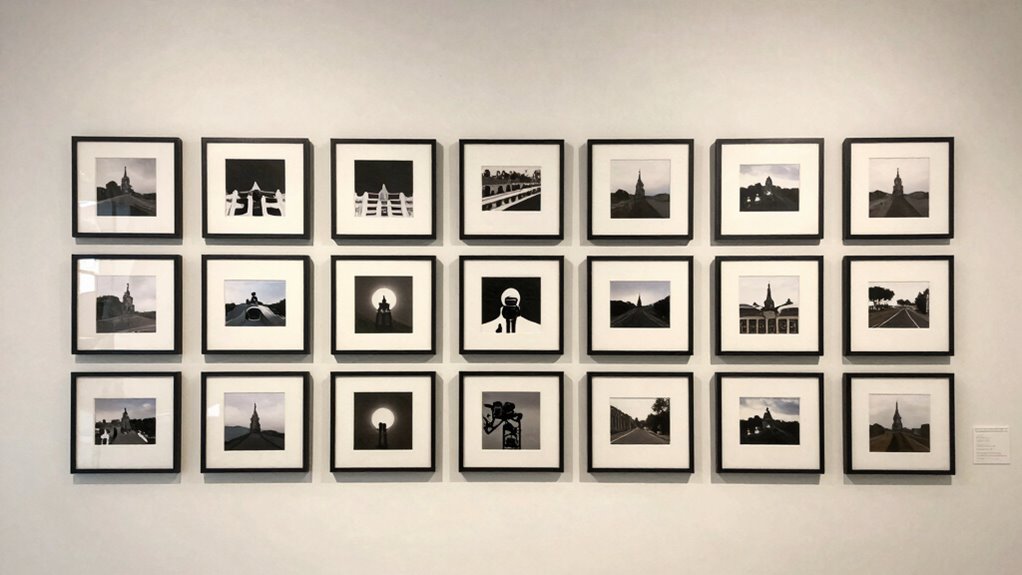
Start by gathering your tools, like a tape measure, level, and pencil, to guarantee accuracy. Next, establish key measurements based on your wall and frame sizes, keeping consistent spacing in mind. Carefully mark and measure each point to create a precise layout before hanging your artwork.
Gather Necessary Tools
Before you begin hanging your gallery wall, gather the essential tools to guarantee precise measurements and markings. You’ll need items that help you visualize spacing, align pieces perfectly, and consider color coordination and lighting techniques.
- Tape measure – to accurately measure wall space and artwork dimensions.
- Level – ensures your frames hang straight, preventing crooked displays.
- Pencil – for light, erasable marks that guide placement.
- Painter’s tape – temporarily holds pieces, allowing you to test arrangements without damage.
Having these tools ready helps you mark exact points and maintain consistent spacing. Proper lighting techniques and color coordination can then be considered to enhance visual harmony, but only after your placement is flawlessly marked. This ensures a cohesive, professional look. Additionally, consider incorporating landscaping to enhance natural beauty as a backdrop to your gallery for added visual interest. Furthermore, understanding astrological compatibility can also inspire thoughtful themes for your gallery wall that resonate with personal connections. Embracing inclusive casting in your artwork can also create a deeper connection with diverse audiences, enriching the overall experience. Moreover, using bike generators as a sustainable energy source can add an eco-friendly element to your creative space.
Establish Key Metrics
To guarantee your gallery wall looks polished and balanced, establishing key metrics is essential. Start by considering color theory—use contrasting or complementary colors to create visual harmony. Measure the heights of your pieces and decide on a consistent spacing, typically between 2-4 inches, to maintain rhythm. Lighting considerations are also critical; note how natural or artificial light affects your wall, as shadows can alter how art appears. Use painter’s tape or chalk to mark key points based on these metrics, ensuring each piece aligns with your overall design plan. By setting these measurements early, you’ll create a cohesive layout that’s both visually appealing and well-balanced, making the actual hanging process smoother and more precise.
Mark and Measure Carefully
Once you’ve established your key metrics, it’s time to transfer those measurements onto the wall with precision. Accurate marking guarantees your gallery wall looks intentional and balanced. To do this:
- Use painter’s tape to outline the layout, considering color coordination and lighting enhancement, to see how pieces will interact with the space.
- Measure and mark the center points of each frame, maintaining consistent spacing, as this creates visual harmony.
- Use a level to ensure horizontal and vertical alignment, especially when adjusting for wall imperfections.
- Double-check all measurements before hanging, paying attention to how light reflects off each piece and how the arrangement complements your room’s lighting and color palette.

Outlet Template and Labor Saving Devices for Old Work Box Templates, Horizontal or Vertical Low Voltage Tools for Single & Double Gang, Electrical Cutter, Wall Box Template and Level
[Fast & Easy & Professional]: Use our outlet template to quickly and easily trace cut outs for single…
As an affiliate, we earn on qualifying purchases.
As an affiliate, we earn on qualifying purchases.
Choosing Frame Sizes and Layouts That Work
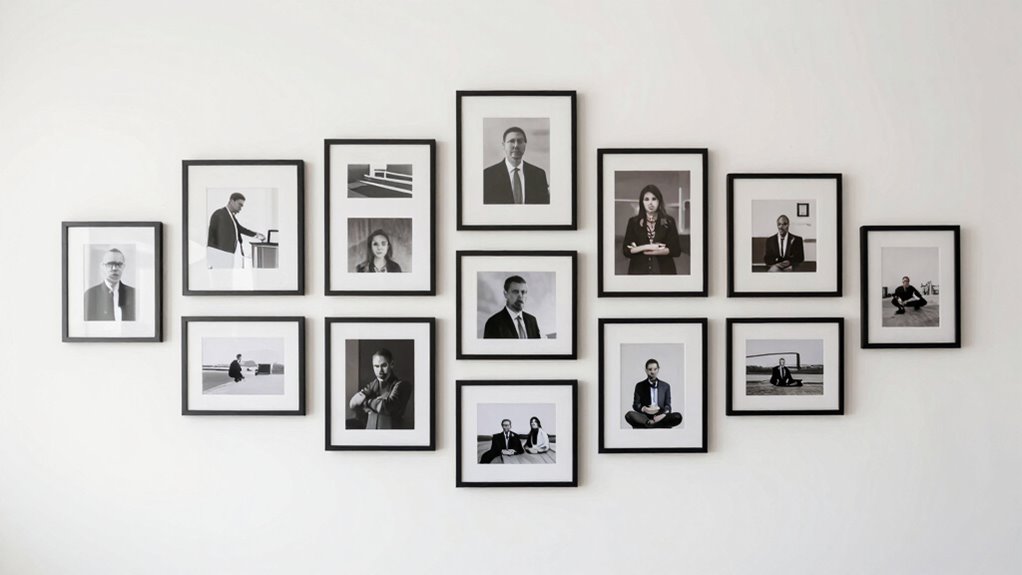
Choosing the right frame sizes and layouts is essential for creating a balanced and visually appealing gallery wall. Start by selecting frames that vary in size but complement each other, avoiding cluttered or overcrowded looks. Use color coordination to unify the collection—stick to a consistent color palette or mix contrasting shades thoughtfully. Consider the frame material; wood, metal, or acrylic can set different moods and styles, so choose materials that match your decor. Arrange larger frames centrally or at eye level, then fill gaps with smaller pieces for harmony. Keep spacing consistent using the spacing rule, and experiment with different layouts on the floor before hanging. This approach guarantees your gallery wall feels intentional, cohesive, and visually engaging.
Applying Spacing Techniques to Different Wall Types

Sure! Here’s the revised content with the requested changes:
—
Different wall surfaces and shapes can influence how you apply spacing techniques to your gallery wall. For textured or uneven walls, maintain slightly larger gaps to prevent cluttered appearances. On smooth, flat surfaces, tighter spacing works well for a cohesive look. When considering wall shapes, such as corners or alcoves, adapt spacing to complement the space’s geometry. Additionally, door swings should be considered to avoid obstructing movement around the gallery wall.
Adjust spacing based on wall texture and shape for a balanced, polished gallery display.
To enhance visual harmony, focus on:
- Using consistent frame materials to create unity across varying wall types.
- Coordinating colors in your artwork and frames to draw attention without overwhelming the space.
- Adjusting spacing based on frame sizes to avoid crowding or excessive gaps.
- Taking wall shape into account when aligning pieces, ensuring even distribution and balance.
Integrating natural light into your gallery wall design can also enhance the overall ambiance, making the space feel more inviting. Additionally, smart lifestyle tips can help you curate your gallery wall with intention and purpose. These techniques guarantee your gallery wall looks intentional and polished. Incorporating design principles can further elevate your gallery wall, ensuring it stands out beautifully in any room.
—
Let me know if you need further assistance!
Common Mistakes That Make Gallery Walls Look Chaotic
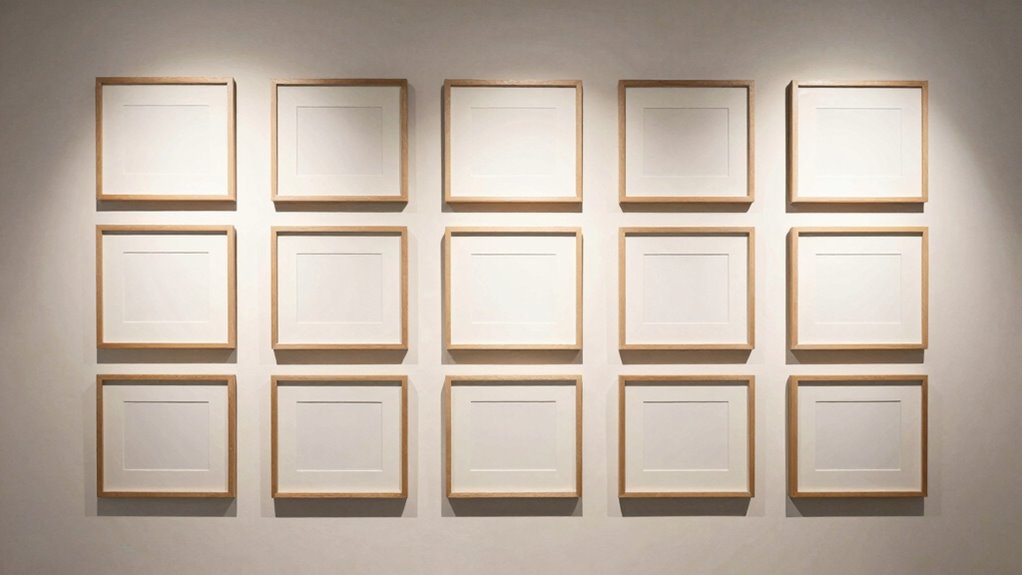
A cluttered gallery wall often results from inconsistent spacing and mismatched frame styles, which can make the entire display feel chaotic. When you ignore spacing rules, your arrangement appears haphazard, distracting the eye. Poor color coordination among frames and artwork can also add to the disorder, pulling focus away from the overall aesthetic. Mixing too many frame styles without a cohesive plan creates visual noise, making the wall look cluttered rather than curated. To avoid this, keep spacing consistent and choose a unified color palette for frames and artwork. Limit yourself to a few complementary frame styles, balancing variety with harmony. This approach helps your gallery wall feel intentional, polished, and visually pleasing, rather than chaotic.
Tips for Balancing Visual Weight and Symmetry in Your Gallery
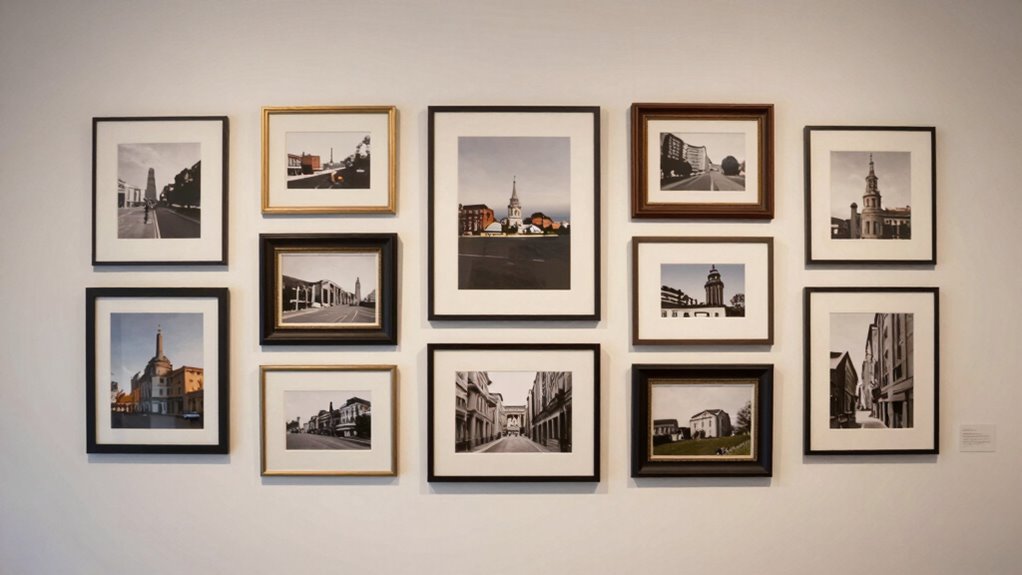
To create a balanced gallery wall, focus on achieving visual weight evenly across the space. Use symmetrical arrangements to bring harmony, and vary frame sizes to add interest without clutter. These tips help you craft a cohesive and visually appealing display. Additionally, consider incorporating goal setting techniques to ensure each piece resonates with your overall aesthetic vision.
Achieve Visual Balance
Achieving visual balance in your gallery wall is essential for creating an appealing and harmonious display. To do this effectively, consider these key strategies:
- Use color theory to distribute hues evenly, avoiding heavy concentrations of bold or dark shades in one area.
- Mix framing styles thoughtfully, balancing ornate and simple frames to create visual interest without overwhelming.
- Pay attention to the size and weight of each piece, placing visually heavier artworks where they won’t dominate the entire arrangement.
- Distribute visual weight by alternating between larger and smaller pieces, ensuring no single area feels too crowded or sparse.
Additionally, considering the importance of gear care can enhance the longevity of your gallery wall’s aesthetic appeal.
Use Symmetrical Arrangements
Symmetrical arrangements can considerably enhance the balance and harmony of your gallery wall. They create a sense of order by evenly distributing visual weight across your display. To achieve this, pay attention to framing styles and color harmony, ensuring each piece complements its neighbor. Symmetry doesn’t mean matching everything perfectly but balancing similar shapes, sizes, or colors on either side. Use a grid layout to align artwork and frames precisely, which reinforces symmetry and provides a cohesive look. Here’s an example of how different elements can be balanced:
| Element Type | Example | Notes |
|---|---|---|
| Frame Style | Simple black frames | Consistent framing enhances unity |
| Color Palette | Blues and neutrals | Creates visual harmony |
| Artwork Shape | Squares and rectangles | Maintains symmetry visually |
| Spacing | Equal gaps | Keeps the arrangement balanced |
Incorporating elements of visual weight can further enhance the overall appeal of your gallery wall.
Vary Frame Sizes
Have you ever wondered how to make your gallery wall feel balanced yet dynamic? Varying frame sizes is key. Start by selecting a mix of small, medium, and large frames to create visual interest. Consider these tips:
- Use consistent color coordination within frames to unify the display.
- Mix frame materials—wood, metal, or acrylic—to add texture and contrast.
- Place larger frames at eye level for prominence, balancing smaller ones around them. Additionally, using airless paint spraying techniques can help you refresh the frames’ appearance with a smooth finish. Incorporating neural interface technology can also inspire innovative ways to display art, merging creativity with cutting-edge advancements in visual engagement. Furthermore, investing in precious metal IRAs can be a great way to secure your financial future while you curate your art collection.
- Balance the visual weight by distributing darker or more intricate frames evenly. Furthermore, choosing eco-friendly craft materials can enhance the overall sustainability of your decor. Additionally, using stain removal techniques can be helpful when cleaning frames to maintain their aesthetic appeal.
Using Spacing to Make Your Favorite Art Stand Out
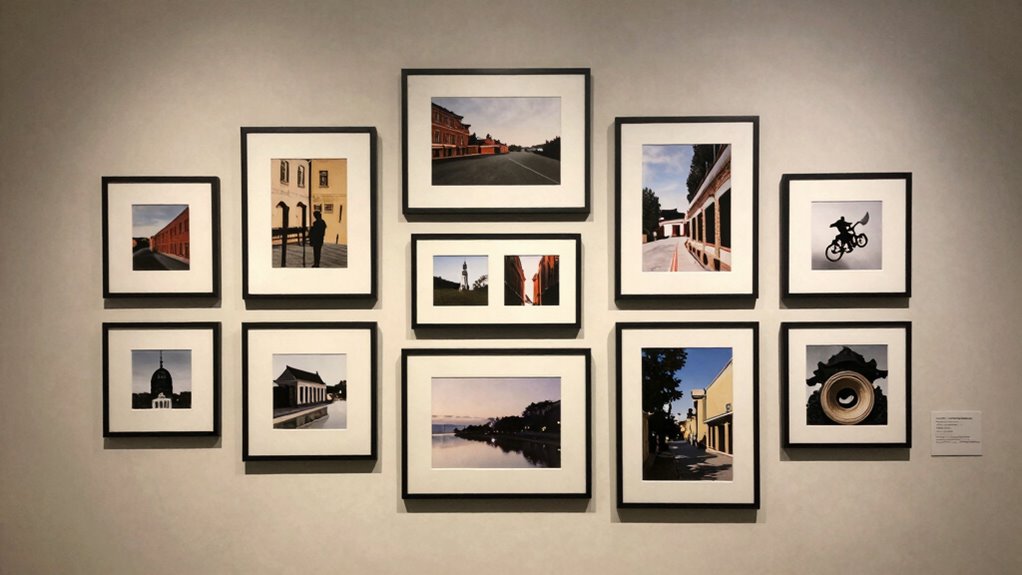
When it comes to making your favorite art pieces truly stand out, spacing plays a crucial role. Proper spacing creates visual breathing room, drawing attention to each piece’s unique details. Use consistent gaps between artworks to maintain a balanced look, and consider how color coordination can enhance the effect—pairing bold colors with neutral backgrounds ensures they pop. Lighting enhancement also makes a difference; strategically placed lights can highlight specific pieces and add depth to your gallery wall. Avoid overcrowding by leaving enough space for each artwork to breathe, which helps each piece command attention. By thoughtfully adjusting the spacing, you emphasize your favorite art, making the display more cohesive and engaging without overwhelming the viewer.
Transform Your Wall: Before and After Using the Spacing Secret
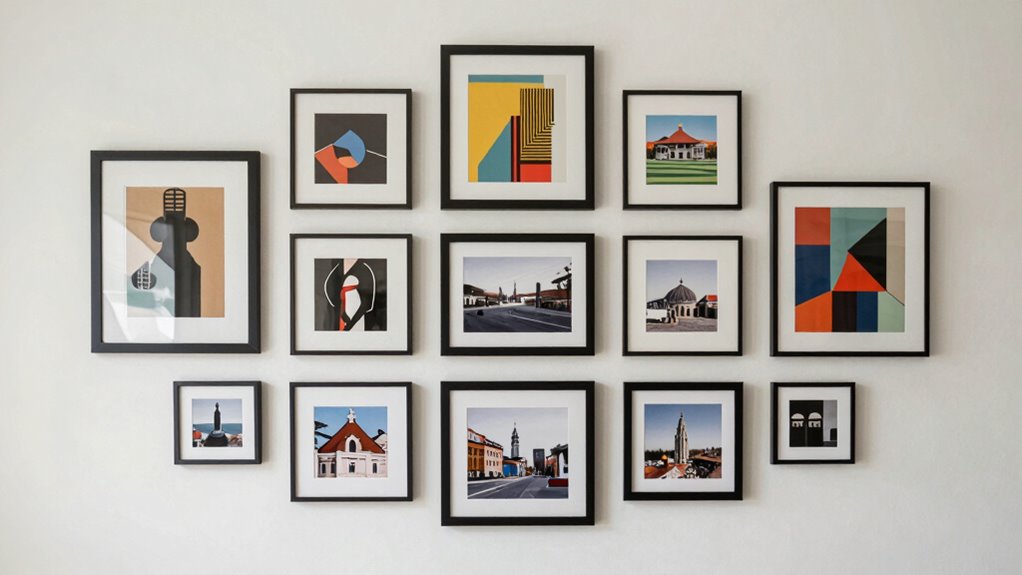
Transforming your wall with the spacing secret can dramatically change its look, making your art feel more intentional and polished. Before, your gallery might look cluttered or uneven, with mismatched frame styles and inconsistent spacing. After applying the secret, your arrangement appears cohesive and balanced. To enhance this effect:
Transform your gallery with the spacing secret for a more polished, balanced, and intentional display.
- Choose a unified color coordination scheme to tie the pieces together visually.
- Select frame styles that complement each other, creating harmony rather than chaos.
- Use consistent spacing between artworks to establish rhythm and order, similar to how proper car covers protect vehicles from environmental damage. Additionally, maintaining consistent spacing can enhance the overall aesthetic and make each piece more impactful. Incorporating soundproofing materials can also improve the ambiance in your space, making it more inviting. Understanding personality traits can also guide your choices, ensuring your gallery reflects your unique style and preferences.
- Rearrange pieces to ensure focal points are central, emphasizing key pieces.
This simple yet effective technique elevates your gallery wall, transforming a random collection into a curated display that feels thoughtful and stylish. Additionally, embracing the balance between individual rights can inspire personal expression in your gallery setup.
Frequently Asked Questions
How Do I Choose the Right Spacing for Different Art Styles?
You choose the right spacing for different art styles by considering color coordination and frame styles. For cohesive looks, keep similar frame styles and colors close, while mixing contrasting ones adds interest. Use consistent spacing—roughly 2-4 inches—to balance the gallery. Adjust spacing based on art size; larger pieces need more room. This approach guarantees your gallery wall feels intentional and visually appealing, no matter the art styles you mix.
Can This Spacing Rule Work for Uneven or Textured Walls?
Did you know that 78% of interior designers say textured or uneven surfaces challenge traditional gallery wall spacing? This spacing rule can still work for textured or uneven walls, but you should modify it. Use smaller gaps between frames on textured surfaces to enhance cohesion and avoid clutter. For uneven surfaces, measure from the highest point and adjust spacing accordingly. This guarantees your gallery looks intentional and balanced, no matter the wall’s surface.
What Tools Are Best for Measuring Consistent Gaps?
You should use a measuring tape or a ruler to keep consistent gaps for frame alignment and visual balance. A level can help guarantee your frames are straight, especially on uneven or textured walls. For precision, consider painter’s tape to mark equal spacing points. These tools help you maintain even gaps, creating a harmonious gallery wall that looks intentional and well-balanced, regardless of wall surface irregularities.
How Do I Adapt the Spacing Rule for Large or Irregularly Shaped Pieces?
To adapt the spacing rule for large or irregular pieces, focus on maintaining center alignment for each artwork, which helps create visual balance. Use wall symmetry as a guide, arranging pieces so their centers line up, even if shapes vary. Measure consistent gaps between frames, adjusting spacing to accommodate size differences. This approach guarantees your gallery wall looks intentional, cohesive, and visually appealing, regardless of artwork size or shape.
Is There a Specific Spacing Guideline for Gallery Walls in Small Spaces?
In small spaces, keep frame placement close, about 1-2 inches apart, to maximize wall real estate while maintaining balance. Use consistent spacing to create a cohesive look, and consider color coordination by choosing frames and artwork that complement each other. This approach prevents overcrowding and guarantees your gallery wall feels intentional and visually appealing, even in tight areas. Adjust spacing slightly if you want a more relaxed or structured appearance.
Conclusion
Now that you know the spacing secret, you’ll see your gallery wall in a new light. By keeping your spacing consistent, you’ll turn a chaotic cluster into a stunning focal point. Remember, a little planning goes a long way—don’t let your wall look like a bolt from the blue. With these tips, you’re all set to create a balanced, eye-catching display that truly reflects your style. It’s time to put your best foot forward!