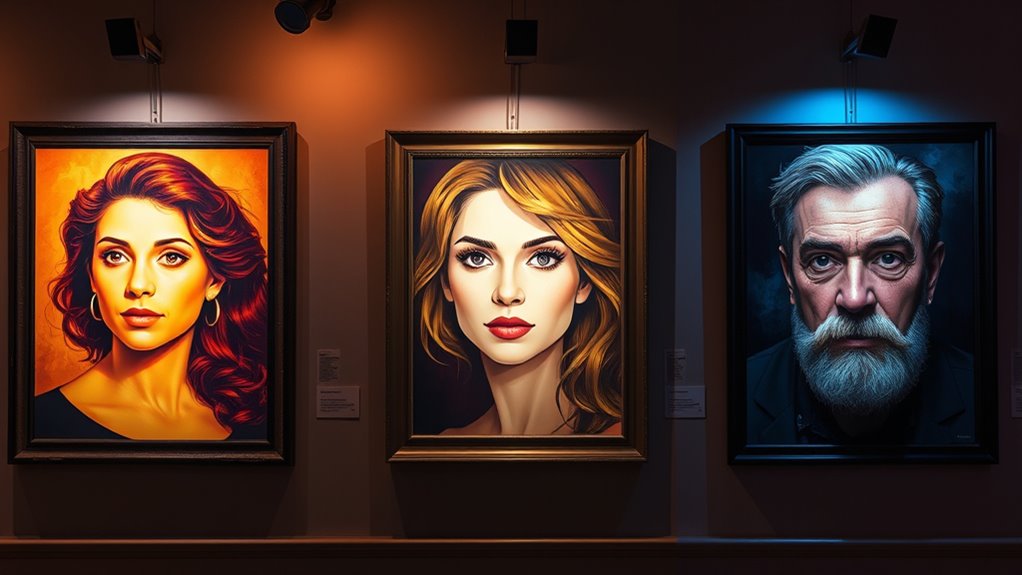

Lighting temperature greatly influences how you perceive and emotionally connect with art. Warm lighting creates a cozy, inviting atmosphere while emphasizing rich reds and yellows, fostering intimacy. Cooler lighting offers clarity, highlighting details and cooler tones like blues and greens for a more modern feel. The right temperature enhances color accuracy and reveals subtle nuances, shaping your overall experience. If you keep exploring, you’ll discover how to optimize lighting to truly bring your art to life.
Key Takeaways
- Warmer lighting enhances reds and yellows, creating a cozy, emotional atmosphere that emphasizes warmth in artwork.
- Cooler lighting accentuates blues and greens, fostering clarity and a modern, analytical viewing experience.
- The choice of lighting temperature influences color perception, making artwork appear richer or more subdued.
- Proper lighting ensures true color rendering, allowing viewers to see artwork as intended by the artist.
- Lighting temperature guides emotional engagement, shaping the viewer’s mood and connection with the art.
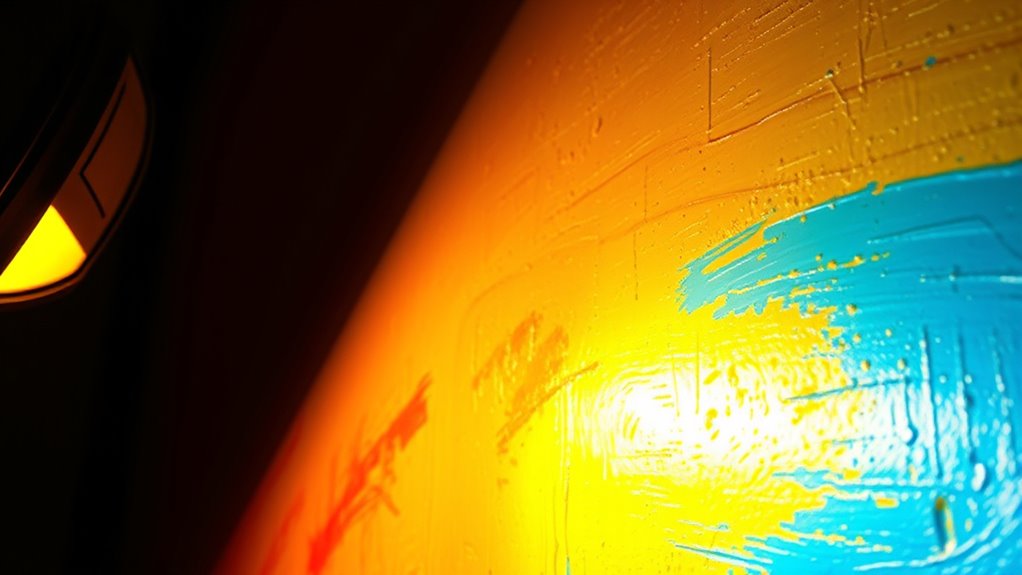
Lighting temperature profoundly influences how we perceive art, shaping the mood and highlighting details in different ways. When you adjust the color temperature of your lighting, you’re not just changing the ambiance—you’re actively affecting how colors appear and how the artwork’s nuances are perceived. For instance, warmer lights with lower color temperatures tend to produce a cozy, inviting atmosphere, making reds and yellows appear richer and more vibrant. Conversely, cooler lights with higher color temperatures can lend a crisp, modern feel that emphasizes cooler tones like blues and greens. This variation in lighting impacts color rendering, which is vital because it determines how accurately colors are represented under different lighting conditions. When the color rendering is high, the artwork’s true colors shine through, allowing you to experience it as the artist intended. If the color rendering is poor, colors may look dull or distorted, diminishing the artwork’s impact and altering your emotional response.
Your mood as a viewer is directly affected by these lighting choices. Warm lighting often evokes feelings of comfort, intimacy, and nostalgia, encouraging you to engage more emotionally with the art. It can make a painting feel more inviting, drawing you into its warmth and subtle textures. On the other hand, cooler lighting tends to foster a sense of clarity and objectivity, sharpening details and creating a more analytical viewing experience. This can be especially effective for contemporary or minimalist artworks, where clean lines and subtle contrasts benefit from crisp, cool illumination. The interplay between lighting temperature and viewer mood isn’t just about aesthetics; it influences your entire perception and emotional connection to the piece. If you’re in a gallery or viewing space, choosing the right lighting temperature can guide your emotional journey through the art, emphasizing certain details or mood elements while downplaying others.
Ultimately, understanding how lighting temperature affects color rendering and viewer mood empowers you to curate or experience art more intentionally. Whether you’re an artist, curator, or enthusiast, recognizing these effects helps you make conscious decisions about lighting setups to enhance the artwork’s visual impact. The right lighting can transform your experience, revealing hidden details, intensifying colors, and evoking specific emotions. By paying attention to the nuances of lighting temperature, you control the story the art tells, ensuring that your perception aligns with your intended experience and emotional response.
Frequently Asked Questions
How Does Lighting Temperature Affect the Longevity of Artwork?
Lighting temperature can affect your artwork’s longevity by influencing UV damage and color fading. Cooler or warmer lights may emit more UV rays, which accelerate deterioration and cause colors to fade over time. To protect your pieces, you should select lighting with low UV emission and maintain appropriate temperature levels. Proper lighting helps preserve the artwork’s vibrancy and prevents premature aging, ensuring it remains beautiful for years to come.
Can Different Art Mediums Respond Uniquely to Lighting Temperature?
Did you know that different art mediums respond uniquely to lighting temperature? You’ll notice that paintings with vibrant colors benefit from warmer light, enhancing their mood and color rendering. Conversely, sculptures or textiles might require cooler lighting to preserve textures and details. By adjusting lighting temperature, you can optimize each medium’s visual impact, ensuring your artwork’s mood is enhanced and colors are accurately rendered, creating a more engaging viewer experience.
What Are the Best Lighting Practices for Preserving Art in Galleries?
You should prioritize essential lighting practices to preserve art in galleries. Keep light intensity low to prevent damage, avoiding excessive brightness that accelerates deterioration. Proper fixture placement is vital; position lights to minimize glare and shadows while evenly illuminating pieces. Use adjustable fixtures for flexibility, and consider specialized lighting designed for art preservation. These steps help maintain the artwork’s integrity, ensuring it remains vibrant for years to come.
How Do Cultural Perceptions Influence Preferred Lighting Temperatures?
Your understanding of cultural perceptions influence how you perceive lighting. Cultural lighting traditions shape what you consider warm or cool, affecting your preferences. For example, in some cultures, warm lighting feels inviting and respectful, while others favor cooler tones for clarity. These perceptions influence what lighting temperature feels natural or appropriate, making your experience deeply rooted in cultural context. Recognizing this helps you appreciate diverse lighting choices and their cultural significance.
Are There Technological Advancements Improving Lighting for Art Display?
You’ll find that LED innovations and smart lighting are transforming art displays considerably. These advancements allow you to customize lighting temperatures precisely, ensuring ideal color rendering and minimal damage to artworks. With smart lighting systems, you can adjust settings remotely or automatically, creating perfect viewing conditions. This technology enhances your ability to showcase art authentically, making your exhibitions more vibrant, dynamic, and tailored to each piece’s unique needs.
Conclusion
Just as Van Gogh’s swirling skies seem to dance under warm light, your perception of art is shaped by the glow you choose. Lighting temperature guides your emotional response, revealing or concealing details, much like a painter’s brushstroke. Remember, the right light can transform a simple piece into a profound experience. So, when you view art, consider the warmth or coolness that surrounds it—your illumination holds the power to evoke wonder, just as a master’s hand does.