AI has transformed modern art creation by providing powerful tools like neural networks and GANs that enable you to craft stunning, realistic images and textures. These technologies challenge traditional ideas of creativity, encouraging collaborations that blur lines between human and machine authorship. Ethical questions about ownership and originality also arise, shaping the future of art. To discover how artists are pushing creative boundaries and what’s next, keep exploring how AI continues to shape the art world.
Key Takeaways
- AI expands creative possibilities through neural networks and GANs, enabling the generation of realistic and innovative artworks.
- It redefines artistic collaboration, blending human intuition with machine algorithms to create new forms of expression.
- AI challenges traditional notions of authorship and originality, raising ethical and legal questions about ownership and attribution.
- The integration of AI into live performances and interactive installations enhances immersive and dynamic art experiences.
- Advancements in AI-driven tools and personalized algorithms are shaping future trends in modern art creation.

How AI Image Generators Work: 10 Secrets to Creating Digital Art (The World of AI: Understanding Tomorrow, Today)
As an affiliate, we earn on qualifying purchases.
As an affiliate, we earn on qualifying purchases.
The Evolution of Artistic Tools Through AI
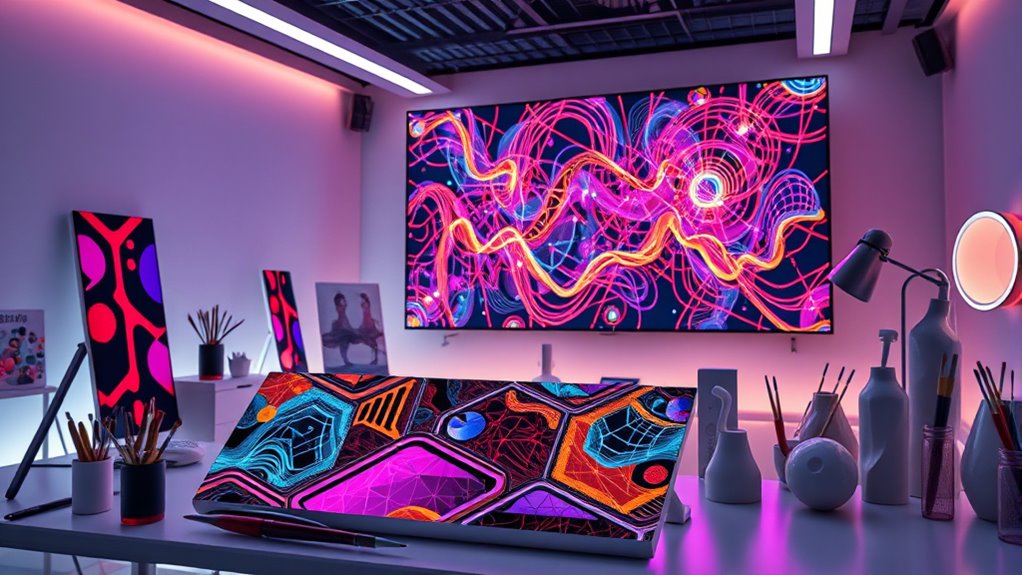
Artificial intelligence has revolutionized the way artists create by introducing powerful new tools that expand creative possibilities. Neural networks, especially deep learning models, now enable artists to experiment with complex patterns and styles, pushing boundaries beyond traditional methods. Generative adversarial networks (GANs) stand out by allowing you to generate realistic images, textures, and even entire scenes with minimal input. These tools learn from vast datasets, giving you the ability to craft unique artwork or enhance existing pieces effortlessly. As a result, AI-driven technologies transform how you approach design, composition, and visual storytelling. Affiliate disclosure With continuous advancements, these tools make it easier for you to innovate and explore new artistic frontiers, shaping a future where human creativity and machine intelligence work hand in hand.

ChatGPT Mastery. The Millionaire’s AI Tool: Unlocking the Power of Artificial Intelligence for Wealth Creation
As an affiliate, we earn on qualifying purchases.
As an affiliate, we earn on qualifying purchases.
AI-Generated Art: Techniques and Examples

Building on the innovative tools that have expanded artistic possibilities, AI-generated art leverages specific techniques to produce striking visual works. Neural networks form the backbone of many creations, enabling machines to analyze vast datasets and generate new images or styles based on learned patterns. One prominent method is using generative adversarial networks (GANs), where two neural networks compete—one creates images, and the other evaluates their authenticity. This process refines the output, resulting in highly realistic and unique artworks. Artists and technologists harness these tools to push creative boundaries, blending machine intelligence with human vision to craft innovative visual experiences. Additionally, health benefits associated with certain natural substances influence the development of tools and materials used in digital art and design.

GANs in Action: Deep learning with Generative Adversarial Networks
As an affiliate, we earn on qualifying purchases.
As an affiliate, we earn on qualifying purchases.
Redefining Creativity and Authorship
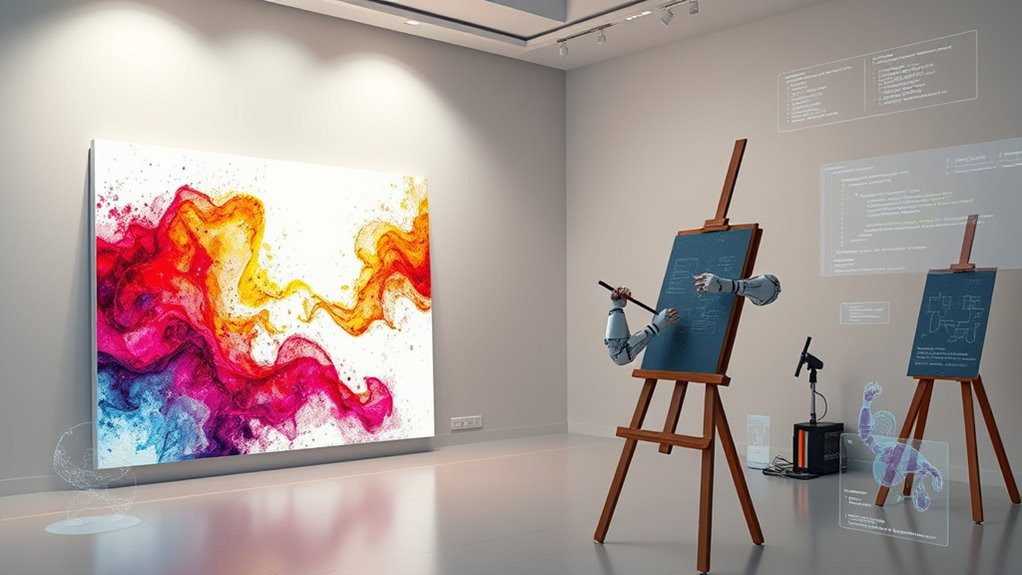
How has AI transformed the way we think about creativity and who can be considered an artist? AI challenges traditional notions by blending human intuition with machine algorithms, prompting you to reconsider the role of emotional expression in art. It pushes boundaries, making room for collaborations that blur the line between human and machine authorship. Additionally, understanding store hours can be crucial for artists and collectors when planning visits to galleries or art markets that may operate under specific schedules.

Interactive Installation Art & Design
As an affiliate, we earn on qualifying purchases.
As an affiliate, we earn on qualifying purchases.
Ethical Considerations and Intellectual Property
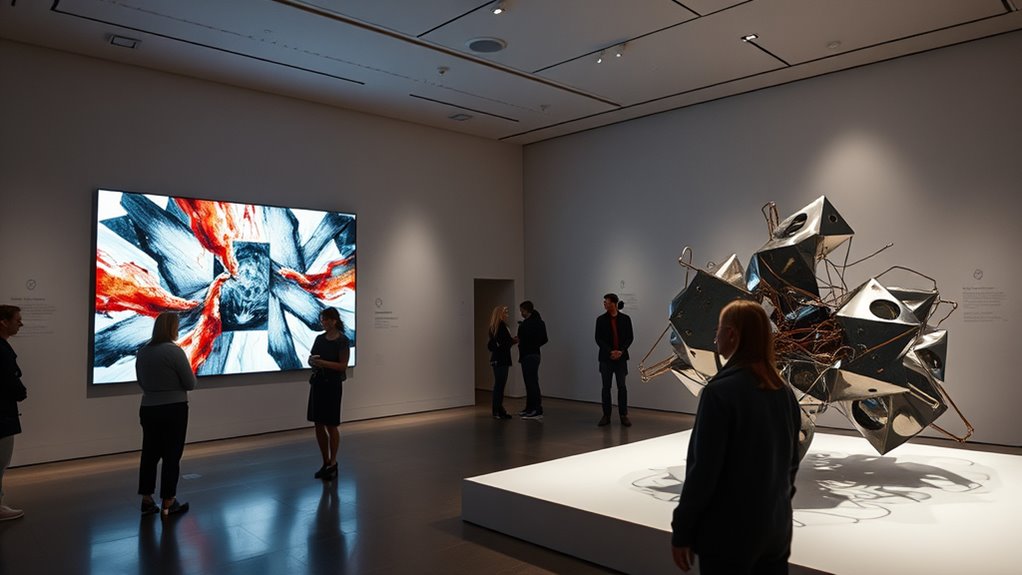
As AI-generated art becomes more prevalent, questions around ethics and intellectual property grow more urgent. You might face ownership disputes over who truly owns the rights—whether it’s the artist, the programmer, or the AI itself. These disputes highlight the moral implications of using AI in creative processes, raising concerns about originality and compensation. You need to contemplate whether AI-created works should be attributed to human creators or treated as independent entities. Additionally, questions about licensing and the reuse of existing artworks by AI systems complicate the legal landscape. Steering through these issues requires balancing innovation with respect for existing intellectual property rights, ensuring ethical practices. Both the 16PF and MBTI tests are widely used in various settings, including counseling and organizational development, which underscores the importance of clear frameworks and standards in evaluating creative and personal outputs. Ultimately, addressing these concerns helps protect creators and promotes responsible AI integration into modern art.
Future Directions and Emerging Trends in AI Art
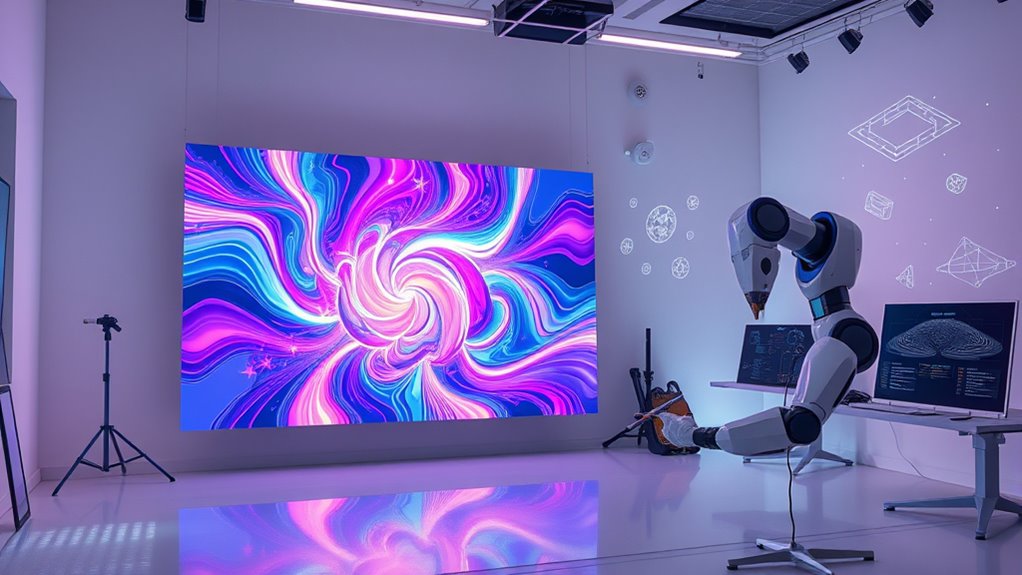
Emerging trends in AI art point toward increasingly sophisticated collaborations between humans and machines, pushing the boundaries of creative expression. You’ll see algorithmic aesthetics evolve, allowing artists to craft intricate, data-driven visuals that were previously impossible. Future developments focus on enhancing creative collaboration, where AI acts as a true partner, not just a tool. Here are some key directions:
AI-human collaborations are transforming art with evolving aesthetics and dynamic, data-driven, emotionally resonant creations.
- Integration of AI in live art performances for dynamic, real-time creations
- Development of personalized AI algorithms to match individual artistic styles
- Expansion of interactive installations blending human input with machine learning
- Refinement of algorithmic aesthetics to produce more nuanced, emotionally resonant works
- The for-sale 100 market is also expected to influence AI-generated art, providing new opportunities and challenges for artists and collectors alike.
These trends will reshape how you create, interpret, and experience modern art.
Frequently Asked Questions
How Do Artists Feel About AI Replacing Traditional Methods?
You might feel conflicted about AI replacing traditional methods, questioning artistic authenticity and originality. Some artists embrace AI as a new tool, while others maintain creative skepticism, worrying it may diminish human touch in art. You could see AI as expanding creative possibilities or threatening genuine expression. Ultimately, your feelings depend on whether you value technological innovation or prioritize maintaining the emotional depth of handcrafted art.
Can AI Truly Replicate Human Emotional Expression in Art?
You might think AI can’t truly replicate human emotional expression because it lacks emotional authenticity and creative intuition. But recent advances suggest AI can mimic emotional tones remarkably well, sparking debates about whether it genuinely understands feelings or just imitates them. While AI’s output can evoke emotion, it often misses the depth that human experiences and intuition bring, making true emotional authenticity still a challenge for machines.
What Are the Economic Impacts of AI on the Art Industry?
You might notice AI causing market disruption in the art industry, making it easier to produce and sell art quickly. However, you also face copyright concerns, as AI-generated works blur lines about ownership and originality. These changes could lower prices and shift demand, impacting artists’ livelihoods. While AI offers new opportunities, it’s essential to stay aware of these economic impacts to adapt and protect your creative work.
How Accessible Is AI Art Creation for Amateur Artists?
AI art creation is more accessible than ever, transforming amateur artists’ lives dramatically. With user-friendly interfaces, you can plunge into creating stunning artworks without extensive technical skills. This technology fuels the democratization of art, making it possible for anyone to express their creativity. You no longer need years of training—AI tools empower you to produce professional-quality art quickly, opening doors to new artistic horizons and leveling the playing field for all.
Will Ai-Generated Art Influence Cultural Diversity and Representation?
You might wonder if AI-generated art will shape cultural representation and diversity in art. It can promote inclusivity by giving more voices a platform, but it could also risk homogenizing styles if not carefully managed. Your role as an artist or viewer is essential in ensuring AI tools celebrate cultural diversity, encouraging unique perspectives, and resisting cultural erasure. Ultimately, AI has the potential to both expand and challenge diversity in art.
Conclusion
As you explore the evolving landscape of AI in art, you’ll find that it gently nudges traditional boundaries, inviting new forms of expression. While the journey offers exciting horizons, it also suggests a delicate dance with ethical nuances and creative ownership. Embrace this transformation with curiosity and care, understanding that, like all great innovations, it’s a subtle shift—one that promises to enrich your artistic horizons while honoring the timeless spirit of creativity.