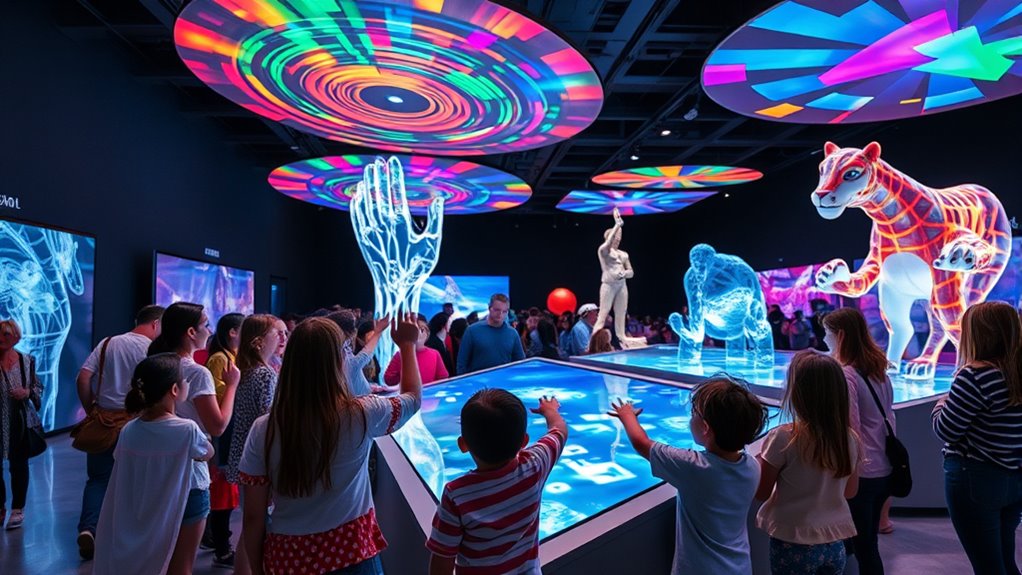

Interactive exhibitions turn passive viewing into engaging experiences by using digital tools like touchscreens, virtual reality, and sensors. These technologies encourage you to participate directly, explore exhibits more deeply, and connect emotionally with the content. Whether you’re interested in history, art, or science, digital interactions make learning fun and memorable for everyone. By engaging your senses and curiosity, these displays create personalized moments you won’t forget — and there’s much more to discover if you keep exploring.
Key Takeaways
- Incorporate touchscreens, virtual reality, and motion sensors to create immersive, participatory experiences.
- Use gamification and augmented reality to make exhibits engaging and interactive for diverse audiences.
- Enable visitors to influence displays, fostering a sense of agency and personal connection.
- Design accessible digital tools to attract and involve all age groups and learning styles.
- Collect interaction data to improve exhibit relevance, educational value, and overall visitor engagement.

Have you ever wondered how museums and galleries are transforming to engage visitors more deeply? The answer lies in the innovative use of digital engagement and interactive technology that turns passive viewing into active participation. Today’s exhibitions are no longer static displays; they’re dynamic experiences that invite you to step in, touch, explore, and contribute. Digital engagement plays a pivotal role here, as it bridges the gap between the exhibits and your personal experience. Interactive screens, virtual reality setups, and smart installations allow you to become part of the story rather than just an observer. When you engage directly with digital elements, you’re more likely to remember what you’ve learned and feel a sense of connection to the subject matter.
Digital engagement transforms museums into immersive, participatory experiences that deepen connection and enhance learning.
Visitor participation is at the heart of these modern exhibitions. Instead of simply reading placards or observing artifacts, you’re encouraged to interact with the displays. For example, some exhibitions include touchscreens that let you manipulate digital recreations of historical sites or art pieces, giving you a hands-on understanding that’s impossible with traditional displays. Others feature motion sensors that respond to your movements, triggering audiovisual effects or revealing hidden layers of information. This active involvement makes the learning process more engaging and personalized, transforming your visit from a passive stroll into an immersive adventure.
The beauty of these approaches is that they appeal to diverse audiences, from tech-savvy teens to curious seniors. Digital engagement tools can be tailored to different learning styles, ensuring everyone finds something compelling. Interactive quizzes, gamified challenges, and augmented reality experiences make complex topics accessible and fun. When you participate in these activities, you’re not just a spectator—you become a co-creator of the exhibit. Your responses can even influence the display, creating a unique experience each time you visit. This sense of agency fosters a deeper emotional connection to the content and encourages repeat visits.
Moreover, digital engagement and visitor participation help museums gather valuable insights about what visitors find interesting or confusing. The data collected from interactive stations can inform future exhibit design, making experiences more relevant and engaging. As you navigate through these exhibitions, your interactions contribute to a broader understanding of how people learn and connect with cultural content. In essence, these innovative strategies don’t just entertain; they transform the way you experience and internalize information, making every visit memorable and meaningful.
Frequently Asked Questions
How Do Interactive Exhibitions Measure Visitor Engagement?
You measure visitor engagement by collecting feedback through surveys and observing behaviors at interactive exhibits. Engagement metrics like time spent at each station, participation rates, and repeat visits help gauge how involved visitors are. By analyzing this data, you can identify which elements resonate most, allowing you to improve future exhibitions and create more immersive experiences that truly captivate your audience.
What Technology Is Commonly Used in Interactive Exhibits?
You’ll find that interactive exhibits commonly use digital sensors to track visitor movements and responses, making experiences more personalized. Augmented reality is also popular, overlaying digital visuals onto real-world settings to enhance engagement. These technologies actively involve you in the exhibit, creating immersive, memorable experiences. By leveraging sensors and augmented reality, creators can tailor interactions to keep you engaged and make learning both fun and impactful.
How Are Accessibility Concerns Addressed in Interactive Installations?
You address accessibility concerns by incorporating accessibility design and inclusive technology into interactive installations. You guarantee exhibits are usable by people with diverse abilities through features like adjustable interfaces, tactile feedback, audio descriptions, and visual cues. You also test with diverse user groups, gather feedback, and continually improve to create an inclusive experience. This approach guarantees everyone can engage, learn, and enjoy the exhibition fully, regardless of their individual needs.
What Are the Costs Associated With Creating an Interactive Exhibition?
Creating an interactive exhibition is like planting a garden—you need careful budget planning and stakeholder collaboration to nurture it. Costs include technology, design, installation, and maintenance. You’ll also need to take into account staffing and accessibility features. By working closely with your team, you can balance expenses and ensure your exhibition blooms successfully without overspending, turning your vision into an engaging experience that resonates with every visitor.
How Do Interactive Exhibitions Impact Long-Term Visitor Retention?
Interactive exhibitions boost long-term visitor retention by fostering visitor loyalty through engaging, memorable experiences. You’ll see repeat visits as visitors enjoy experiential learning that deepens their understanding and connection to your exhibit. These dynamic interactions make your exhibit stand out, encouraging visitors to return for new insights and hands-on activities. Ultimately, you create a loyal audience that values your exhibit’s unique, engaging approach, ensuring sustained interest over time.
Conclusion
So, when you step into an interactive exhibition, you’re not just a visitor—you’re a participant, a creator, a discoverer. You feel the excitement, the curiosity, the connection. You engage with the art, the ideas, the stories, and you leave transformed. You inspire, you learn, you grow. Because in these moments, you don’t just observe; you experience, you feel, you belong. And that’s what makes interactive exhibitions truly unforgettable.