
To control lighting installations seamlessly with DMX, start by understanding its key components like fixtures, control consoles, and wiring. Plan your setup by mapping out fixture addresses and ensuring proper signal flow with correct cabling and termination. Setting up involves assigning addresses, connecting equipment, and testing fixtures. Troubleshooting common issues like signal loss or conflicts is vital for smooth operation. Keep in mind best programming practices and future expansion options—stay tuned to learn how to master these essentials effortlessly.

Get art and craft supplies delivered free — and shop member deals
- Fast, free delivery on millions of items
- Access to Prime Big Deal Days deals on October 6–7
- Prime Video, Amazon Music and more included
Key Takeaways
- Properly plan and map your lighting needs to select compatible fixtures and design an effective layout.
- Assign unique DMX addresses to avoid conflicts and ensure predictable fixture responses.
- Use high-quality cables, proper termination, and correct daisy-chaining to prevent signal issues.
- Test the system thoroughly and document fixture capabilities for smooth programming and troubleshooting.
- Incorporate modular, wireless, and scalable hardware to future-proof and simplify expansion.
As an affiliate, we earn on qualifying purchases.
What Is DMX Lighting Control and Why Is It Essential?
Have you ever wondered how professional lighting setups achieve seamless control over multiple fixtures? That’s where DMX lighting control comes in. It’s a digital communication protocol that allows you to manage various lighting elements through a single system. With DMX, you can precisely adjust color mixing, creating vibrant scenes or subtle atmospheres, all by controlling individual fixtures’ color and intensity. Dimmer options become smoother, enabling gradual changes without flickering. This system guarantees your lights respond instantly and consistently, which is essential for installations requiring dynamic lighting effects. By using DMX, you gain reliable, flexible control, reducing complexity and setup time. It’s the backbone of modern lighting design, making it easier to craft the perfect ambiance with minimal effort. Additionally, understanding digital concepts in lighting can enhance your ability to create innovative installations. Incorporating elements like outdoor ovens into your design can further elevate the atmosphere of your space.
As an affiliate, we earn on qualifying purchases.
The Basic Components of a DMX Lighting System

Ever wondered what makes a DMX lighting system work seamlessly? It all starts with the basic components. First, you have the lighting fixtures, which are the actual lights you see on stage or in an installation. These fixtures are designed to receive DMX signals and respond accordingly. Next is the control console, which acts as the brain of the system. It sends out DMX data to your fixtures, allowing you to control color, brightness, and movement. A DMX splitter or repeater may also be involved to distribute signals across multiple fixtures, especially in larger setups. Finally, wiring and connectors link everything together, ensuring a reliable flow of data. Together, these components form a cohesive system that gives you precise control over your lighting environment.
As an affiliate, we earn on qualifying purchases.
Planning Your DMX Lighting Setup for Success
To set up a successful DMX lighting system, you need to start by mapping out your lighting needs so you know what equipment is essential. Next, select compatible gear that fits your setup and guarantees smooth operation. Additionally, understanding craftsmanship in your lighting fixtures will ensure they not only function well but also enhance the overall aesthetic. A well-planned lighting layout will also help you maximize the effectiveness of your design. Finally, plan your cabling layout carefully to prevent signal issues and make future adjustments easier. Additionally, consider color accuracy when selecting lighting fixtures to enhance the visual experience of your setup.
Map Your Lighting Needs
Before you start assembling your DMX lighting system, it’s essential to carefully map out your lighting needs. Identify the key areas you want to highlight and consider how color mixing can enhance the atmosphere. Determine the types of fixtures you’ll need, focusing on fixture selection to match your desired effects. Planning helps prevent over- or under-specifying equipment, saving time and money. Use the table below to organize your lighting requirements:
| Area/Effect | Fixture Type & Quantity |
|---|---|
| Stage spotlighting | Moving heads, 4 units |
| Ambient lighting | LED wash lights, 6 units |
| Color effects | RGB pars, 8 units |
This structured approach ensures your setup will be both functional and visually dynamic.
Choose Compatible Equipment
Once you’ve mapped out your lighting needs, selecting equipment that works seamlessly together becomes the next priority. Focus on fixture compatibility to guarantee all your devices can communicate and operate smoothly under the DMX protocol. Check that the fixtures support the same DMX channels and protocols to avoid issues down the line. Additionally, consider the color temperature of your fixtures; matching or coordinating color temperatures creates a cohesive look and simplifies programming. Make certain that your chosen fixtures are compatible with your lighting control console and other gear. Compatibility reduces troubleshooting and ensures reliable performance during operation. By carefully selecting equipment with compatible DMX interfaces and similar color temperature ranges, you set yourself up for a smooth, efficient lighting setup that’s easy to control and adjust. Furthermore, understanding research-driven insights on emerging lighting technologies can provide you with a competitive edge in your installations.
Plan Your Cabling Layout
Planning your cabling layout is a crucial step to guarantee your DMX lighting setup functions smoothly and efficiently. Start by mapping out where each fixture will go, verifying proper power distribution to avoid overloads. Consider wireless integration options to reduce cable clutter and increase flexibility, especially for hard-to-reach areas. Keep DMX runs short and avoid running cables parallel to power lines to prevent interference. Use daisy chaining where possible, but plan for a proper terminator at the end of your chain. Label all cables clearly for easy troubleshooting and maintenance. Proper planning minimizes future headaches, saves time during installation, and ensures reliable data transmission. A well-thought-out cabling layout sets the foundation for a successful and professional lighting setup.
As an affiliate, we earn on qualifying purchases.
How to Set Up Your First DMX Lighting System, Step by Step
Setting up your first DMX lighting system might seem intimidating at first, but breaking it down into clear steps makes the process straightforward. First, connect your fixtures to a DMX controller using the appropriate DMX cables, ensuring proper termination at the end of the chain for signal clarity. Next, assign each fixture a unique DMX address, which allows you to control multiple lights independently. Then, configure your controller to create creative lighting effects by adjusting intensity, color, and movement parameters. Finally, test the setup to confirm all fixtures respond correctly. This simple process not only helps you achieve stunning visual effects but also promotes energy efficiency by precisely controlling each fixture’s operation. With practice, your system will become intuitive and reliable.
Troubleshooting Common DMX Lighting Problems
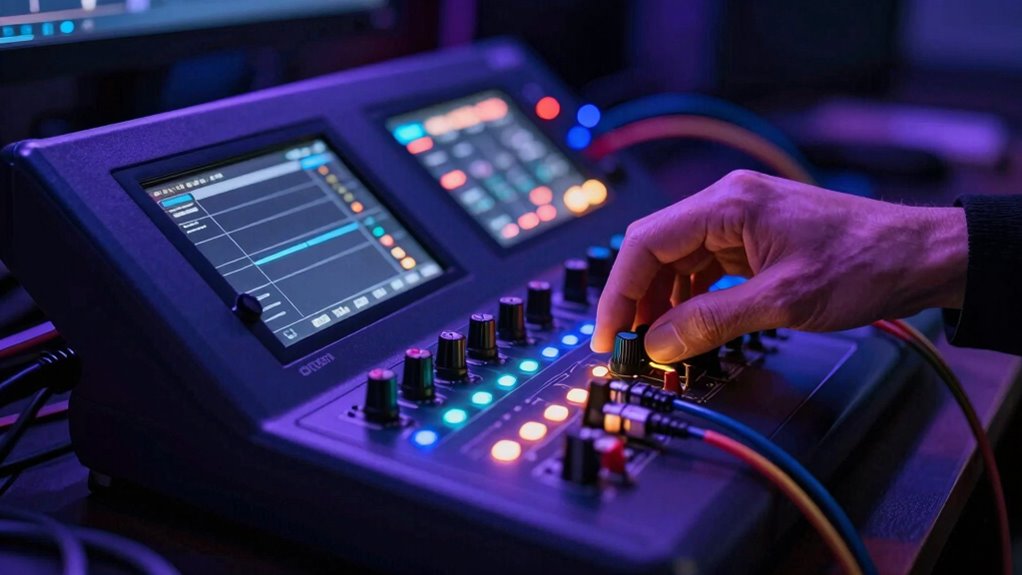
When your DMX lights aren’t responding, the first step is to check for signal loss, which can happen if cables are damaged or connections are loose. Address conflicts are another common issue; ensuring each device has a unique address helps avoid this problem. By systematically testing these areas, you can quickly identify and fix the most frequent DMX troubleshooting issues. Additionally, understanding the importance of symbolism in shapes can enhance your approach to organizing and managing your lighting setup. Investing in top car protection can also help safeguard your equipment during installations. Regularly inspecting and maintaining cabling solutions can prevent unexpected failures and ensure optimal performance. Incorporating regular maintenance practices, such as foam rolling techniques, can improve the performance and longevity of your equipment. Moreover, maintaining a healthy work-life balance can prevent burnout and enhance your focus during installations.
Identifying Signal Loss
How can you tell if a DMX signal is getting lost? Usually, you’ll notice flickering lights, inconsistent colors, or unresponsive fixtures. These signs point to potential signal interruption. To troubleshoot, check these key areas:
- Cable integrity – Inspect your DMX cables for damage, loose connectors, or poor grounding, as compromised cables can cause signal loss.
- Connection points – Ensure all connections are secure and properly terminated with the correct end caps, preventing signal reflection.
- Signal chain – Verify the DMX address settings and that fixtures are correctly daisy-chained without breaks or damage along the line.
Resolving Address Conflicts
Address conflicts are a common source of lighting issues, and resolving them quickly can restore your setup’s functionality. When fixture addressing overlaps, you might see inconsistent color mixing or unexpected behavior. To troubleshoot, check each fixture’s DMX address and verify no two fixtures share the same number. Use proper addressing to avoid conflicts and ensure smooth operation. Here’s a simple visual guide:
| Fixture | Address | Functionality |
|---|---|---|
| Fixture 1 | 1 | Controls color mixing |
| Fixture 2 | 2 | Controls color mixing |
| Fixture 3 | 3 | Controls color mixing |
Additionally, understanding ethical hacking can provide insights into identifying vulnerabilities in your lighting control systems.
Best Practices for Programming and Controlling Your DMX Lights
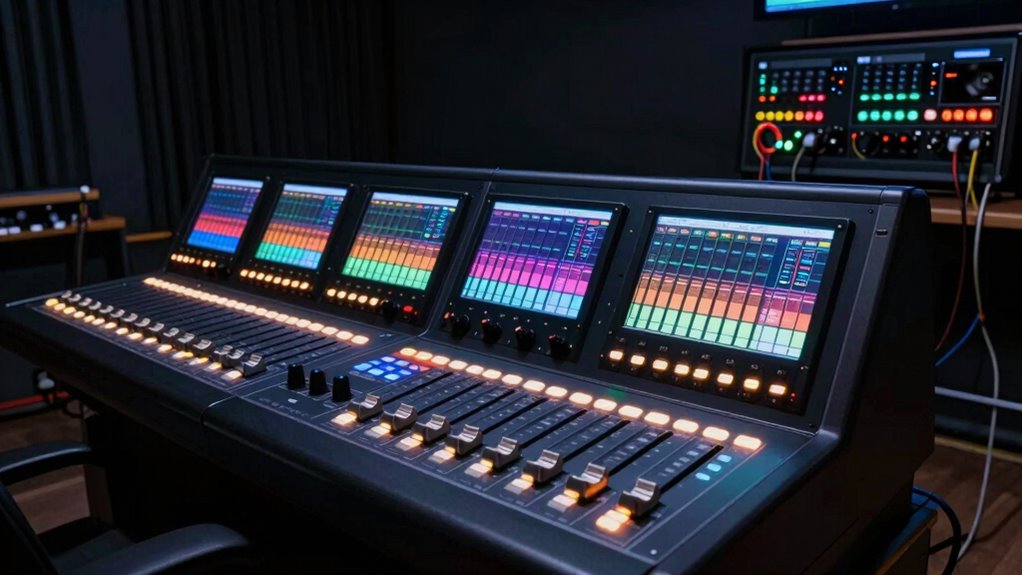
Programming and controlling DMX lights effectively requires a clear understanding of your setup and a strategic approach. To achieve impressive creative lighting effects, focus on mastering advanced programming techniques. Here are key best practices:
- Plan your cues and scenes in advance to guarantee smooth shifts and cohesive visuals.
- Use color palettes and timing controls to create dynamic and engaging effects.
- Regularly test and document each fixture’s address and capabilities to avoid confusion and streamline adjustments.
Expanding and Future-Proofing Your DMX Lighting Installation

Considering the long-term viability of your DMX lighting setup is essential as technology evolves and your needs grow. To future-proof your installation, focus on modular expansion, allowing you to add fixtures or control points without overhauling the system. Wireless integration is also key, enabling remote control and flexibility without cumbersome cabling. Choose compatible hardware that supports both wired and wireless DMX protocols, so you can adapt as your setup scales or adopts new technology. Planning for easy upgrades and expansion now prevents costly rewiring later. By prioritizing modular components and wireless options, you guarantee your system remains versatile, scalable, and ready for evolving lighting demands. Additionally, incorporating smart home technology enhances your installation by integrating lighting with other automated systems, ensuring a cohesive and efficient living environment. This approach saves time, reduces costs, and keeps your installation current for years to come.
Frequently Asked Questions
What Are the Common Mistakes to Avoid in DMX Setup?
In DMX setup, avoid common mistakes like poor cable management, which can cause signal issues, and neglecting proper DMX troubleshooting. Always check your connections for secure, correct wiring and guarantee terminators are in place at the end of the chain. Don’t skip testing your setup before full operation. These steps help prevent signal interference, making your lighting control smooth, reliable, and easier to troubleshoot if problems arise.
How Do I Choose the Right DMX Controller for My Needs?
Choosing the right DMX controller is like finding the perfect tool for a job. You’ll want one that matches your lighting fixture compatibility and simplifies DMX signal troubleshooting. Consider your project size—smaller setups need fewer channels, while larger shows demand more advanced controllers. Read reviews, check compatibility, and think about expansion options. This way, you’ll avoid headaches down the line and keep your lighting smoothly synchronized and easy to control.
Can DMX Be Integrated With Other Lighting Control Systems?
Yes, DMX can be integrated with other lighting control systems. You’ll want to confirm wireless integration options are available if you prefer a cable-free setup. Additionally, check protocol compatibility—many systems support protocols like Art-Net or sACN, which facilitate seamless communication between DMX and other control platforms. By verifying these features, you can create a unified control setup that maximizes your lighting system’s flexibility and ease of use.
What Safety Precautions Should I Take During Installation?
During installation, prioritize power safety by turning off all power sources before handling equipment. Guarantee proper equipment grounding to prevent electrical shocks and protect your setup. Use the correct cables and connectors, and check for damaged wiring. Keep cables organized to avoid tripping hazards. Always follow manufacturer instructions and local electrical codes. If unsure, consult a professional to ensure safe and compliant installation, minimizing risks for you and your equipment.
How Do I Maintain and Update a DMX Lighting System Over Time?
To maintain and update your DMX lighting system, regularly check connections and firmware updates for wireless integration, ensuring smooth communication. Manage power wisely by inspecting cables and power supplies to prevent overloads. Keep your system organized and document changes to facilitate troubleshooting and upgrades. Incorporate wireless controls where possible for flexibility, and schedule routine maintenance to keep everything running efficiently and extend your system’s lifespan.
Conclusion
Mastering DMX lighting is like wielding a painter’s brush—empowering you to craft immersive atmospheres with precision. With the right knowledge, you can avoid the chaos of a tangled web and instead orchestrate a symphony of light that captivates your audience. Remember, as Da Vinci once said, “Simplicity is the ultimate sophistication.” Embrace these basics, and you’ll transform your installations into timeless works of art, effortlessly blending technology and creativity.
Halloween Picks
halloween
As an affiliate, we earn on qualifying purchases.