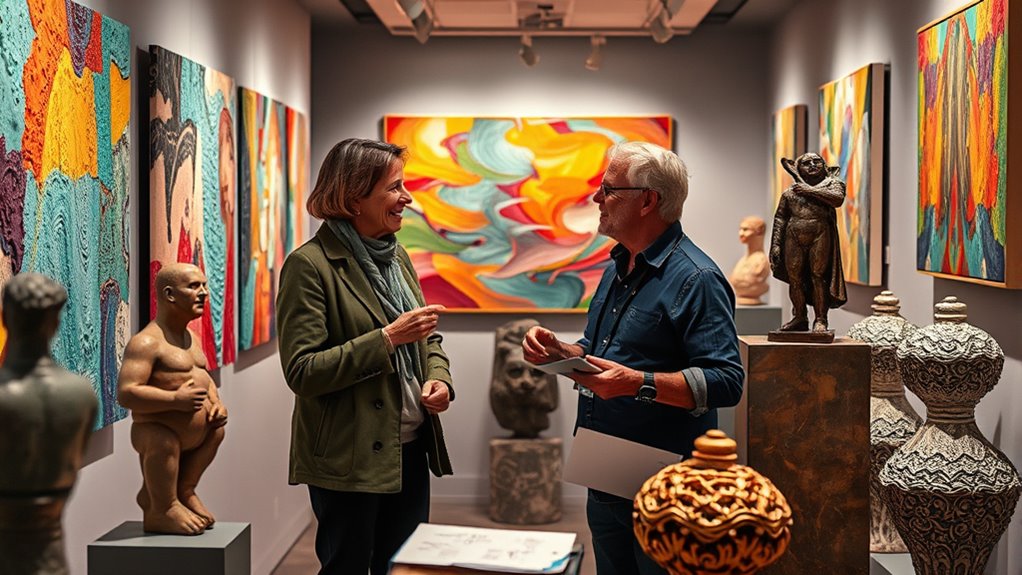

Effective collaboration between curators and artists is crucial for creating impactful exhibitions. You should engage in meaningful dialogue, understanding the artist’s intent and sharing your curatorial vision. Building trust, staying open to creative risks, and maintaining clear communication help resolve conflicts and foster mutual respect. Together, you can craft a cohesive narrative that highlights the artwork’s significance and engages viewers. To explore ways to strengthen these partnerships, there’s much more to discover ahead.
Key Takeaways
- Effective collaboration fosters shared understanding of artistic and curatorial visions, leading to cohesive and meaningful exhibitions.
- Building trust and mutual respect between curators and artists encourages creative risk-taking and authentic expression.
- Open communication channels help resolve conflicts early and ensure both parties feel valued and heard.
- Engaging in ongoing dialogue allows for reinterpretation and refinement of artworks within the exhibition context.
- Collaborative efforts enhance viewer engagement by creating compelling narratives that reflect both artistic intent and curatorial insight.
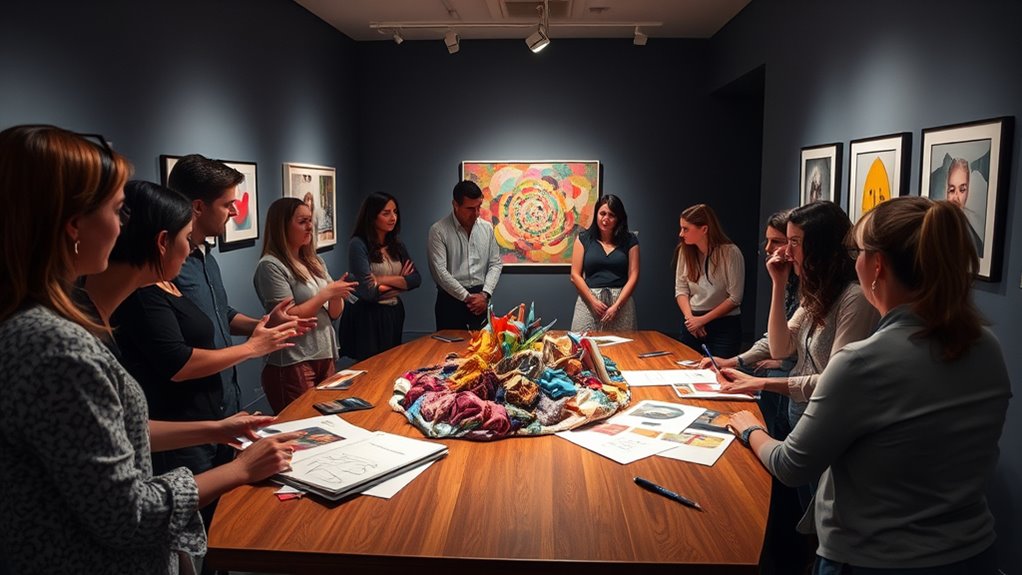
Collaboration between curators and artists plays a crucial role in shaping compelling exhibitions that resonate with audiences. When you engage in meaningful curatorial dialogue, you open pathways to deeper understanding and innovative presentation of artworks. This dialogue isn’t just about selecting pieces; it’s about co-creating a narrative that reflects both artistic intent and curatorial vision. As you navigate the artist-institution dynamics, you recognize that building trust and mutual respect is essential for a successful partnership. You learn to listen carefully to the artist’s ideas, concerns, and aspirations, which helps in aligning goals and expectations. This ongoing exchange ensures that the exhibition isn’t merely a display of works but a cohesive story that captures the essence of the artist’s vision and the institution’s mission.
Understanding the artist-institution dynamics enables you to foster an environment where creative risks are encouraged. You realize that collaboration thrives when both parties feel valued and empowered. This often means balancing institutional constraints—such as space, budget, and audience engagement—with the artist’s desire for experimentation and authenticity. Additionally, considering factors like color accuracy can enhance the visual impact of artworks within the exhibition context. By maintaining open channels of communication, you can address potential conflicts early, creating solutions that serve the integrity of the artwork and the curatorial concept. This proactive approach helps cultivate a collaborative atmosphere rather than a transactional one, allowing the artist’s voice to remain central throughout the process.
Your role involves not only selecting works but also interpreting and presenting them in ways that highlight their significance. Through active dialogue, you can negotiate how the pieces are displayed, contextualized, and integrated into the overall narrative. This collaborative effort enhances the viewer’s experience, making the exhibition more engaging and meaningful. You also recognize that the relationship with the artist is dynamic; it evolves as the project progresses, requiring flexibility and adaptation. This fluidity often results in surprising insights and innovative exhibition concepts that neither party might have envisioned alone.
Ultimately, your success hinges on fostering genuine collaboration grounded in mutual respect and open communication. By emphasizing curatorial dialogue and understanding the nuances of artist-institution dynamics, you help craft exhibitions that are vibrant, authentic, and resonant. These partnerships not only elevate the artworks but also create memorable experiences for audiences, reaffirming the importance of collaboration in the evolving landscape of curatorial practice.
Top picks for "collaboration between curator"
Open Amazon search results for this keyword.
As an affiliate, we earn on qualifying purchases.
Frequently Asked Questions
How Do Curators Select Artists for Collaborative Projects?
You evaluate artists based on curatorial criteria like originality, relevance, and technical skill. During artist selection, you look for those whose work aligns with the project’s theme and goals. You consider their past exhibitions, innovative approach, and potential for collaboration. By appraising these factors, you ensure the chosen artists will contribute meaningfully to the project, creating a cohesive and impactful collaborative experience.
What Are Common Challenges in Curator-Artist Collaborations?
You might face challenges like communication gaps and divergent visions in curator-artist collaborations. These issues can lead to misunderstandings or conflicts, making it hard to achieve a cohesive project. To overcome them, you should prioritize clear, open dialogue and establish shared goals early on. Embracing flexibility and actively listening can help bridge gaps, ensuring both you and the artist work harmoniously toward a successful exhibition or project outcome.
How Do Collaborations Influence an Artist’s Creative Process?
Collaboration sparks creative synergy, pushing you to explore new ideas and challenge your boundaries. It encourages innovative experimentation, allowing you to incorporate diverse perspectives that can transform your work. Through ongoing dialogue with curators, you gain fresh insights that inspire your artistic growth. This process fuels your creativity, leading to richer, more dynamic pieces that reflect a deeper engagement with your concepts and the exhibition space.
What Role Does Funding Play in Curator-Artist Partnerships?
They say “money makes the world go round,” and in curator-artist partnerships, funding plays a vital role. Your access to grants depends on funding priorities, which shape project scope and resources. When funding is accessible, it empowers you to develop innovative ideas and strengthen collaborations. Without adequate support, even the most talented artists struggle to realize their visions. Clear, fair grant accessibility ensures vibrant, dynamic partnerships that push creative boundaries.
How Are Collaborative Works Typically Promoted and Exhibited?
You typically promote and exhibit collaborative works through targeted publicity strategies, like social media campaigns and press releases, to reach wider audiences. You also focus on audience engagement by hosting interactive events, artist talks, or workshops that draw visitors in and deepen their connection with the work. These efforts help showcase the collaboration’s unique story, making the exhibition more memorable and accessible to diverse audiences.
Conclusion
When you collaborate with curators and artists, you create a dynamic synergy that’s like a finely tuned orchestra. This partnership not only elevates your work but also pushes creative boundaries, opening new possibilities. Embrace open communication and shared vision, because together, you can craft exhibitions that resonate deeply with audiences. Remember, the best collaborations are like a dance—fluid, intentional, and full of mutual respect, leading to truly memorable artistic experiences.