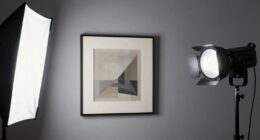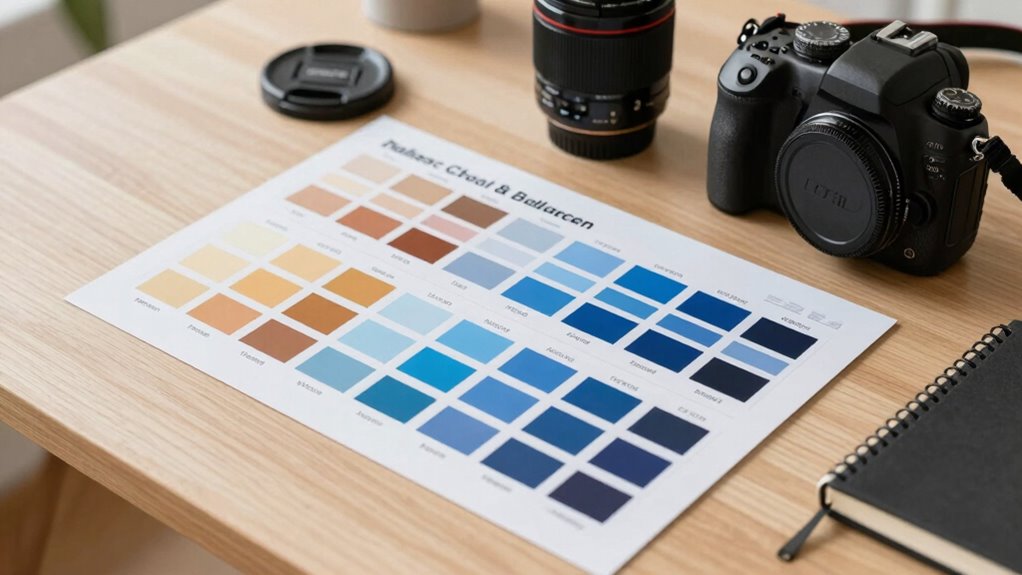
To get accurate colors indoors, match your camera’s white balance preset to your light source: use tungsten for incandescent lights, fluorescent for tube lighting, and daylight or auto for natural or mixed light. For better control, set a custom white balance or adjust manually using sliders. Avoid auto white balance for tricky lighting conditions. If colors still look off, you can fix them later in post-processing. Keep exploring to master perfect artwork photos every time.
Key Takeaways
- Match camera white balance preset to the light source: tungsten for incandescent, fluorescent for tubes, daylight for natural light.
- Use custom white balance for precise color accuracy based on specific lighting conditions.
- Adjust white balance manually with sliders to fine-tune color temperature and maintain artwork’s true colors.
- Rely on neutral gray or white points in the scene for consistent calibration and accurate color reproduction.
- Correct white balance in post-processing using tools like Lightroom or Photoshop to restore color fidelity.
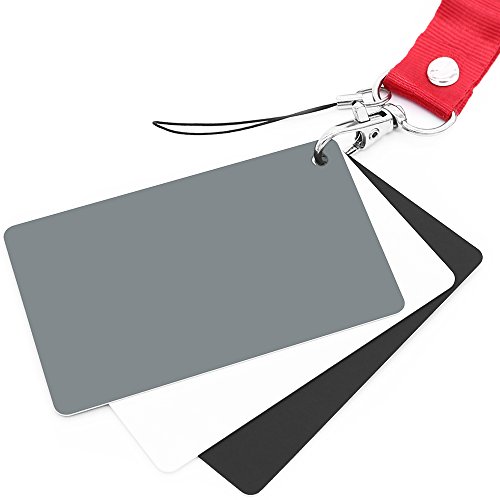
Anwenk Grey White Balance Card 18% Exposure Photography Custom Calibration Camera Checker for DSLR and Film
Neutral 18% Grey / Gray Card with matte finish for scratch resistant. Non reflective and waterproof.
As an affiliate, we earn on qualifying purchases.
As an affiliate, we earn on qualifying purchases.
Understanding White Balance in Indoor Art Photography
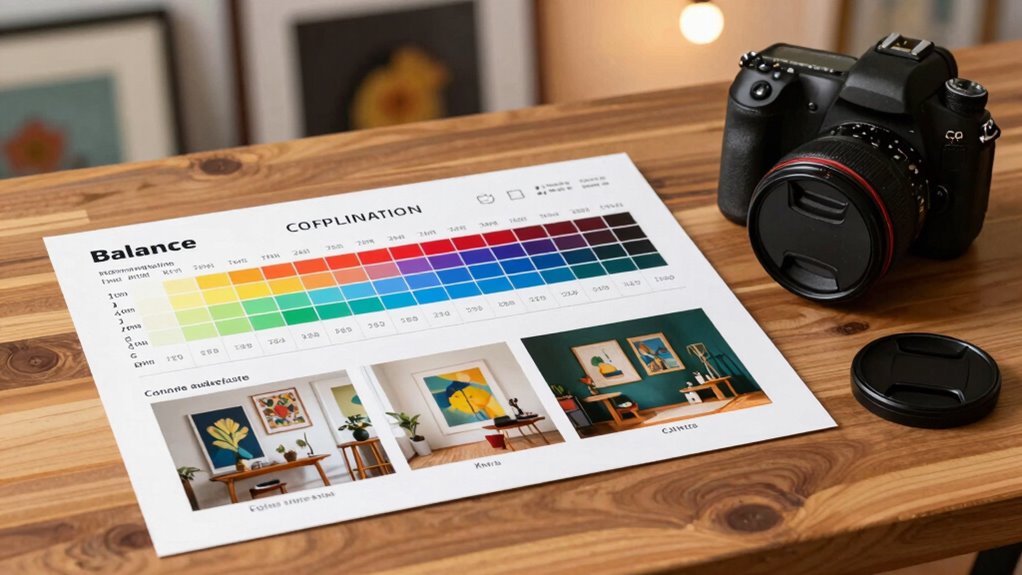
Have you ever noticed how indoor art photography can sometimes look unnaturally warm or cool? That’s often due to the color temperature, which is influenced by your light source. Different light sources emit varying color temperatures, causing some images to appear too yellow, blue, or neutral. When you understand how the light source impacts color temperature, you can better control the mood and accuracy of your photos. For example, incandescent bulbs produce a warm, yellowish hue, while fluorescent lights tend to cast a cooler, bluish tone. Recognizing these differences helps you anticipate how your art will appear under different lighting conditions. Additionally, using LED lights can provide a more consistent color temperature for your photography. Adjusting your camera’s white balance accordingly ensures your images accurately reflect the original colors of the artwork. Furthermore, content formats can play a significant role in how the artwork is perceived, influencing the viewer’s experience. Moreover, color accuracy is essential for achieving true-to-life representations of art, ensuring that colors are rendered faithfully in your photographs. Additionally, indoor air quality can affect the overall aesthetic of your space, influencing how colors are perceived in your photos. Maintaining effective soundproofing techniques in your environment can also enhance the visual experience by minimizing distractions, allowing viewers to focus more on the artwork itself.

Torjim Softbox Photography Lighting Kit, 16'' x 16'' Professional Softbox Lighting Kit with 85W 3000-7500K LED Bulbs, Studio Lights for Photography/Video Recording/Live Streaming/Portraits Shooting
【Illuminate Your Creativity】 Torjim softbox lighting kit is made of high-quality PET fabric and a foldable nylon cover,…
As an affiliate, we earn on qualifying purchases.
As an affiliate, we earn on qualifying purchases.
Best White Balance Settings for Indoor Art Shots
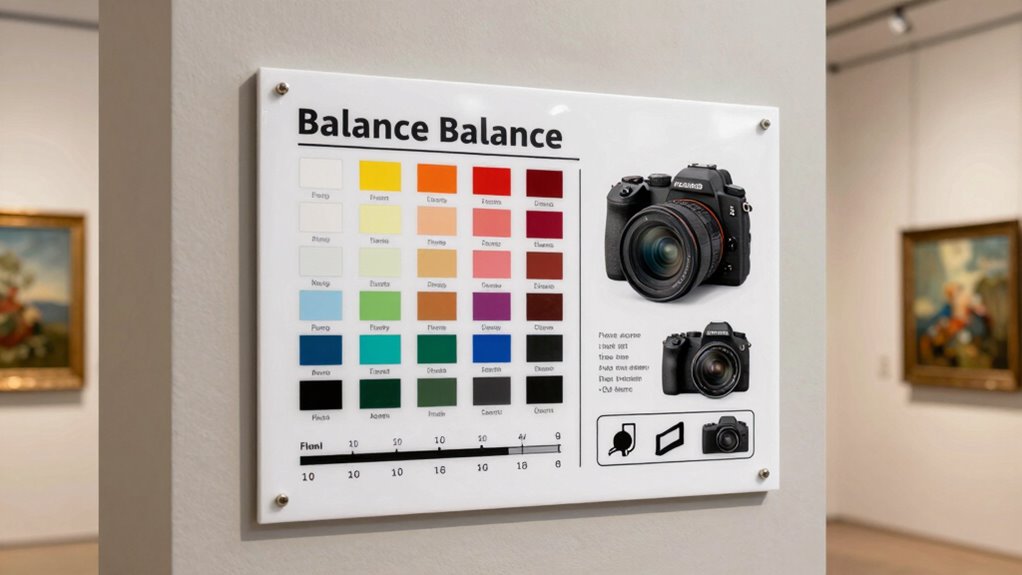
Choosing the right white balance setting is essential to capturing accurate colors in your indoor art photography. Your goal is to match the color temperature of your light sources to prevent color casts. If your light sources are incandescent or tungsten bulbs, set your camera to a tungsten or incandescent white balance preset to neutralize the warm tones. For cooler fluorescent or LED lighting, select the fluorescent or daylight setting to balance the cooler color temperature. If your camera allows, use a custom white balance for precise control based on your specific light sources. This guarantees the colors in your artwork appear true to life, avoiding unwanted color shifts. Adjusting the white balance based on the dominant light sources helps you accurately represent the artwork’s colors and details. Additionally, consider how support and boundaries can affect the environment in which you photograph, ensuring a stable setting for optimal results. Maintaining proper indoor air quality can also enhance your photography experience by reducing dust and allergens that may affect both your equipment and the artwork. Furthermore, be mindful of smart home devices that could unintentionally interfere with your photography environment, ensuring they do not disrupt your lighting setup. Proper gear care, including cleaning your camera equipment, is also crucial for consistently achieving the best results in art photography. Selecting the right waterpark gear can also enhance your experience by allowing for better versatility in different lighting conditions.

Macolink White Balance Grey Cards 18% Gray Cards Custom Color Calibration DSLR/SLR/Evil Camera Checker for Digital Photography Video (3.35" X 2.2")
The gray card can let you get right white balance in seconds and always have the perfect exposure.
As an affiliate, we earn on qualifying purchases.
As an affiliate, we earn on qualifying purchases.
How to Adjust White Balance for Different Indoor Lighting
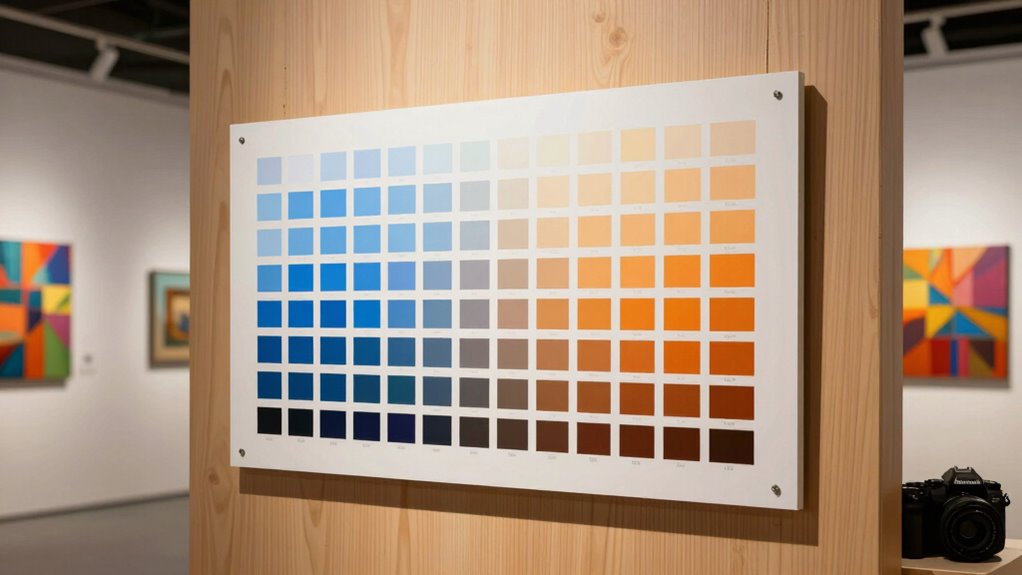
Adjusting your white balance for different indoor lighting conditions is essential to guarantee your photos accurately reflect the colors of your scene. The key is understanding the color temperature of your light source types. Incandescent bulbs emit warm, yellowish light with a low color temperature, so set your white balance to a higher Kelvin value or use the tungsten preset. Fluorescent lights often produce a greenish tint, requiring a custom adjustment or the fluorescent preset. LED lighting varies widely, so you might need to manually fine-tune your white balance or shoot in a setting like auto white balance and correct later. By recognizing the specific light source types and their color temperatures, you assure your artwork’s true colors are faithfully captured. Additionally, cultivating a growth mindset can enhance your approach to photographic challenges, allowing for more creative solutions when adjusting your settings. Understanding the significance of mammography guidelines can also help you appreciate the importance of precision in capturing colors in art photography. Furthermore, the rising trend of wellness tourism can inspire creative environments that enhance the atmosphere for showcasing art pieces. Consider incorporating outdoor ovens in your indoor setup for versatile lighting when showcasing art pieces. Using lightweight foundations can also help create a balanced look that complements the colors in your photographs.
Macolink White Balance Grey Cards 18% Gray Cards Custom Color Calibration DSLR/SLR/Evil Camera Checker for Digital Photography Video (3.35" X 2.2")
The gray card can let you get right white balance in seconds and always have the perfect exposure.
As an affiliate, we earn on qualifying purchases.
As an affiliate, we earn on qualifying purchases.
Common White Balance Mistakes When Photographing Artwork

One common mistake when photographing artwork is neglecting to set the correct white balance, which can lead to color distortions that misrepresent the piece’s true hues. If you don’t consider the ambient light, your camera may choose a color temperature that doesn’t match the lighting conditions, resulting in unnatural tones. For example, under tungsten or fluorescent lighting, the colors can shift toward yellow or green, respectively. Relying on auto white balance often causes inaccuracies, especially in mixed lighting environments. To avoid this, manually adjust the white balance to match the ambient light or use a preset that corresponds to your lighting source. Failing to do so can compromise the artwork’s true colors, making it look different from how it appears in person. Additionally, understanding the importance of goal setting in your photography process can help ensure you capture the artwork accurately. Proper white balance is crucial for achieving optimal comfort in the representation of the artwork’s colors, as it enhances the overall viewing experience. Using AI in drug discovery can lead to more accurate assessments of colors and details, improving the integrity of the artwork’s portrayal. To further enhance your photographic results, consider diversifying your portfolio of techniques to best capture the unique qualities of each piece. Embracing cutting-edge technology in photography can significantly elevate your ability to reproduce artwork authentically.
Fixing White Balance in Post-Processing for Accurate Colors

When the white balance isn’t perfect in your initial shot, post-processing offers a valuable opportunity to correct it and restore accurate colors. You can modify the color temperature to match the light source comparison, ensuring the artwork looks true to life. Understanding media literacy can enhance your ability to recognize how different light sources interact with colors in your photos. Additionally, the use of slang terms in photography discussions can help you better understand the jargon related to color correction and lighting techniques. Use editing tools like Lightroom or Photoshop to fine-tune the white balance by dragging sliders or selecting a neutral point. Moreover, recognizing the principles of bioluminescent organisms can deepen your insight into how various lighting conditions affect color perception. Additionally, understanding the horsepower of electric dirt bikes can assist in recognizing how different light sources interact with colors in your photos. For instance, using essential oils can help create a calming environment, enhancing your focus while editing.
| Light Source Comparison | Adjusted Color Temperature |
|---|---|
| Incandescent Bulb | Cooler, higher Kelvin |
| Daylight (Sunlight) | Neutral, mid-range Kelvin |
| Fluorescent Light | Warmer or cooler, depends on bulb |
| LED Light | Usually adjustable, check color temp |
This method ensures your artwork’s colors stay accurate, regardless of initial lighting conditions.
Frequently Asked Questions
How Does White Balance Affect Color Accuracy in Art Photography?
White balance directly impacts color accuracy in art photography by adjusting for the color temperature of your light source. When you set the correct white balance, you guarantee consistent color reproduction, preventing hues from appearing unnatural or off. If you don’t, colors can shift, reducing color consistency across your images. Proper white balance maintains true-to-life colors, helping viewers accurately perceive the artwork’s intended palette.
Can White Balance Settings Vary Between Different Camera Brands?
Did you know that different camera brands can have up to a 10% variation in white balance settings? Yes, white balance settings can vary between brands because of differences in camera sensors and internal color calibration. This means you might need to adjust your white balance more carefully depending on your camera brand to guarantee accurate color reproduction of art indoors. Always test your camera’s settings for the best color fidelity.
What Tools Can Help Verify Correct White Balance On-Site?
To verify correct white balance on-site, use tools like a gray card or a color calibration target. These help you set the correct light temperature and guarantee accurate colors. Adjust your camera’s white balance setting until the colors look true to life. Additionally, reviewing your images on a calibrated monitor can confirm that the color calibration is accurate, helping you capture art with consistent and true-to-life color rendition.
How Does Ambient Light Influence White Balance Choices Indoors?
Ambient light acts like a chameleon, constantly shifting its hue and affecting your shot. It influences your white balance choices because the color temperature of light, or light temperature, varies indoors—from warm tungsten bulbs to cool fluorescent tubes. Recognizing these changes helps you select the right white balance setting, ensuring the colors in your artwork appear true to life. Adjusting for ambient light prevents your photos from looking overly warm or cool, maintaining accurate color representation.
Are There Specific White Balance Settings for Photographing Artwork With Reflective Surfaces?
When photographing artwork with reflective surfaces, you should manually set your white balance or use a custom setting to prevent color shifts. Reflective surfaces can cause glare and distort colors, so adjusting white balance helps maintain accurate color calibration. Use a gray card or white balance tool to calibrate your camera, ensuring consistent, true-to-life colors across your images. This approach minimizes reflections and preserves the artwork’s true hues.
Conclusion
Mastering white balance is like tuning a finely crafted instrument—you’ll find the perfect pitch that brings your artwork’s true colors to life. With a keen eye and a few adjustments, you’ll paint with precision, ensuring every hue sings in harmony. Remember, the right white balance doesn’t just capture an image; it preserves the soul of your art. Keep experimenting, and let your camera be the brush that reveals its vibrant essence.