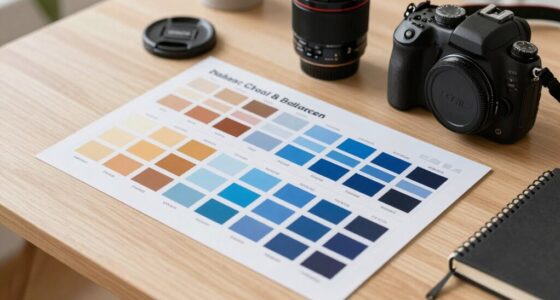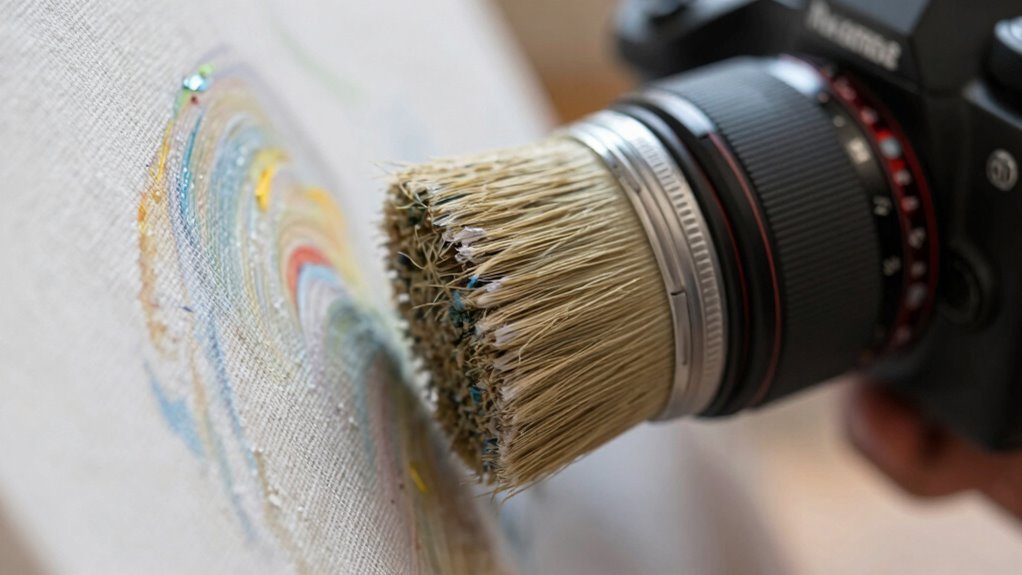
If you want to capture fine brushstrokes and surface textures, a macro lens is your best choice because it excels at close-up work and revealing intricate details with sharpness and depth. Prime lenses are great for overall sharp images and broader compositions, making them versatile for different settings. To get the most from your shots, it’s important to understand their strengths and proper techniques—exploring more will help you improve your art photography skills.
Key Takeaways
- Macro lenses excel at capturing fine textures and surface details, making brushstrokes appear more vivid and detailed.
- Prime lenses offer sharpness and clarity suitable for documenting broader brushstroke patterns with consistent quality.
- Macro lenses are ideal for extreme close-up work, revealing intricate brushstroke textures that prime lenses may not emphasize.
- Prime lenses provide versatility for capturing both detail and overall composition, suitable for various artistic and contextual settings.
- Proper lighting and camera settings are crucial for both lenses to effectively showcase brushstrokes and surface textures.

Xenvo Pro Lens Kit for iPhone and Android, Macro and Wide Angle Lens with LED Light and Travel Case Black
✔ COMPATIBLE WITH ALL SMARTPHONES, TABLETS, and LAPTOPS including ALL iPhone models, Samsung Galaxy and Note, Google Pixel,…
As an affiliate, we earn on qualifying purchases.
As an affiliate, we earn on qualifying purchases.
Which Lens Is Best for Capturing Brushstrokes in Artwork?
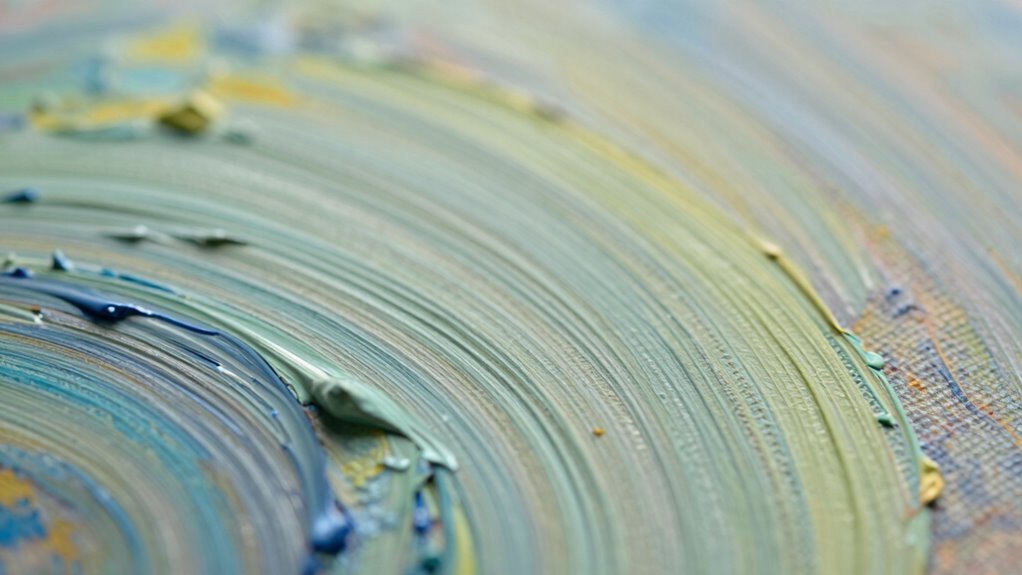
When it comes to capturing the intricate details of brushstrokes in artwork, a macro lens often proves to be the best choice. Its ability to focus closely allows you to highlight fine textures and subtle nuances. With a macro lens, you gain superior color accuracy, ensuring the hues of the paint are true to life, which is essential for art reproduction. Additionally, macro lenses typically minimize lens distortion, preserving the artwork’s original proportions and details. This helps you avoid warping or stretching the brushstrokes, keeping your images authentic. The sharpness and clarity you get from a macro lens make it ideal for showcasing the delicate artistry in each stroke. Overall, it’s the perfect tool for capturing the richness and authenticity of artwork’s details. Furthermore, understanding survival strategies in the context of documenting art can enhance your approach to capturing and preserving these intricate details. This adaptability in digital content formats can lead to more innovative ways of presenting art and its nuances. Moreover, a macro lens often offers high color accuracy that can significantly enhance the visual impact of the artwork. Additionally, the process of capturing art can lead to transformative experiences similar to what is found in twin flame unions, as you discover deeper connections with the creative work.
prime lens for detailed artwork capture
As an affiliate, we earn on qualifying purchases.
As an affiliate, we earn on qualifying purchases.
How Do Macro and Prime Lenses Differ for Art Photography?

While macro lenses excel at capturing fine details and textures, prime lenses offer a different set of advantages for art photography. Prime lenses generally have greater lens durability, making them more reliable for long shooting sessions and challenging environments. They typically feature a fixed focal length, which means less focal length variability, leading to sharper images with fewer optical distortions. This simplicity benefits artists who want consistent results and minimal adjustments. Additionally, emerging applications in photography highlight the importance of selecting the right lens for specific artistic goals. Macro lenses, on the other hand, are specialized for close-up work and often have a more complex design to handle extreme magnification. If your focus is on capturing detailed brushstrokes or textures, macro lenses are ideal. For broader artistic compositions with a need for durability and sharpness, prime lenses are often the better choice. Additionally, investing in top car protection can help protect your equipment and enhance the overall shooting experience. Proper cabling solutions can also prevent potential hazards that might affect your photography setup. Understanding risk management strategies is crucial for protecting your investment in high-quality photography gear.

Vivitar Series 1 +1 +2 +4 +10 Close-Up Macro Filter Set w/Pouch (52mm)
MACRO PHOTOGRAPHY ACCESSORIES: Whether you’ve got a digital camera or dslr camera, our macro lens kit allows you…
As an affiliate, we earn on qualifying purchases.
As an affiliate, we earn on qualifying purchases.
Why Macro Lenses Are Great for Showing Fine Textures

Macro lenses excel at capturing intricate details that go unnoticed to the naked eye. They emphasize surface textures, making every tiny bump and pattern stand out sharply. This ability brings a new level of realism and depth to your close-up shots. Additionally, they can be beneficial for showcasing eco-friendly natural pools that blend seamlessly with their surroundings. Engaging with new experiences through photography can enhance your creative expression and foster a deeper appreciation for the beauty in everyday life, as embracing the elegance of simplicity can elevate your artistic vision. Furthermore, understanding angel numbers can provide spiritual guidance that enhances your creative process. Being aware of early detection signs can also inspire a deeper connection to your subjects, reminding you of the importance of health and awareness in all aspects of life.
Capturing Intricate Details
Thanks to their exceptional close-focusing ability, macro lenses allow you to capture tiny details that often go unnoticed, revealing textures with stunning clarity. When you use a macro lens, you can:
- Highlight fine surface patterns, like the veins in a leaf or the cracks in a dried flower petal.
- Use lighting techniques to emphasize minute textures, creating shadows that add depth and dimension.
- Achieve excellent color accuracy, ensuring subtle tonal variations stand out sharply.
These features help you showcase intricate details that might be lost with a standard lens. Macro lenses excel at revealing the complexity beneath the surface, making every tiny texture pop with precision. This allows for a truly immersive and detailed viewing experience in your photographs.
Emphasizing Surface Textures
Surface textures come to life through the detailed rendering capabilities of macro lenses. They excel at surface enhancement and texture emphasis, revealing the finest nuances of a subject’s surface. With a macro lens, you can capture the intricate ridges, pores, and fibers that often go unnoticed. This focus on fine detail makes macro lenses perfect for showcasing surface textures vividly. By highlighting these textures, you add depth and richness to your images, allowing viewers to almost feel the surface.
| Surface Types | Macro Lens Effect |
|---|---|
| Rough | Shows detailed ridges |
| Smooth | Reveals subtle variations |
| Fibrous | Highlights fibers |
| Porous | Emphasizes pores |

10 Pack Fresnel Lens Magnifying Sheets – Reading, Solar Oven + DIY Projection TV Lenses
Lot of 10 Fresnel Lenses
As an affiliate, we earn on qualifying purchases.
As an affiliate, we earn on qualifying purchases.
When Prime Lenses Help Capture Sharp, Detailed Artwork

Sure! Here’s the revised content with the requested additions:
—
Prime lenses excel at capturing images with exceptional sharpness and clarity, making fine details stand out vividly. When your artwork demands precision, their focused optics guarantee every line and texture is crisp and clear. Using a prime lens lets you highlight the intricate elements that bring your creative vision to life. Additionally, capturing art in urban settings, like cultural festivals, can enhance the overall context and vibrancy of your work. Proper piercing care is essential, ensuring that your artistic expression remains untainted by distractions. Furthermore, the evolution of pinball machines showcases how design impacts engagement, paralleling the attention to detail needed in artistic photography. This attention to detail mirrors the insights found in navigating the AI revolution, where understanding the nuances of technology transforms creative processes. The importance of product roundups can also guide photographers in selecting the best gear for precise captures.
—
Let me know if you need any further adjustments!
Enhanced Sharpness and Clarity
When capturing intricate artwork or detailed scenes, the quality of your lens can profoundly impact the sharpness and clarity of your images. Prime lenses excel here by offering superior optical performance, which enhances:
- Lighting techniques: They handle light more effectively, reducing glare and ensuring even illumination that highlights brushstrokes and textures.
- Color accuracy: Prime lenses deliver truer, more vibrant colors, making artwork appear more lifelike and detailed.
- Edge-to-edge sharpness: Their fixed focal length minimizes distortions, capturing crisp details across the entire frame.
This combination allows you to produce images with remarkable clarity, emphasizing fine details without sacrificing overall image quality. Choosing a prime lens can elevate your ability to showcase the depth and nuance of detailed artwork.
Focus on Fine Details
Capturing fine details in artwork requires a lens that can reveal every subtle nuance with precision. Prime lenses excel here because their fixed focal length often delivers exceptional sharpness and clarity. To maximize this, guarantee lens compatibility with your camera to avoid any image degradation. Good lighting conditions are vital; natural light or controlled studio lighting help highlight delicate brushstrokes without creating harsh shadows or glare. When you focus carefully, a prime lens can capture intricate textures and minute details that truly showcase the artist’s skill. Additionally, understanding the concept of time can influence how we perceive the artistic process and the patience involved in creating such detailed work. The Victorian aesthetic emphasizes the importance of craftsmanship, which parallels the meticulous attention needed in capturing artwork. Keep in mind, the lens’s quality and your ability to control lighting conditions directly influence the level of detail you can achieve. With the right setup, your images will reveal the artwork’s finest features with stunning accuracy. Additionally, understanding maintenance essentials for your camera can ensure optimal performance during your shoots.
Tips for Photographing Brushstrokes With Macro and Prime Lenses
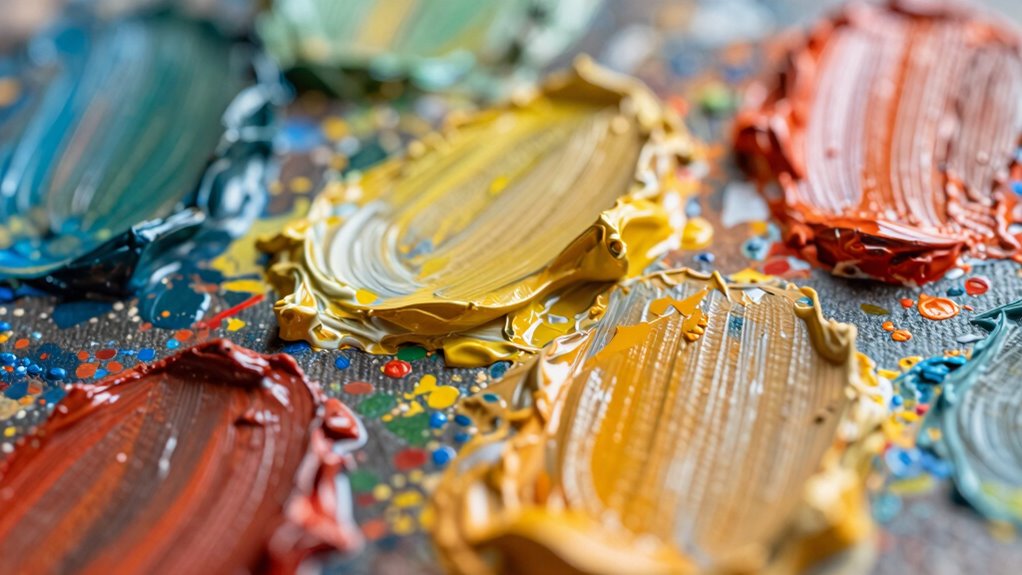
Photographing brushstrokes up close can reveal stunning textures and intricate details, but it requires careful technique. To enhance your shots, consider these tips:
- Use lighting techniques like diffused natural light or softboxes to minimize harsh shadows and highlight texture.
- Choose a background that contrasts with the artwork, such as a neutral or complementary color, to make brushstrokes stand out.
- Adjust your aperture for a shallow depth of field, keeping the brushstrokes sharp while softly blurring the background for focus.
Keep your camera steady with a tripod, and experiment with angles to capture the texture and flow of each stroke. These steps will bring out the beauty of the brushwork in your photos.
What to Consider When Choosing a Lens for Art Documentation?

Choosing the right lens is essential for accurately documenting artwork, as it directly impacts the detail, color accuracy, and overall quality of your images. Consider how lighting conditions affect your shot—natural light may require different camera settings than studio lighting. Think about your camera settings, including aperture, ISO, and shutter speed, to guarantee sharpness and proper exposure. A macro lens can capture fine brushstrokes but may need more controlled lighting, while a prime lens offers versatility with a wider aperture for better depth of field. Decide based on your subject’s size and detail level. Ultimately, understanding how lighting conditions and camera settings interact will help you select the best lens for capturing your artwork’s true essence.
Common Mistakes and How to Improve Your Art Photography
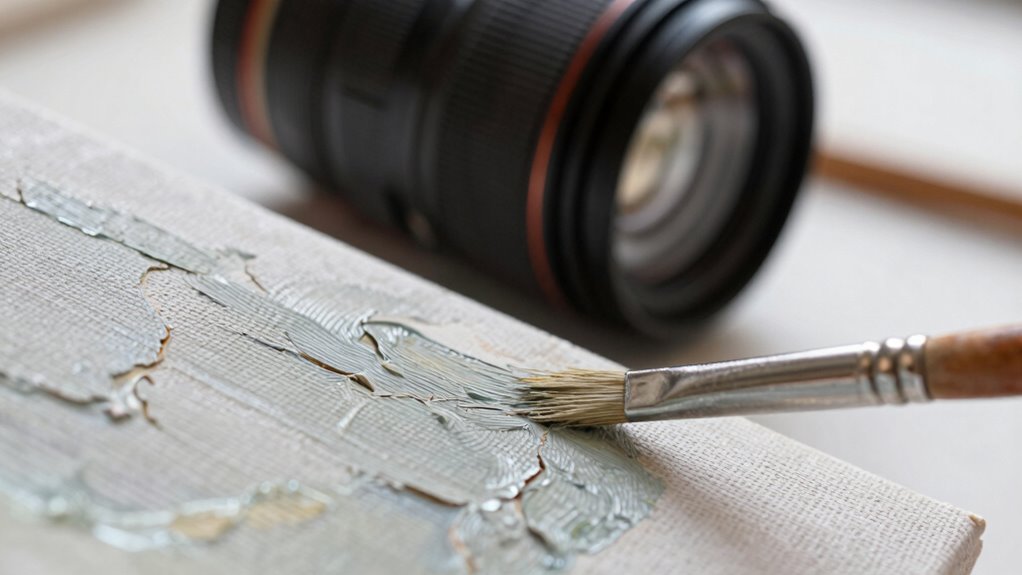
One common mistake in art photography is neglecting the importance of proper lighting, which can lead to dull colors, harsh shadows, or loss of detail. To improve, focus on refining your lighting techniques and ensuring color accuracy. Additionally, understanding lighting techniques can greatly enhance the way your brushstrokes are captured.
Consider these steps:
- Use diffused light sources to soften shadows and highlight brushstrokes without harsh contrasts.
- Adjust your white balance settings for true-to-life colors, enhancing color accuracy. Additionally, understanding cloud service vulnerabilities can help you appreciate how external factors may impact your photography environment.
- Experiment with different angles and light intensities to reveal textures and details effectively. Additionally, incorporating elements of regional flavor profiles can add depth to the narrative of your art photography, enhancing its overall storytelling.
Frequently Asked Questions
Can Macro or Prime Lenses Be Used for 3D Artwork Photography?
Yes, you can use macro or prime lenses for 3D artwork photography, but keep in mind their strengths and limitations. Macro lenses excel at capturing fine details and textures, enhancing artistic expression. Prime lenses offer sharp, high-quality images with minimal technical limitations like distortion. Your choice depends on whether you want close-up detail or overall clarity, but both can beautifully showcase 3D artwork when used thoughtfully.
How Does Lighting Affect Brushstroke Capture With Different Lenses?
Lighting dances like sunlight on a canvas, revealing every brushstroke’s texture and nuance. Your lighting techniques cast shadows and highlights, making each stroke pop or recede. Using soft, diffused light enhances color accuracy, capturing the true vibrancy of the artwork. Bright, directional light emphasizes details, but too harsh can wash out subtleties. Adjust your lighting to balance clarity and mood, ensuring your lens captures the brushstrokes’ vivid story.
Are There Specific Brands Recommended for Art Photography Lenses?
You should consider brands like Canon, Nikon, and Sony for art photography lenses, as they offer excellent options that enhance detail and color accuracy. An artistic lens from these brands can help you capture brushstrokes with clarity and depth. Look for specific recommendations like Canon’s EF 100mm macro or Sony’s FE 85mm prime, which are favored by artists for their sharpness and beautiful bokeh.
What Camera Settings Optimize Lens Performance for Detailed Artwork?
You should start by adjusting your aperture control to a smaller f-stop, like f/8 or higher, for greater depth of field and sharp details. Keep your ISO optimized by setting it as low as possible to minimize noise, especially in well-lit environments. Use a tripod for stability, and manually focus to guarantee the brushstrokes are crisp. These settings help you capture intricate artwork with clarity and precision.
How Do Lens Focal Lengths Influence the Portrayal of Texture Depth?
You see, focal length effects are like a window into depth perception, shaping how textures come alive. Longer focal lengths compress space, making brushstrokes appear flatter, while shorter ones expand the scene, highlighting subtle textures and depth. Your choice influences how vivid the artwork feels, allowing you to emphasize the tactile qualities. So, pick your focal length wisely to bring out the richness and dimensionality in your artistic captures.
Conclusion
Think of choosing between a macro and prime lens like selecting the right brush for your masterpiece. I once watched an artist zoom in with a macro lens, revealing textures like a magnifying glass revealing hidden details, much like discovering a secret garden. Whether capturing delicate brushstrokes or sharp details, your choice shapes the story your photos tell. With the right lens, you turn each shot into a vivid window, inviting viewers to step inside your artistic world.