
To prepare your artwork for shipping, start by choosing sturdy, high-quality packaging like double-walled boxes, foam padding, or custom crates for fragile pieces. Wrap each item carefully, labeling the package as “Fragile” and “Handle with Care.” Don’t forget to document its condition beforehand. Additionally, select thorough insurance to cover potential damages or loss. Following these steps ensures your artwork stays safe during transit; keep going to discover more essential tips.
Key Takeaways
- Use sturdy, high-quality packaging materials like double-walled boxes, foam padding, and bubble wrap to protect artwork during transit.
- Clearly label packages with “Fragile” and “Handle with Care” to ensure proper handling and minimize damage risks.
- Document artwork’s condition with photos and detailed descriptions before shipping for insurance claims if needed.
- Obtain comprehensive insurance coverage that reflects the artwork’s true value, through shipping companies or specialized insurers.
- Incorporate buffer time in your shipping plan for customs clearance, inspections, and unforeseen delays to ensure timely delivery.
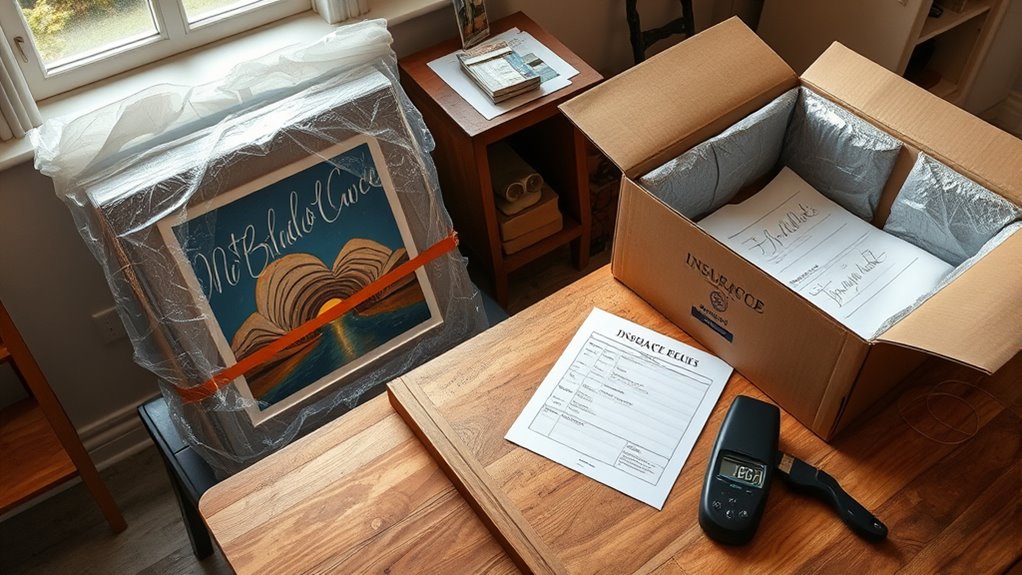
Shipping artwork requires careful preparation to guarantee it arrives safely and intact. When you’re planning to send valuable or fragile pieces, you need to be aware of the customs regulations that could impact your shipment. Different countries have specific rules about what can be imported or exported, and failing to comply can cause delays or even confiscation of your artwork. Before you pack, research the destination country’s customs requirements, including necessary paperwork like export licenses or valuation documents. Ensuring these are in order helps avoid unnecessary hold-ups, especially if you’re working under tight shipping deadlines. Being proactive about customs paperwork minimizes surprises and keeps your project on schedule.
Proper customs documentation ensures smooth international art shipments and prevents delays or confiscation.
Timing is essential when shipping artwork, so you should always plan ahead to meet your deadlines. Rushing at the last minute can lead to improper packing or overlooked documentation, increasing the risk of damage or delays. Factor in extra time for customs clearance and potential inspections, particularly if your artwork is large, valuable, or internationally shipped. Staying aware of your shipping deadlines allows you to choose the right courier service and shipping method, ensuring your artwork arrives when needed. If you’re working within a gallery exhibition schedule or a client’s deadline, build buffer time into your plan to accommodate any unforeseen delays. This way, you won’t be caught off guard, and your artwork will reach its destination on time.
Proper packaging is essential to safeguard your artwork during transit. Use sturdy, high-quality materials like double-walled boxes, foam padding, and acid-free tissue paper to protect delicate surfaces. Wrap each piece carefully, securing corners and edges that are most vulnerable to damage. Incorporate shock-absorbing materials like bubble wrap or foam to cushion the artwork against impacts. Label the package with “Fragile” and “Handle with Care” to alert handlers, and consider using custom crates for particularly valuable or fragile pieces. Clear labeling not only helps prevent mishandling but also ensures that your artwork is handled with the appropriate care throughout its journey. Additionally, selecting appropriate packaging materials helps to minimize environmental impact and supports sustainable practices.
Insurance plays a key role in protecting your investment. Always opt for extensive coverage that reflects the true value of your artwork. Check if the shipping company offers insurance options or consider purchasing standalone coverage from a specialized insurer. Document the condition of your artwork before shipping with photos and written descriptions; this evidence can be invaluable if you need to file a claim. Remember, insurance reduces your financial risk in case of loss, theft, or damage during transit. By combining meticulous packaging with reliable insurance, you give your artwork the best chance of arriving in perfect condition, ready to be appreciated by its new owner.
Frequently Asked Questions
How Do I Determine the Appropriate Insurance Coverage for Valuable Artwork?
To determine the appropriate insurance coverage for valuable artwork, start with an insurance estimation based on its current market value or appraised worth. Review coverage guidelines from your insurer to make certain all potential risks are addressed. Consider additional coverage for high-value pieces or unique risks like theft or damage. Always document the artwork’s condition and value before shipping, and consult with specialists if needed to ensure you’re fully protected.
What Are the Best Materials for Custom Artwork Packaging?
You should choose sturdy materials like reinforced cardboard or custom foam padding for your artwork packaging. Use artwork framing options such as bubble wrap or corner protectors to prevent damage. Incorporate custom packaging techniques like double-boxing and cushioned inserts to secure your piece. These materials and methods guarantee your artwork stays safe during transit, reducing the risk of damage and making sure it arrives in perfect condition.
How Should I Document Artwork Condition Before Shipping?
You should thoroughly document the artwork condition before shipping by taking clear, detailed photos from multiple angles, including close-ups of any existing damage or unique features. Write a detailed shipping documentation that notes the artwork’s condition, dimensions, and any special handling instructions. Keep these records safe, as they serve as essential proof in case of damage or disputes, ensuring you’re protected and can verify the artwork’s state upon arrival.
What Are Common Shipping Carriers for Fragile Artwork?
You should consider shipping carriers like FedEx, UPS, or DHL, known for handling fragile artwork carefully. They follow strict artwork handling protocols and adhere to shipping regulations to guarantee your piece arrives safely. When choosing a carrier, verify their experience with delicate items and inquire about special handling options. Always track your shipment and confirm delivery to prevent damage or loss, following proper shipping regulations for fragile artwork.
How Do I Handle International Artwork Shipments and Customs?
When handling international artwork shipments, you need to complete all necessary customs documentation accurately and promptly. Familiarize yourself with international shipping regulations to make certain smooth clearance and avoid delays. Properly declare the artwork’s value and description, and include invoices if required. Work with a reliable carrier experienced in international shipping, and track your shipment closely. This approach helps protect your artwork and ensures it reaches its destination safely and on time.
Conclusion
Now that you know how to prepare your artwork for shipping—protecting it, packaging it, insuring it—you’re ready to guarantee its safe journey. By choosing the right materials, securing proper insurance, and carefully packing each piece, you safeguard your creation from damage and loss. Remember, preparation is key. With attention to detail and care, you’ll deliver your artwork safely, confidently, and professionally—ready for display and admiration, no matter where it travels.