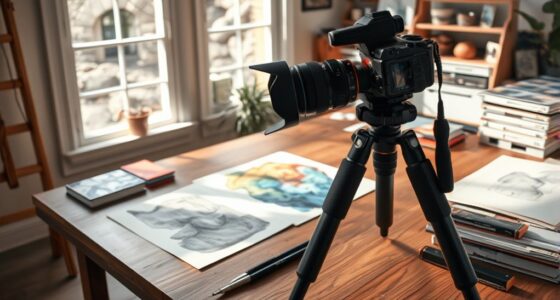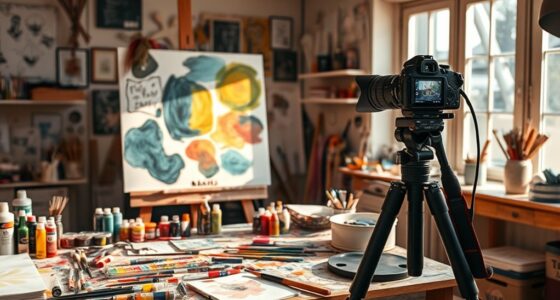
To prepare for art fairs, plan your logistics carefully by selecting reliable shippers, packing artworks securely, and scheduling pickups well in advance. Visualize your booth layout to maximize impact and create an inviting flow that highlights your art. Pay attention to lighting, display fixtures, and visitor navigation to guarantee a professional presentation. Organize your inventory and tools ahead of time, and consider contingency plans for delays. Keep exploring for deeper strategies to make your booth stand out.
Key Takeaways
- Plan artwork placement and booth layout to maximize visual impact and visitor flow.
- Select reliable shipping providers and use high-quality packing materials for safe transportation.
- Schedule pickups, deliveries, and setup time carefully, allowing buffer for delays and contingencies.
- Prepare detailed inventory, labels, and display hardware to streamline setup and avoid last-minute issues.
- Use effective lighting and adaptable fixtures to create an inviting, professional atmosphere that highlights your artwork.
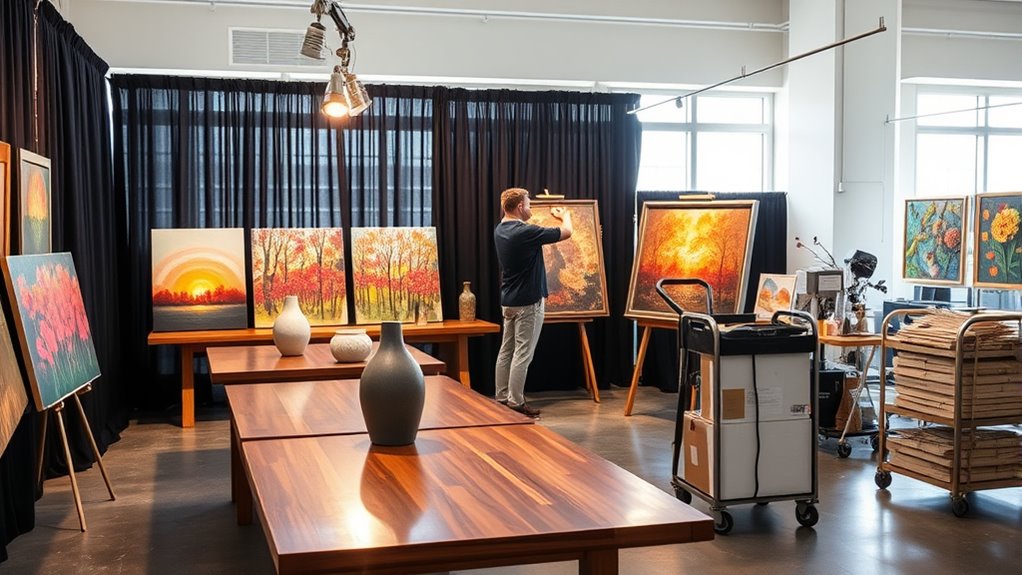
Are you ready to make a strong impression at your next art fair? If so, your success hinges on meticulous preparation, especially when it comes to gallery setup and transportation planning. These elements are vital for ensuring your artwork arrives in pristine condition and your booth looks professional and inviting. Starting with gallery setup, you want to think about how your space will showcase your work. Visualize each piece’s placement, ensuring there’s enough breathing room to highlight individual artworks without clutter. Consider the flow of traffic, making it easy for visitors to navigate your booth comfortably. Use proper lighting to enhance your pieces and create an inviting atmosphere. Bringing display fixtures that are easy to assemble and adaptable to different layouts can save time and stress during setup. Remember, a well-organized gallery setup not only draws attention but also communicates your artistic vision clearly. Additionally, consider how artwork display techniques can maximize visual impact and attract more visitors to your booth.
Transportation planning is equally essential. You need to determine the best way to get your artwork to the fair, minimizing the risk of damage or delays. This involves selecting reliable shipping providers experienced in handling art. Pack your pieces carefully using high-quality materials like bubble wrap, foam padding, and sturdy boxes tailored to each artwork’s size and fragility. Label everything clearly with handling instructions and ensure all packages are securely sealed. If you’re transporting artwork personally, plan your route ahead of time, considering traffic, parking, and accessibility at both your starting point and the venue. It’s wise to schedule plenty of buffer time for loading and unloading, especially if the venue has strict delivery hours. Double-check that your transportation method includes insurance coverage, so you’re protected against potential damages or losses. If you’re working with a freight service, confirm pickup and delivery times well in advance and stay in close contact with the handlers to track your shipment’s progress.
In addition to packing and transportation, prepare a detailed inventory of all your works, including photographs, descriptions, and values. This will smooth out the check-in process and help manage your inventory during the fair. Also, consider the logistics of setting up your booth—have all tools, cables, and display hardware ready and organized. Being proactive about transportation planning and gallery setup means you’ll avoid last-minute surprises, giving you more time to focus on engaging with visitors and showcasing your art. With thorough preparation, you’ll arrive confident, ready to make the best impression possible at your next art fair.

EZVALO Picture Light for Wall, 4800mAh Rechargeable Wireless Remote Battery Lights for Painting, 16In Dimmable Magnetic LED Art Display Light, Colors Temperatures, for Gallery, Living Room,Hallway
USB Rechargeable & Easy Charge: Our picture light with with built-in 4800mAh large-capacity battery and comes with a…
As an affiliate, we earn on qualifying purchases.
As an affiliate, we earn on qualifying purchases.
Frequently Asked Questions
How Early Should I Arrive Before the Art Fair Opens?
You should aim for an early arrival, ideally about 1-2 hours before the art fair opens. This gives you ample time to handle last-minute setup, check your display, and settle in without stress. Timing tips include arriving early to beat traffic and avoid last-minute chaos. An early arrival guarantees you’re prepared and relaxed, making a strong first impression when the doors open.
What Insurance Coverage Is Recommended for Artwork During Transport?
Did you know that over 60% of art transit damages happen during transport? To protect your artwork, you should get extensive art transport insurance that offers adequate artwork coverage. Make certain it covers theft, damage, and environmental risks. This way, you’re financially protected if accidents occur. Always review the policy carefully, and consider consulting a specialist to guarantee your valuable pieces are fully covered during every stage of transport.
How Can I Effectively Price My Artwork for Different Art Fairs?
You should start by researching pricing strategies that suit your art style and target audience. Conduct market research to see what similar artists are charging at different art fairs. Adjust your prices based on factors like size, medium, and uniqueness. Be flexible and prepared to negotiate, but always stay consistent with your pricing approach. This guarantees your artwork remains competitive while reflecting its true value across various events.
What Are Common Mistakes to Avoid During Setup and Presentation?
Avoid cluttering your stall and guarantee your display lighting highlights your artwork effectively. Keep your stall organized, so visitors can easily navigate and focus on your pieces. Don’t neglect proper lighting, which can make your art pop and attract attention. Be mindful of your presentation, maintaining a professional appearance. These mistakes can hinder your sales, so plan ahead to create an inviting, well-lit, and organized space that showcases your art beautifully.
How Do I Handle Sales Tax and Billing for International Buyers?
You might worry about handling sales tax and billing for international buyers, but it’s manageable. First, clarify your local sales tax obligations and inform buyers about any applicable taxes. Use clear customs paperwork to avoid delays, and offer international payment methods like PayPal or credit cards to simplify transactions. Keep detailed records, including invoices and receipts, to make certain smooth customs clearance and accurate tax reporting.

How to Set Up Photography Lighting for a Home Studio
As an affiliate, we earn on qualifying purchases.
As an affiliate, we earn on qualifying purchases.
Conclusion
Now that you’ve covered the logistics and presentation, you’re all set to make a splash at the art fair. Remember, preparation is key—you don’t want to be caught off guard. Keep your artworks polished, your booth inviting, and your team ready to engage. When everything falls into place, you’ll be hitting two birds with one stone: impressing visitors and building your reputation. Stay sharp, and let your art do the talking!
![Bubble Cushioning Wrap Rolls, 3/16" x 12" x 72' ft Total [2 Rolls of 36 Feet] Perforated Every 12", 20 Fragile Stickers for Packaging, Shipping, Mailing](https://m.media-amazon.com/images/I/41azI2zaEYL._SL500_.jpg)
Bubble Cushioning Wrap Rolls, 3/16" x 12" x 72' ft Total [2 Rolls of 36 Feet] Perforated Every 12", 20 Fragile Stickers for Packaging, Shipping, Mailing
Premium quality: Made from original nylon bubble, strong, flexible, lightweight, well tear, and moisture resistant. Easy to store…
As an affiliate, we earn on qualifying purchases.
As an affiliate, we earn on qualifying purchases.

National Flood Insurance Program — Flood Insurance Manual: April 2024
As an affiliate, we earn on qualifying purchases.
As an affiliate, we earn on qualifying purchases.