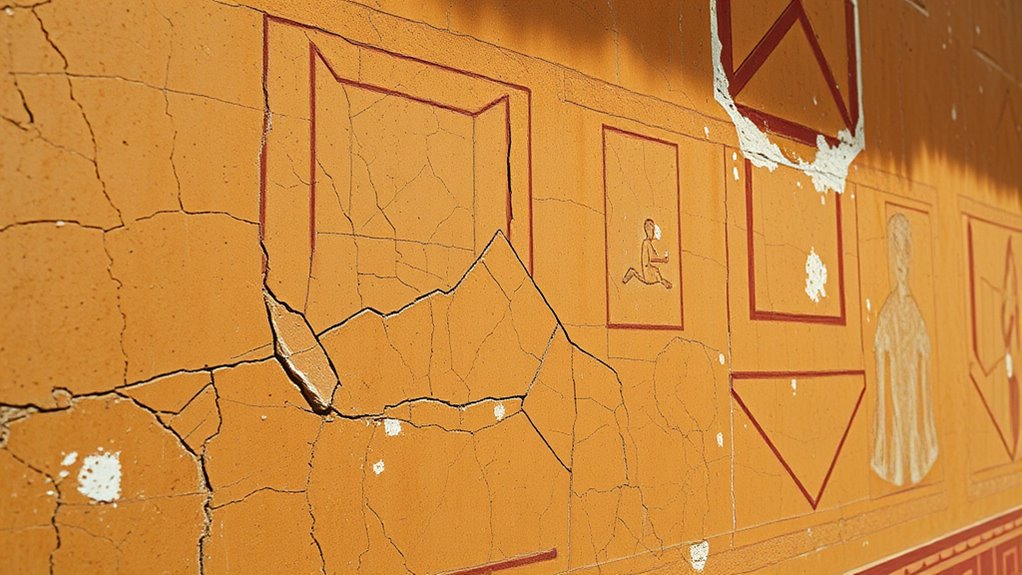

Fresco painting is an ancient technique where you apply mineral pigments onto wet plaster, creating long-lasting murals. It dates back to civilizations like the Romans and Renaissance masters such as Michelangelo. Today, artists still use fresco methods, blending traditional skills with modern materials for better durability and effects. Preserving these artworks involves advanced conservation techniques, ensuring they withstand time’s passage. If you explore further, you’ll discover how this ancient craft continues to inspire contemporary art and innovation.
Key Takeaways
- Fresco painting dates back to ancient civilizations like Egypt, Greece, and especially the Renaissance period in Italy.
- Traditional fresco involves applying pigments onto wet plaster, ensuring long-lasting color bonds.
- Preservation challenges include environmental factors, pollution, and human activity, requiring specialized conservation techniques.
- Modern applications incorporate new materials and methods to enhance durability while maintaining traditional aesthetics.
- Contemporary artists and conservators continue to explore fresco techniques, blending historical practices with innovative technologies.

Fresco painting is an ancient art form that involves applying pigment directly onto wet plaster, creating vibrant and durable murals. To master this technique, you need to understand the materials and techniques involved. You start with a sturdy, finely prepared plaster surface, typically made from lime mixed with sand or marble dust. Artists carefully apply a rough layer called the arriccio, followed by a smooth, thin layer called the intonaco, which is where you’ll paint. The pigments you use are natural mineral or earth-based, mixed with water so they bond with the wet plaster as it dries. This process requires speed and precision because the colors become an integral part of the wall once the plaster hardens. You often work in sections called giornate, meaning “a day’s work,” since the plaster needs to stay moist for the pigments to fuse properly. The success of a fresco depends heavily on your ability to work quickly and accurately, as any interruption might result in visible seams or uneven coloration. While this technique produces vivid, long-lasting images, it also presents preservation challenges. Over centuries, frescoes are vulnerable to environmental factors such as humidity, temperature fluctuations, and pollution, which can cause the plaster to deteriorate or delaminate. Additionally, human activity like touching or vandalism can cause damage, and restorers must be cautious when repairing these ancient murals to avoid compromising their authenticity. The porous nature of the plaster makes it susceptible to moisture ingress, which can lead to mold growth or flaking paint. Because of these issues, preservation requires specialized techniques, including careful cleaning, consolidation, and sometimes inpainting, all performed by professionals trained in conservation. Modern applications of fresco painting still face these challenges, but advances in materials and conservation science have improved how we protect and restore these works. You might find contemporary artists experimenting with fresco techniques, using modern, more resistant materials while respecting the traditional methods. However, the core principles of working swiftly on wet plaster and understanding the chemistry of pigments remain essential. As a fresco artist or conservator, you must continuously adapt to preserve this fragile yet resilient form of art. The timeless appeal of frescoes lies in their ability to connect you with a centuries-old tradition of craftsmanship, yet their preservation demands ongoing effort and expertise. Advances in conservation science have further contributed to the ongoing efforts to preserve these historic artworks for future generations. Whether creating new murals or restoring historic masterpieces, understanding the materials, techniques, and preservation challenges is fundamental to ensure that this ancient art form endures for future generations.
Frequently Asked Questions
How Durable Are Fresco Paintings Over Centuries?
Fresco paintings can last centuries if well-maintained, but age-related deterioration and environmental impact can affect their durability. You might notice fading, cracking, or flaking over time due to moisture, temperature changes, or pollution. Proper conservation efforts help preserve these artworks, but exposure to harsh conditions can accelerate decay. Overall, with care, frescoes remain remarkably resilient, often surviving for hundreds of years despite the inevitable effects of aging and the environment.
What Are the Main Differences Between True Fresco and Secco?
Oh, the timeless art of fresco! True fresco uses wet plaster, so your masterpiece becomes part of the wall, making it super durable. Secco, on the other hand, applies paint on dry plaster, inviting cracks and peeling—like your favorite old wallpaper. The main difference? Wall preparation and the painting process. True fresco requires meticulous wall prep and quick work, while secco’s more forgiving, but less lasting, technique.
Which Pigments Are Best Suited for Fresco Painting?
You should use natural earth pigments like ochre, umber, and sienna for fresco painting, as they bond well with lime plaster and age beautifully. Avoid synthetic colorants, which don’t adhere properly and may fade over time. These natural pigments provide rich, durable colors that enhance the longevity and authenticity of your fresco, ensuring your artwork retains its vibrancy for years to come.
How Long Does It Typically Take to Complete a Fresco?
You typically spend several days to weeks completing a fresco, depending on its size and complexity. The time commitment varies because of the artistic process involved, which includes preparing the wall, applying the plaster, and carefully painting on wet plaster. Patience is key, as you need to work quickly and precisely to create durable, vibrant artwork that lasts centuries. Your dedication directly influences the final quality of your fresco.
Are Modern Materials Compatible With Traditional Fresco Techniques?
Yes, modern materials can be compatible with traditional fresco techniques. You can use synthetic binders that blend well with lime plaster, ensuring durability and adhesion. Additionally, modern substrates like lightweight boards or specially prepared surfaces can replace traditional wall materials, making fresco painting more accessible and practical. Just make sure to test compatibility beforehand, as some materials might alter the authentic look or longevity of your fresco.
Conclusion
Fresco painting connects the past to the present, tradition to innovation, and artistry to expression. It reminds you that history shapes your creativity, that craftsmanship endures through time, and that each brushstroke carries a story worth telling. As you explore its legacy and modern uses, remember that frescoes are more than art—they’re a declaration to resilience, passion, and the timeless desire to leave a lasting mark. Embrace this craft, and let your creativity flourish.