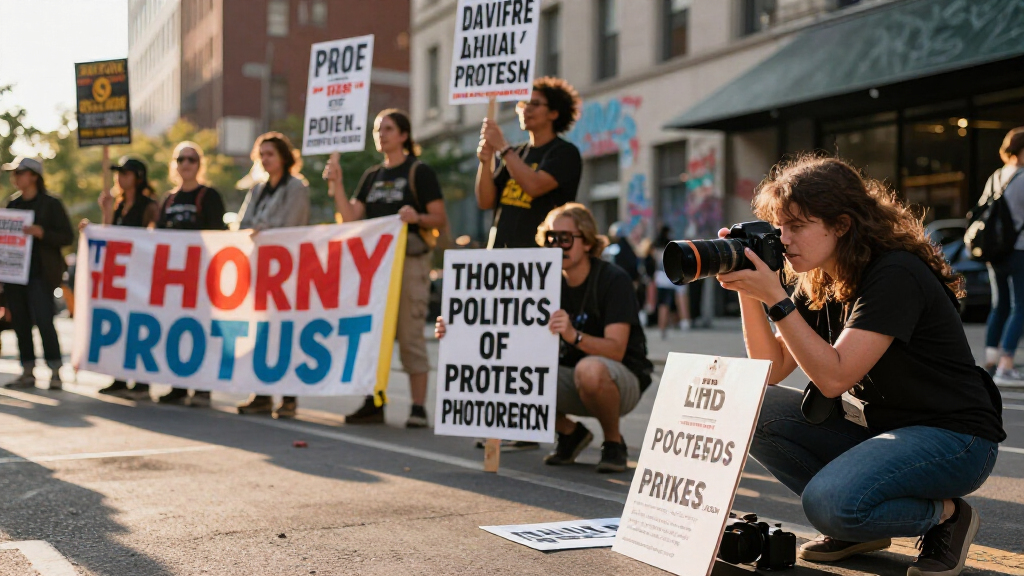

TL;DR
Protest photographers are facing mounting legal and political pressures, with authorities and groups challenging their work. This raises questions about press freedom, ethics, and the role of visual documentation in activism.
Protest photographers worldwide are increasingly confronting legal restrictions, police harassment, and political opposition, highlighting the complex and often contentious role of visual documentation in social movements.

Get art and craft supplies delivered free with Prime
- Fast, free delivery on millions of items
- Prime Video, Amazon Music and more included
- Member-only deals all year
Recent incidents include photographers being detained or fined during protests in multiple countries, with authorities citing reasons such as national security or public order. Activists and press freedom advocates argue these actions threaten the independence of photojournalism and the ability of citizens to document protests.
Legal cases are emerging where photographers face charges for capturing images in restricted areas or for sharing images deemed sensitive by authorities. Some governments have introduced or proposed legislation aimed at regulating or limiting the work of protest photographers, citing concerns over misinformation or security threats.
At the same time, groups opposing protests have targeted photographers, accusing them of bias or of inciting unrest, which complicates the ethical landscape of protest photography. The debate centers on whether photographers are acting as independent journalists or as participants in the protests themselves.
Implications for Press Freedom and Citizen Documentation
This trend underscores the growing challenges to press freedom and the right of citizens to document public events. Restrictions on protest photography can hinder transparency, accountability, and the public’s understanding of social movements. The legal and political pressures faced by photographers may also influence how protests are covered and perceived, potentially shaping public opinion and policy responses.
Popular right now

Vitamix Nano Personal Blender with SmoothiePilot Technology, Black

KitchenAid Artisan Mini Tilt-Head Stand Mixer, 3.5 Quart, Aqua Sky Blue

Dyson Airwrap i.d. Multi-Styler
As an affiliate, we earn on qualifying purchases.
Legal and Political Challenges Facing Protest Photographers
Over the past year, multiple incidents have highlighted the contentious environment for protest photographers. In some countries, authorities have detained photographers for capturing images near sensitive sites or during demonstrations, citing security concerns. Legislation proposals in various regions aim to restrict photography in certain areas or impose fines for sharing images that authorities consider harmful.
Historically, protest photography has played a vital role in documenting social movements, from the civil rights era to recent protests in Hong Kong, Chile, and the United States. However, current political climates and security narratives are increasingly used to justify restrictions, raising concerns among journalists and human rights advocates.
Some legal experts warn that such restrictions may violate constitutional rights to free expression and press freedom, but governments argue they are necessary for security and order.
Unclear Impact of New Restrictions on Photojournalism
It remains unclear how widespread and lasting the legal restrictions will be, and whether courts will uphold or strike down these measures. The long-term impact on the work and safety of protest photographers is still developing, with some cases pending resolution.
Legal Challenges and Advocacy Efforts in Progress
Legal challenges against restrictive laws are expected to proceed in several jurisdictions, with advocacy groups mobilizing to defend protest photographers’ rights. Monitoring of new legislation and court rulings will be crucial in understanding the future landscape for protest documentation.
Key Questions
Why are authorities restricting protest photography?
Authorities cite reasons such as national security, public order, and misinformation concerns, but critics argue these restrictions hinder press freedom and transparency.
Are protest photographers protected by law?
Protection varies by country; in some regions, laws support press freedom, but recent restrictions and arrests suggest protections are under threat in others.
How are protest groups responding to these restrictions?
Some groups are organizing legal support, advocating for free speech, and documenting restrictions themselves to raise awareness about the issue.
Will these restrictions affect future protests?
Potentially, as fear of legal repercussions may deter photographers and participants, impacting the visibility and documentation of social movements.
Source: rss