TL;DR

Get art and craft supplies delivered free with Prime
- Fast, free delivery on millions of items
- Prime Video, Amazon Music and more included
- Member-only deals all year
Hyperallergic published Valentina Di Liscia’s interview with Colombian artist Doris Salcedo about memory, political violence and public resistance. The conversation follows the removal of objects tied to LGBTQ+, feminist and left-wing histories from Bogotá’s National Museum and their reinstatement by court order within two weeks. The report does not give the interview’s publication date or identify the court.
Colombian artist Doris Salcedo spoke with Hyperallergic about memory and resistance after objects connected to LGBTQ+, feminist and left-wing histories were removed from Bogotá’s Museo Nacional on October 15 and reinstated within two weeks under a court order. The episode prompted protests and renewed debate over who gets to represent Colombia’s political past in public institutions, according to the report by senior editor Valentina Di Liscia.
The objects taken off display included works and materials related to LGBTQ+ and feminist movements, Colombia’s 2016 peace agreement with the Revolutionary Armed Forces of Colombia (FARC), and the political campaigns of Carlos Pizarro and Bernardo Jaramillo Ossa. Both left-wing leaders were assassinated in the 1990s. The report says President Abelardo de la Espriella ordered their removal and had described Pizarro and Jaramillo Ossa as “terrorists.”
The removal drew public opposition. Hundreds of people protested, and the report says protesters faced police repression. A court order led to the objects’ return within two weeks. The source does not provide the text of the order, name the court, or specify whether the restored display exactly matched the earlier presentation.
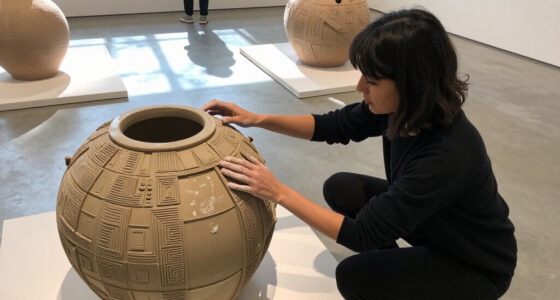
Di Liscia’s interview turns from the museum dispute to Salcedo’s work and the continuing effects of political violence. The report describes Salcedo’s sculptures as evoking victims of Colombia’s conflicts by articulating “the contours of their absence”, rather than simply presenting memory as a look backward. It says the discussion addresses state efforts to erase history, generational wounds and how Colombian artists are making paths forward.
A Museum Dispute Over Public Memory
The dispute matters because museums shape which histories are visible and how they are presented. Removing materials about social movements, peace-making and assassinated political figures can affect how visitors encounter contested periods in Colombia’s past. Their reinstatement after public protest and a court order shows that the decision did not stand, though the source does not explain the legal reasoning.
Salcedo’s perspective connects the institutional dispute to the human consequences of political violence. Her work, as described by Di Liscia, treats absence as something that can be made perceptible without claiming to repair loss. That framing gives the interview a wider relevance: struggles over archives and displays concern not only what is preserved, but also how communities recognize people and events that have been marginalized or suppressed.
Popular right now

Samsung QN65LS03FAFXZA 65 The Frame QLED 4K Art Mode Vision AI Smart TV (2025)

Breville BES870XL Barista Express Espresso Machine, Brushed Stainless Steel

Samsung 65-Inch The Frame Pro Neo QLED 4K TV (2026) Bundle with Modern Brown Bezel, HDMI Cables, and Home Theater Guide
As an affiliate, we earn on qualifying purchases.
Colombia’s Contested Historical Record
The museum episode sits against a history marked by decades of violence and the 2016 peace agreement with the FARC. The objects included material connected to that agreement and to political figures killed in the 1990s, linking the removal to more than one moment in the country’s recent past. The supplied report does not detail the objects individually or describe the museum’s curatorial rationale for displaying them.
Salcedo has made the effects of violence and loss central to her artistic practice, according to the report. Di Liscia frames her sculpture as a way of engaging with victims’ absence. The interview also considers how Colombian artists respond to attempts to erase history and how successive generations carry the effects of political violence.
““terrorists””
— Abelardo de la Espriella, as quoted in the supplied report
Questions Around the Court Order
The supplied material does not identify the court that ordered the objects reinstated, explain its legal basis, or say whether the ruling is final. It also does not make clear who selected the objects for removal, what formal explanation was given, or whether the president’s order covered every object described in the report.
The source summarizes Di Liscia’s conversation with Salcedo but does not include a transcript or direct answers from the artist. Details about any ongoing legal or museum proceedings, the protesters’ treatment, and changes to display policy are not provided. Those gaps limit what can be concluded about the dispute beyond the removal, public response and court-ordered return reported here.
The Museum’s Next Public Record
The objects had been returned within two weeks of their October 15 removal, according to Hyperallergic. The supplied report does not announce a further hearing, museum review or government response, so no next legal or institutional milestone is confirmed. The immediate development to watch is whether the museum keeps the materials on display and whether authorities or the court provide further explanation of the decision.
Salcedo’s interview also points to a broader continuing question: how artists and cultural institutions respond when accounts of political violence are challenged. The source describes that discussion but does not give a formal next project or public event from the artist. Further details would be needed to establish what changes, if any, follow from the dispute.
Key Questions
What happened at Bogotá’s National Museum?
On October 15, objects tied to LGBTQ+, feminist and left-wing histories, the 2016 FARC peace agreement, and two assassinated political leaders were removed from display. A court order led to their return within two weeks, according to Hyperallergic.
Why were the objects removed?
The supplied report says President Abelardo de la Espriella ordered the removal, but it does not provide a full formal explanation or identify the person or office that selected each object.
What did Doris Salcedo discuss?
Salcedo spoke with Hyperallergic’s Valentina Di Liscia about memory, attempts to erase history, generational effects of political violence, and Colombian artists’ efforts to build paths forward.
Were the objects restored to the museum?
Yes. The report says a court order reinstated them within two weeks. It does not specify whether the display was restored in precisely the same form or whether later changes are planned.
Source: hyperallergic.com