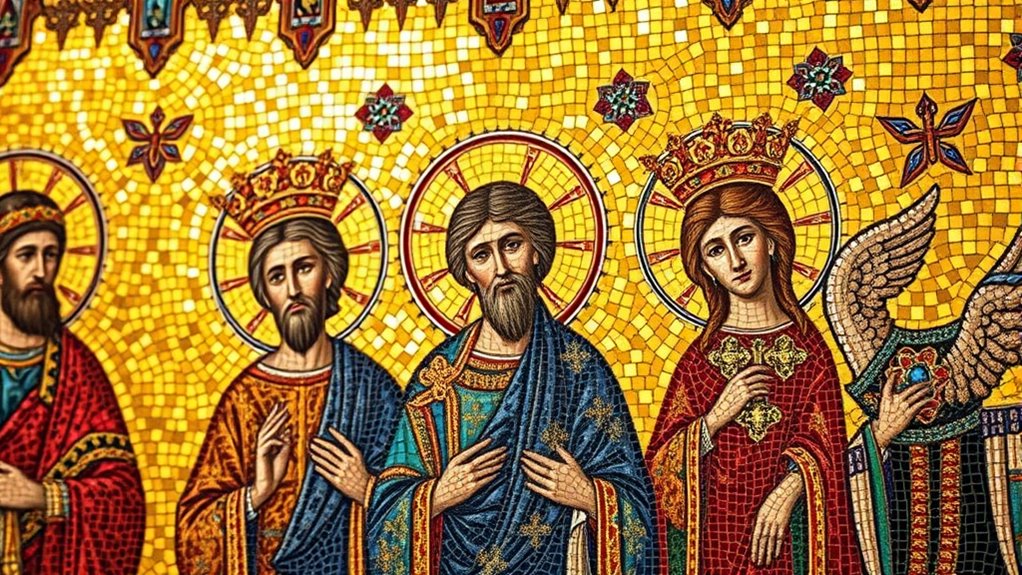

Byzantine mosaics are stunning examples of sacred art created with gold and glass tesserae that depict religious stories and figures. These intricate artworks are designed to inspire awe and elevate your spiritual reflection through their shimmering surfaces and symbolic imagery. The use of gold backgrounds and detailed craftsmanship aims to convey divine light and presence, making them more than just decoration. Stick around to discover how these mosaics blend artistry and faith to create timeless expressions of devotion.
Key Takeaways
- Byzantine mosaics decorate churches and palaces, showcasing religious iconography and spiritual narratives through intricate visual storytelling.
- Gold tesserae symbolize divine light, creating radiant effects that enhance the sacred and otherworldly atmosphere.
- Crafted with tiny glass, stone, and gold pieces arranged in detailed patterns to achieve depth, luminosity, and enduring brilliance.
- Positioned in prominent locations like domes and apses to inspire awe and elevate spiritual reflection for viewers.
- These mosaics serve as lasting acts of devotion, combining artistry and symbolism to convey profound religious and theological messages.
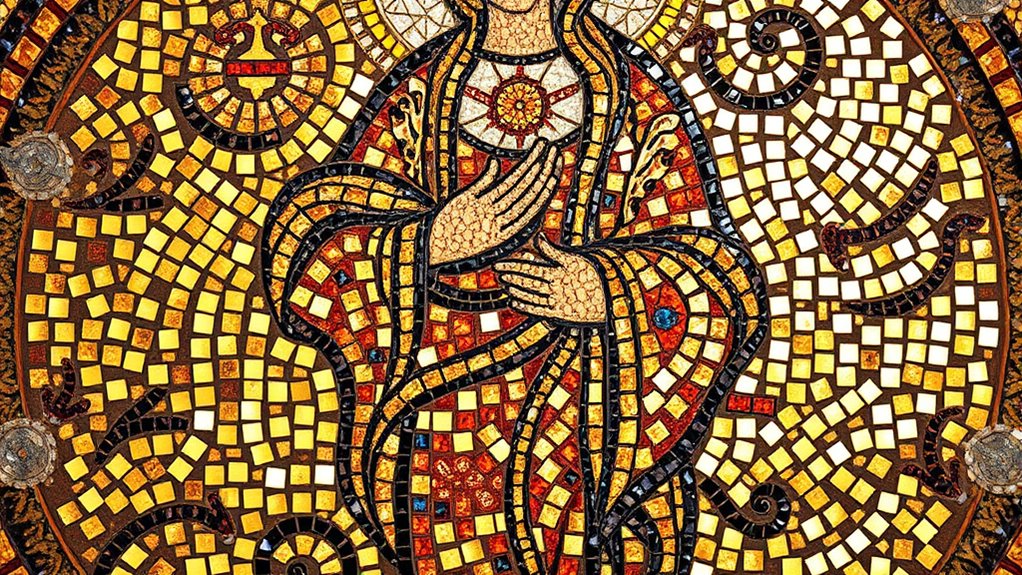
Byzantine mosaics are breathtaking works of art that decorated the walls and ceilings of churches and palaces throughout the Byzantine Empire. When you look at these intricate designs, you’re witnessing more than just decorative patterns; you’re seeing a visual story that embodies powerful iconography symbolism. Every image, from saints and angels to biblical scenes, is carefully chosen to convey spiritual truths and theological messages. These mosaics serve as sacred narratives, guiding worshippers’ minds toward divine realities. The symbolism embedded in each scene isn’t random—it’s a deliberate effort to communicate complex religious ideas through visual language. For example, the use of gold backgrounds isn’t just for beauty; it signifies the divine light of heaven, creating an otherworldly aura that elevates the spiritual significance of the depicted figures. You’ll notice that the figures often have elongated bodies and solemn expressions, emphasizing their divine nature and spiritual purity. This focus on symbolism helps deepen your understanding of the religious messages conveyed in each mosaic. Additionally, the craftsmanship techniques used in creating these mosaics required incredible skill and patience, reflecting the artisans’ devotion to their spiritual purpose. Behind these stunning visuals lies an impressive mastery of craftsmanship techniques. Byzantine artisans employed a meticulous process that involved cutting tiny pieces of glass, stone, and gold leaf—called tesserae—and fitting them together with incredible precision. The tesserae were often arranged in detailed patterns and shading, giving the images a sense of depth and luminosity that makes them appear almost alive. The use of gold tesserae, in particular, adds a shimmering, radiant quality that catches the light and enhances the spiritual atmosphere. You might marvel at how these techniques create a glowing effect, making the images stand out even against dark backgrounds. The craftsmanship techniques weren’t merely about aesthetics; they were also a spiritual act, a way to honor the divine subjects depicted. The artisans’ skill ensured that each mosaic was durable, vibrant, and capable of conveying complex religious messages for centuries. Whether placed high on cathedral domes or adorning sacred apses, these mosaics were designed to inspire awe and reflection. As you examine Byzantine mosaics, you’re engaging with a form of sacred art that combines iconography symbolism with unmatched craftsmanship techniques. Each piece was crafted with purpose—meant to elevate the viewer’s mind toward the divine, to tell stories rooted in faith, and to serve as a lasting testament to spiritual devotion. The brilliance of gold, the precision of tiny tesserae, and the meaningful iconography all work together to create mosaics that are not just beautiful but profoundly sacred. This combination of artistry and spirituality ensures that Byzantine mosaics remain some of the most remarkable expressions of religious devotion in history.
Frequently Asked Questions
How Did Byzantine Mosaics Influence Later Christian Art?
Byzantine mosaics considerably influenced later Christian art through their iconography development and architectural integration. You’ll notice that their detailed, symbolic images shaped religious storytelling and inspired future artists. These mosaics seamlessly blend with architecture, creating a sacred atmosphere. This integration set a precedent for church design and decoration, impacting the visual language of Christian art for centuries, and emphasizing divine presence through intricate, shimmering imagery.
What Techniques Were Used to Create Vivid Colors in Mosaics?
Imagine painting with tiny shards of glass tesserae and mineral pigments, each piece bursting with vibrant life. You use these glass tesserae to catch and reflect light, creating dazzling colors that shimmer like stained glass. Mineral pigments, ground into fine powders, lock in rich hues. By carefully placing these materials, you craft mosaics that glow with vivid, enduring colors, making sacred scenes come alive with radiant brilliance.
How Were Mosaics Preserved Through Centuries of Wear and Conflict?
You can see that mosaics were preserved through centuries thanks to careful restoration techniques like cleaning, reattaching loose tiles, and applying protective coatings. However, conservation challenges like environmental damage, war, and neglect often threaten their integrity. By addressing these issues with modern conservation methods, experts help safeguard these masterpieces, ensuring they withstand wear and conflict and continue to inspire awe for future generations.
Were Byzantine Mosaics Primarily Created for Religious or Decorative Purposes?
You might think Byzantine mosaics were just pretty decorations, but they served a deeper purpose. They were primarily created for religious reasons, showcasing liturgical symbolism and divine stories, not mere ornamentation. Through exceptional artistic craftsmanship, these mosaics aimed to inspire faith and convey sacred messages. So, behind their stunning gold and glass surfaces lies a deliberate effort to connect worshipers with spiritual truths, making them as meaningful as they are beautiful.
What Symbolism Is Commonly Depicted in Byzantine Mosaic Imagery?
You’ll notice that Byzantine mosaic imagery often features rich iconography symbolism that conveys divine representations. These mosaics depict saints, angels, and Christ, emphasizing spiritual themes and heavenly authority. The use of gold highlights the divine glow, while glass creates luminous effects. This symbolism communicates religious truths, guiding viewers to reflect on sacred stories and divine presence, making each mosaic a visual prayer and a sacred affirmation to faith.
Conclusion
You can’t help but be awestruck as you gaze upon these Byzantine mosaics, where gold and glass collide to create a celestial spectacle brighter than the sun itself. It’s as if the very heavens have been captured and woven into eternal art, illuminating history’s most sacred moments with a brilliance that blinds and inspires. These mosaics don’t just tell stories—they transform your soul, making you feel like you’ve stepped into a divine domain beyond time and space.