
TL;DR
Raed Yassin’s photo-based mixed-media series Warhol of Arabia is on view in the main exhibition of the 61st Venice Biennale. Anchored in Andy Warhol’s weeklong 1977 visit to Kuwait, the works invent scenes around the trip and explore a period of Gulf cultural life that Yassin says is poorly documented.
Artist Raed Yassin’s Warhol of Arabia, a series of photographic mixed-media works built around Andy Warhol’s 1977 visit to Kuwait, is included in the main exhibition of the 61st Venice Biennale, In Minor Keys. The series combines the documented trip with invented scenes, using Pop imagery to imagine social and cultural encounters during a period of change in the Gulf.

Get art and craft supplies delivered free with Prime
- Fast, free delivery on millions of items
- Prime Video, Amazon Music and more included
- Member-only deals all year
Warhol spent a week in Kuwait in January 1977 after an invitation from the country’s national arts council. He attended teas and dinners and held a solo exhibition at Salat Al Funoon gallery, showing portraits of Mao Zedong and Marilyn Monroe alongside flower prints. The visit took place as Kuwait was experiencing the effects of an oil boom and growing connections with Western cultural exports, according to the source report.
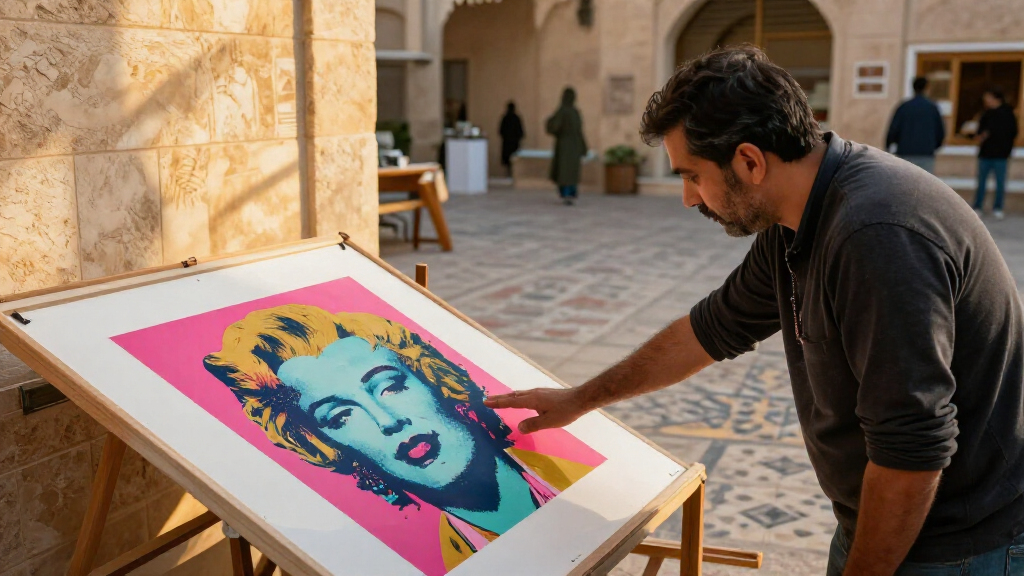
Yassin’s series, made between 2016 and 2018, treats the real visit as a starting point rather than a record of what happened in each scene. In “The Party XII,” Warhol appears on the floor between a sheikh and a woman wearing a kaftan. Yassin renders Warhol in color—his hair pink and glasses yellow—while leaving the other figures in the photograph’s palette, visually marking him as an outsider.
In “The Exhibition XIII,” Yassin overlays four brightly colored headscarves on a photograph of Warhol with his Campbell’s soup can multiples. The intervention brings regional imagery into a picture associated with the artist’s familiar Pop iconography. The works are presented at the Biennale as an imaginative reconstruction, not as documentary photographs of specific events.
Reframing Warhol’s Gulf Visit
The exhibition shifts attention from Warhol’s familiar images and celebrity to the settings in which his work circulated. His Kuwait visit connected an internationally known American artist with a Gulf country experiencing oil-driven wealth and contact with Western cultural production. Yassin’s work asks viewers to consider the social world around that encounter, while making clear that some of its scenes are imagined.
The distinction matters because the series is not evidence of what Warhol said or did at a particular party. Instead, it uses a documented visit to address gaps in how the region’s cultural life in the 1970s is remembered. Its combination of historical reference and fiction invites viewers to look beyond the simple image of a Western artist arriving in an unfamiliar place.
Popular right now

KitchenAid Commercial Series 8-Quart Bowl-Lift Stand Mixer, White

Dyson Airwrap Co-anda2x Multi-Styler and Dryer (2026 Model)

Roborock Q7 M5+ Robot Vacuum and Mop with Self-Emptying Dock
As an affiliate, we earn on qualifying purchases.
The 1977 Kuwait Exhibition
Warhol’s trip came during a period when his commercial circumstances were changing. The report says his domestic star was fading and fewer patrons were willing to meet his asking prices, creating pressure to seek new markets. In Kuwait, the recent oil boom had brought new money and increased connections to Western cultural goods and ideas.
Yassin has described the Gulf in the 1970s as a period that receives limited attention in cultural accounts. His starting point is the record of Warhol’s trip, but he says the scenes in the series represent his own imagination of society at the time. The Biennale presentation places those works within In Minor Keys, the main exhibition of its 61st edition.
““The Gulf region in the 70s was kind of a black hole. No one knew what was going on, especially culturally.””
— Raed Yassin, speaking to Hyperallergic
Where History Meets Invention
The source report does not establish that the gatherings or specific interactions shown in Yassin’s compositions occurred as depicted. The series uses a real trip as its anchor, but its scenes are imaginative constructions. It is also unclear from the available material how much archival documentation survives about Warhol’s week in Kuwait or which details of the visit Yassin used beyond the exhibition and social engagements described in the report.
The source identifies the series as part of the Biennale’s main exhibition but does not provide the exhibition’s closing date, visitor figures, or further details about the works’ presentation. No claims about audience response or the exhibition’s wider reception are confirmed here.
The Biennale Presentation Continues
Warhol of Arabia is being shown as part of In Minor Keys at the 61st Venice Biennale. The source material does not specify a next exhibition for Yassin’s series or announce further programming related to the Kuwait visit. Readers seeking dates, venue details, or later showings will need to consult updates from the Biennale or the artist’s gallery.
Key Questions
What is Warhol of Arabia?
Warhol of Arabia is Raed Yassin’s series of photographic mixed-media works, made from 2016 to 2018. It imagines scenes around Andy Warhol’s 1977 visit to Kuwait.
Where is the series being shown?
The series is included in In Minor Keys, the main exhibition of the 61st Venice Biennale.
What did Warhol do in Kuwait in 1977?
According to the report, Warhol spent a week in Kuwait after an invitation from the national arts council, attended teas and dinners, and held a solo exhibition at Salat Al Funoon gallery.
Are the scenes in Yassin’s works documented events?
Not necessarily. Yassin uses the real visit as an anchor, but the scenes are described as imaginative constructions, not a documentary record of particular gatherings.
What is still unknown about the presentation?
The source does not give the Biennale presentation’s closing date, attendance figures, or a confirmed future venue for the series. It also does not establish that the social scenes depicted took place as shown.
Source: hyperallergic.com