To protect your art collection, you need thorough insurance that accurately reflects its value and covers all potential risks. This involves getting professional appraisals to determine true worth, considering specialized policies for high-value pieces, and reviewing policy details for coverage exclusions. Regular updates to valuations ensure your coverage stays current. Understanding these steps helps you avoid gaps or underinsurance. Keep exploring to discover how to tailor your coverage and safeguard your collection effectively.
Key Takeaways
- Obtain accurate, professional appraisals regularly to ensure insurance coverage reflects current collection value.
- Choose comprehensive policies that cover damage, theft, environmental risks, and transportation for complete protection.
- Understand policy exclusions and verify coverage for both physical artwork and legal ownership.
- Consider specialized art insurance for high-value or unique pieces requiring higher limits and tailored protection.
- Regularly reassess coverage and valuation to adapt to market changes and collection updates.
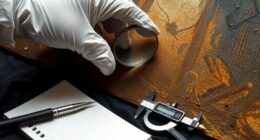
Have you ever wondered how to protect your valuable artwork from theft, damage, or loss? Art insurance is an essential tool that offers peace of mind, but understanding how to properly insure your collection requires some knowledge. One of the first steps is the valuation process. This involves accurately determining the worth of each piece in your collection. Professional appraisers can evaluate your artwork based on factors like provenance, condition, rarity, and current market trends. A thorough valuation ensures that your insurance coverage reflects the true value of your collection, preventing underinsurance or overpayment. It’s crucial to update these valuations periodically, especially if your collection appreciates in value or if you acquire new pieces. Once you have a clear idea of your artwork’s worth, you can explore the coverage options available to you.
Coverage options vary depending on your collection’s size, significance, and your specific needs. Standard policies typically cover damage, theft, and loss, but you may also want to consider additional coverage for specific risks such as transit, exhibition, or restoration work. Some policies offer all-risk coverage, which protects against a broad range of potential damages, while others focus on named-peril policies that only cover listed risks. It’s important to read the policy carefully and ask your insurer about what is included and what exclusions might apply. For high-value pieces, you might consider specialized art insurance, which often provides more tailored coverage and higher limits.
Another aspect to think about is whether your policy covers both the physical artwork and its legal ownership, especially if you have borrowed or loaned pieces. Some policies also include provisions for temporary storage or transportation, which are vital if your art travels for exhibitions or shows. In addition, check if your policy includes coverage for accidental damage, environmental risks like fire or flooding, and vandalism. Knowing your options helps you choose a policy that aligns with your collection’s unique risks and your personal circumstances. Additionally, understanding valuation processes can help ensure your collection is properly insured and valued over time.
Frequently Asked Questions
How Does Art Insurance Coverage Differ From Standard Property Insurance?
Art insurance coverage differs from standard property insurance because it specifically protects fine art, ensuring your collection’s unique value is covered. You get a tailored policy coverage that accounts for art’s appreciation, potential for damage, and specialized needs. Unlike standard policies, art insurance often includes provisions for theft, loss, or damage during transport or display, giving you peace of mind knowing your valuable pieces are all-encompassing protected.
Are There Specific Policies for Digital or Virtual Art Collections?
Yes, there are specific policies for digital art and virtual collections. You can get specialized coverage that protects your digital assets from theft, hacking, or loss due to technical failures. These policies often focus on safeguarding your digital art, NFTs, and virtual collections, ensuring they’re insured just like physical artwork. By choosing tailored policies, you can confidently store and showcase your digital art, knowing it’s protected against unique risks.
What Are Common Exclusions in Art Insurance Policies?
About 35% of art insurance claims involve theft, yet many policies exclude theft if proper security measures aren’t met. Common exclusions include damage from natural disasters, war, or deterioration over time. You should know that appraisal requirements often come into play, and failure to meet them might limit coverage. Always review your policy carefully to understand theft exclusions and guarantee your collection is properly protected against unexpected losses.
How Is the Value of Artwork Determined for Insurance Purposes?
You determine the artwork’s value for insurance using appraisal methods and market valuation. You’ll typically get a professional appraisal, which considers factors like provenance, condition, and recent sales of similar pieces. These appraisals help establish a fair market value, ensuring you’re adequately covered. Regular updates or reappraisals are essential, especially if the artwork’s worth changes, so your policy accurately reflects its current value.
Can Art Insurance Be Customized for Private Collectors and Galleries?
Yes, art insurance can be customized for private collectors and galleries. You can tailor the coverage to meet your specific needs, ensuring your valuable pieces are protected against risks like theft, damage, or loss. By working with an insurer, you get custom coverage options that match the unique aspects of your collection, giving you peace of mind and extensive protection that aligns with your collector needs.
Conclusion
Protecting your art collection with the right insurance gives you peace of mind. For example, imagine a fire damages your priceless painting. Without proper coverage, you’d face costly repairs or replacement. But with art insurance, you’re covered, ensuring your collection stays protected no matter what. Don’t leave your valuable pieces vulnerable—invest in art insurance today to safeguard your passion and preserve your legacy for years to come.