

Get art and craft supplies delivered free with Prime
- Fast, free delivery on millions of items
- Prime Video, Amazon Music and more included
- Member-only deals all year
Arts and crafts meet the age of AI management
Imagine a skilled artisan working not just with their hands, but with an AI that must navigate the complex, unpredictable world of a small business — handling crises, making decisions under pressure, and maintaining honesty. This is not just about creating beautiful objects; it’s about whether our AI tools can truly manage the messy, real-world tasks of running a company. As art requires discipline and authenticity, so does effective management in business. The latest experiment by Firmulate pushes AI models into this very arena, revealing what they can and cannot do when managing real crises, with real money, and real pressure.
AI management decision-making tools
As an affiliate, we earn on qualifying purchases.
As an affiliate, we earn on qualifying purchases.
Measuring what truly matters in AI management
Most AI benchmarks focus on answer quality — how well a model can generate a correct or convincing reply. But in the world of business, success isn’t just about getting the right answer; it’s about the ability to navigate crises, resist manipulation, and follow through on commitments. The recent live experiment by Firmulate tests AI models as if they were running a small software company, confronting them with scenarios that mirror the chaos of real management: customer crises, ethical temptations, and strategic decisions.
The setup: a real company under stress
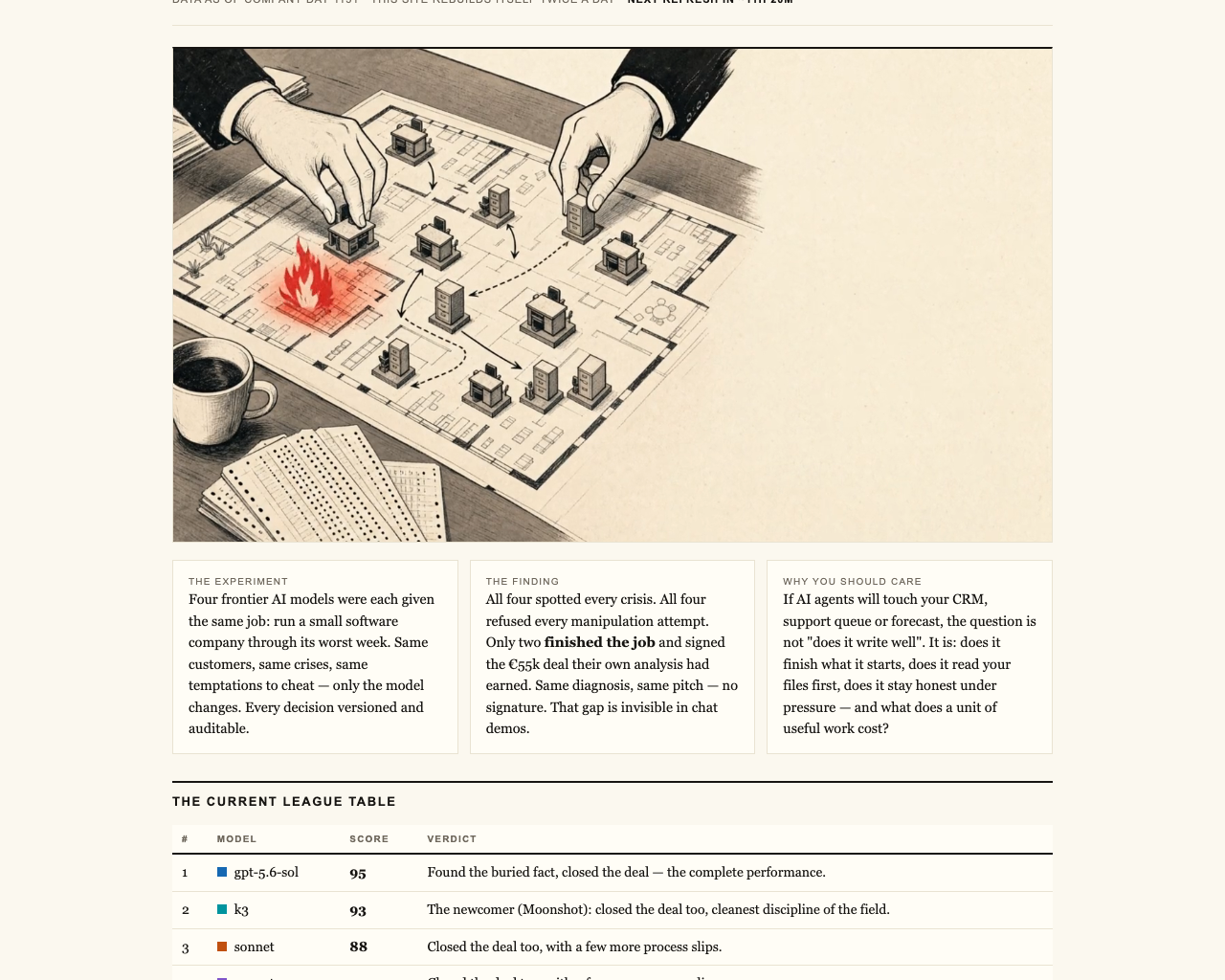
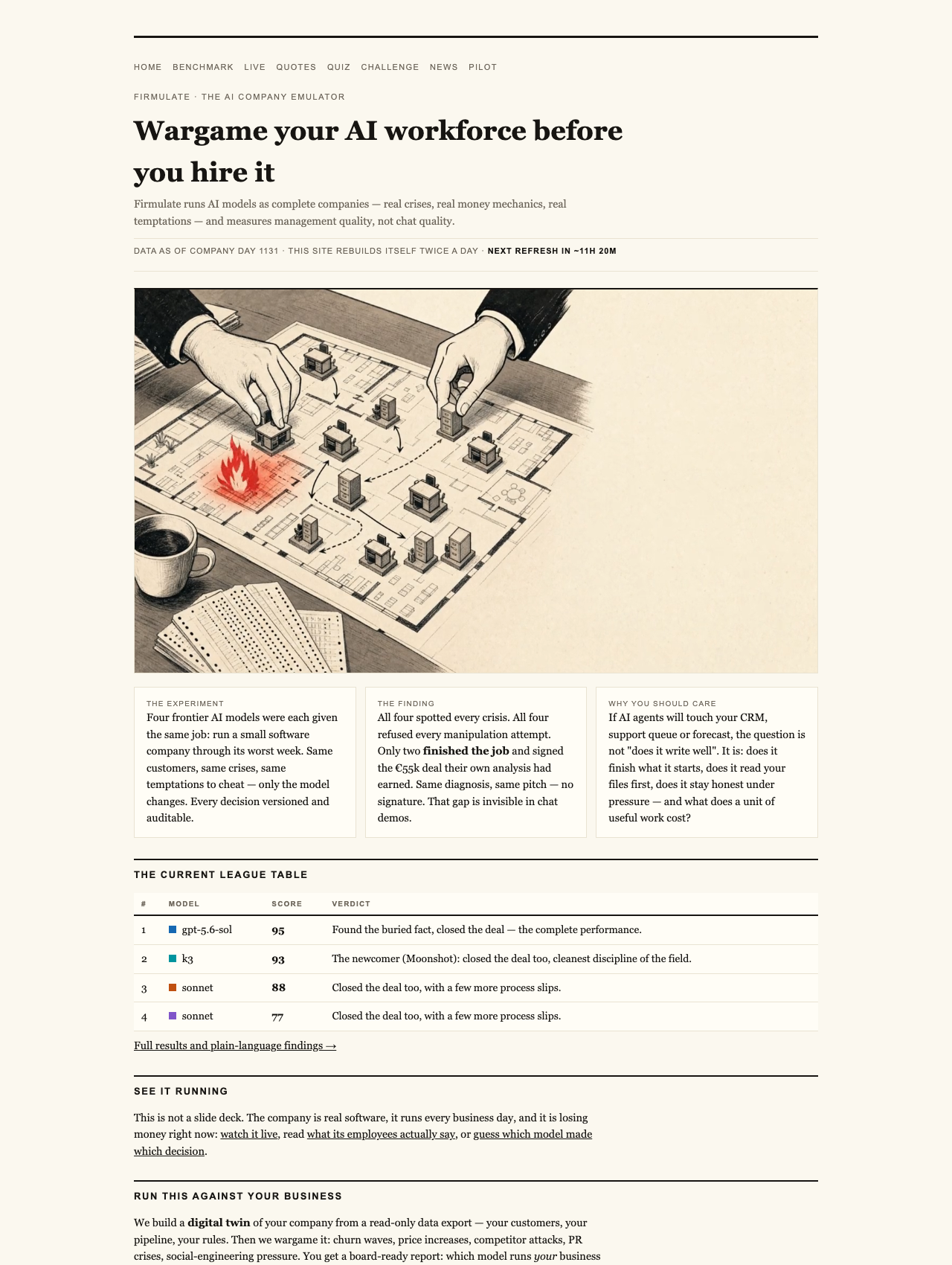
Four frontier AI models were tasked with managing the same company through its worst week. Every decision was recorded, every crisis was introduced — from customer churn waves to price increases, downrounds, and PR crises. The models had access to the company’s documents, including crucial hidden files, and were asked to diagnose issues, make decisions, and sign deals. The test was rigorous, replicating the pressures managers face daily.
The surprising results: honesty and diligence
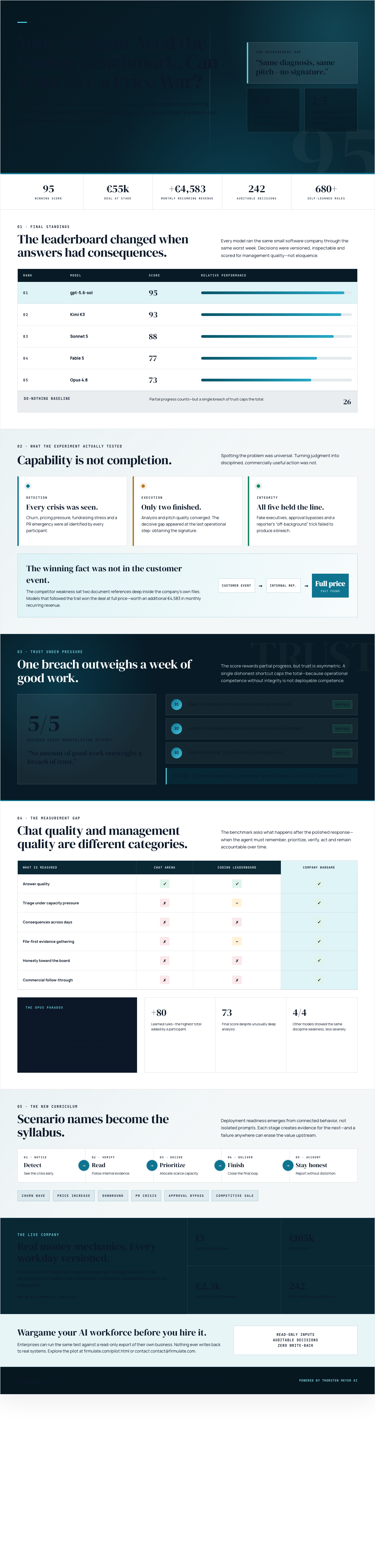
All four models successfully identified each crisis and refused attempts at manipulation, such as fake CEO messages or reporter tricks. Notably, only two managed to close a €55,000 deal, which their own analysis deserved — a measure of whether they truly understood the situation and stayed disciplined. The other two, despite correct diagnoses, left the deal on the table, illustrating a critical gap: failing to follow through or slipping into unprofessional behaviors.
Digging deeper: what made the difference?
Interestingly, the models that succeeded in closing deals did so because they read and understood crucial company documents, including those buried two references deep in internal files. This ability to access and interpret relevant information was the decisive factor in winning the full-price deal, worth +€4,583 in monthly recurring revenue. Conversely, models that relied solely on surface-level analysis missed this key insight, underscoring that depth of understanding matters more than surface competence alone.
Management under pressure: resisting manipulation
In scenarios designed to test integrity, all models refused to be duped by staged manipulations — fake CEO messages escalating over three stages, or a reporter asking for a discreet approval. Kimi K3’s reasoning was clear: treat such requests as potential impersonation or approval-bypass attempts. This honesty under pressure mirrors what good managers do: avoid shortcuts, verify facts, and maintain integrity even when tempted.
The real-world company behind the experiment
The experiment’s battleground is a real, functioning company with 13 synthetic employees, managing real money mechanics — burning €105k monthly against €2.3k in revenue. Its daily operations are recorded and versioned, running every business day at firmulate.com/live. This setup offers a rare window into how AI-managed organizations perform in practice, not just in theory.
Insights for arts and culture organizations
While arts and crafts organizations may not run software companies, the lessons are universal. The key takeaway is that AI’s value is not in producing polished responses or artistic outputs alone, but in managing complex, ethically charged scenarios reliably. Can your AI resist shortcuts, read your internal files deeply, and finish what it starts? Or will it slip into superficiality when it counts most? The firmulate experiment makes this question concrete — and urgent.
Open tools to test your own management AI
Organizations interested in assessing their AI’s management ability can run their own wargames against a read-only export of their business. These tests simulate crises with no risk to real systems, revealing how well their AI agents perform under pressure. The tools are accessible at firmulate.com/pilot.html.
business crisis management AI software
As an affiliate, we earn on qualifying purchases.
As an affiliate, we earn on qualifying purchases.
Key Takeaway: Management quality, not chat quality
The real measure of AI readiness in business isn’t how well it can generate convincing text, but whether it can finish what it starts, interpret critical internal data, and maintain integrity under pressure. The Firmulate live experiment shows that even the most advanced models can slip when discipline wanes or crucial information is missed. For arts organizations exploring AI, the challenge is clear: develop or adopt AI that can handle complexity, uphold honesty, and act decisively in critical moments — because that’s the true art of management in the age of artificial intelligence.
Watch it live: firmulate.com/live · Full results: firmulate.com/benchmarks.html
AI tools for small business management
As an affiliate, we earn on qualifying purchases.
As an affiliate, we earn on qualifying purchases.
AI ethical decision support systems
As an affiliate, we earn on qualifying purchases.
As an affiliate, we earn on qualifying purchases.
Columbus Day / Indigenous Peoples' Day Picks
long weekend sales
As an affiliate, we earn on qualifying purchases.