
The rise of bio‑art blends science and creativity by using living tissues, genetic editing, and biological processes to create innovative artwork. You’ll see sculptures made from bacteria, genetically modified plants, and dynamic works that evolve or respond to stimuli. This movement challenges how we perceive life and art, raising ethical questions and inspiring new cultural perspectives. Exploring bio‑art opens a window into a future where science and creativity intersect more deeply—if you keep exploring, you’ll discover even more.
Key Takeaways
- Bio-art combines biological materials and artistic expression, transforming genetic and living processes into visual and conceptual art forms.
- It employs techniques like gene editing and living sculptures to create dynamic, evolving artworks that challenge traditional art boundaries.
- Artists collaborate with scientists, using tools such as CRISPR to manipulate genetic expression for innovative aesthetic effects.
- The movement raises ethical questions about genetic modification, identity, and societal implications of living, bioengineered art.
- Bio-art inspires future cultural perspectives by blending scientific innovation with creative exploration of life and nature.
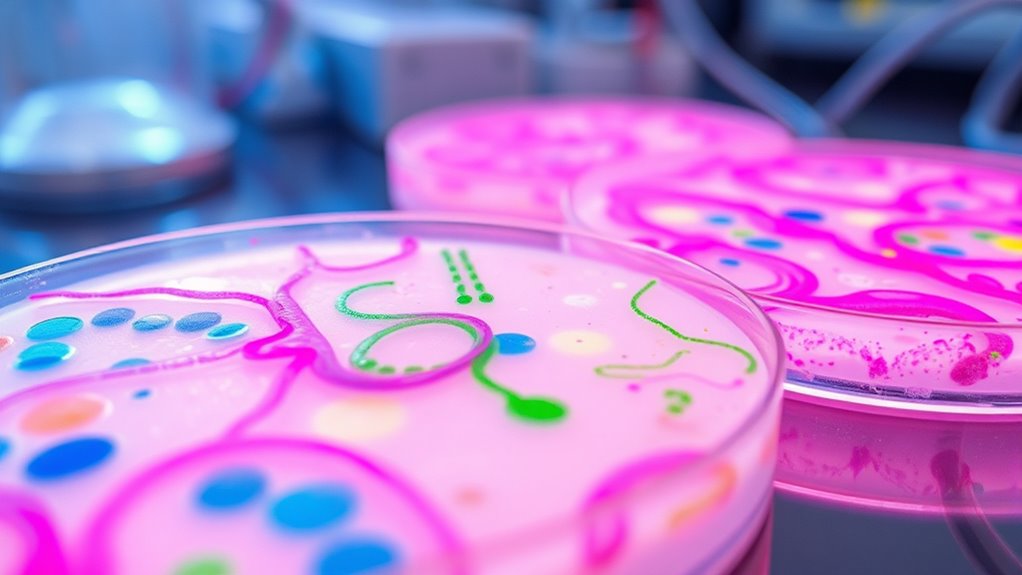
Bio-art bridges the gap between science and creativity, transforming living tissues and biological processes into compelling artistic expressions. As you explore this innovative field, you’ll see how artists harness the intricacies of genetic expression to craft works that challenge perceptions of life and art. Genetic expression, the process by which genetic information directs cellular activity, becomes a tool for aesthetic experimentation. Instead of viewing DNA solely as a blueprint for biological function, bio-artists manipulate and showcase genetic material to produce striking visual effects, often blurring the line between scientific inquiry and artistic exploration.
Bio-art transforms genetic expression into living, visual masterpieces that challenge perceptions of life and art.
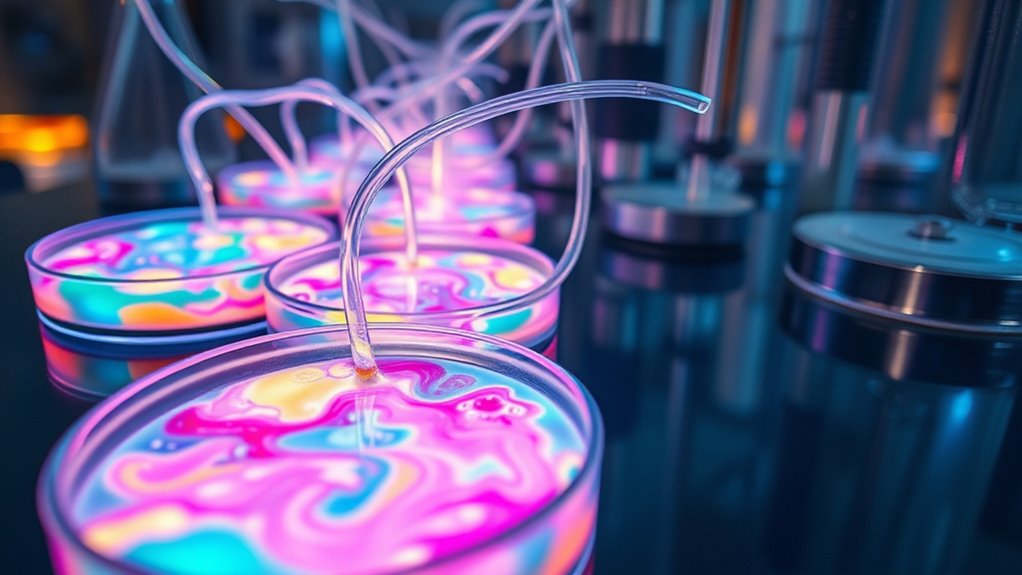
In bio-art, aesthetic experimentation takes on a new dimension. You might encounter sculptures made from living bacteria, or artworks that incorporate genetically modified plants with vibrant colors. These creations demonstrate how manipulating genetic expression can produce unexpected, visually stunning results. By altering gene sequences, artists generate bioengineered organisms that emit different hues, grow in unique patterns, or change over time. This fusion of science and art invites viewers to contemplate the beauty inherent in biological complexity and the potential of genetic manipulation as a creative medium.
You’re also likely to see bio-artists working closely with scientists, pushing the boundaries of what’s possible within laboratory settings. This collaboration allows them to experiment with gene editing techniques like CRISPR to create living art that evolves, responds to stimuli, or embodies symbolic messages. Such works often provoke questions about ethics, identity, and the future of biological manipulation. As you observe these pieces, you might reflect on how genetic expression isn’t just a biological process but also a source of aesthetic inspiration that can challenge societal norms.
Furthermore, bio-art’s emphasis on aesthetic experimentation highlights its role as a provocative platform for dialogue. You’re encouraged to think about the implications of editing genes for artistic purposes and how this might influence future cultural perspectives on life and nature. The integration of living tissues into art transcends traditional boundaries, making the viewer reconsider the definition of art itself. It’s not merely an object to observe but a living, breathing entity that embodies scientific innovation and creative vision.
In addition, the field often raises important ethical considerations about the extent to which biological manipulation should be used creatively, prompting ongoing societal debates. You’re also likely to see bio-artists working closely with scientists, pushing the boundaries of what’s possible within laboratory settings. This collaboration allows them to experiment with gene editing techniques like CRISPR to create living art that evolves, responds to stimuli, or embodies symbolic messages. Such works often provoke questions about ethics, identity, and the future of biological manipulation. As you observe these pieces, you might reflect on how genetic expression isn’t just a biological process but also a source of aesthetic inspiration that can challenge societal norms.
Furthermore, bio-art’s emphasis on aesthetic experimentation highlights its role as a provocative platform for dialogue. You’re encouraged to think about the implications of editing genes for artistic purposes and how this might influence future cultural perspectives on life and nature. The integration of living tissues into art transcends traditional boundaries, making the viewer reconsider the definition of art itself. It’s not merely an object to observe but a living, breathing entity that embodies scientific innovation and creative vision.

Carolina Flow of Genetic Information Kit – 3D DNA & RNA Learning Models | Hands-On Molecular Biology for Classrooms | Demonstrates Replication, Transcription & Translation
- Experience in Science Education: Over 95 years of trusted educational materials
- Create Stop Motion Animations: Produce videos demonstrating genetic processes
- Interactive Learning Tools: Includes placemats, foam parts, and nucleotides
As an affiliate, we earn on qualifying purchases.
As an affiliate, we earn on qualifying purchases.
Frequently Asked Questions
How Do Bio-Artists Ensure Ethical Practices in Their Work?
You guarantee ethical practices in your bio-art work by actively seeking ethical oversight from relevant committees or institutions. You stay accountable by transparently documenting your processes and intentions, and by respecting safety and consent guidelines. By engaging with ethical standards and being responsible for your actions, you demonstrate artist accountability, which helps maintain trust and integrity within the bio-art community and with the public.
What Are the Most Common Materials Used in Bio-Art Projects?
You often see bio-artists using materials like live tissues, bacteria, and genetically modified organisms in their projects. They work with genetic modification and synthetic biology to create living art forms, blending science and creativity. These materials allow artists to explore new aesthetics and concepts while pushing ethical boundaries. By carefully selecting and handling these materials, they guarantee their work promotes innovation without compromising safety or ethics.
Can Bio-Art Influence Medical Advancements or Treatments?
Think of bio-art as a bridge leading to medical breakthroughs; it can indeed influence treatments. You might see artists experimenting with genetic modification or tissue engineering, which can inspire scientists to develop new therapies. By blending art with science, bio-art sparks innovative ideas that could improve regenerative medicine, personalized treatments, and understanding of complex biological processes, ultimately shaping the future of healthcare and offering hope for many patients.
How Do Viewers Typically Respond to Bio-Art Installations?
When you see bio-art installations, you usually notice strong audience engagement and emotional reactions. People are often fascinated, confused, or even disturbed by the blending of science and art. Your response might include curiosity or reflection on ethical questions. Overall, viewers tend to have diverse emotional reactions, which deepens their connection with the artwork and encourages conversations about science, ethics, and creativity.
What Are the Legal Regulations Surrounding Bio-Art Creation?
You might think bio-art faces few regulations, but laws around intellectual property and cultural implications shape its creation. Regulations vary by country, often requiring biosafety measures, permits, and ethical approvals. You need to navigate intellectual property rights to safeguard your work, while respecting cultural sensitivities. Laws are evolving to balance innovation with safety and ethics, so staying informed ensures your bio-art remains compliant and ethically sound.

BrightA Embossed Metal Wave Wall Art – Hand-Painted Tissue Paper Gradient (Mist Green) and Silver 3D Wall Art, Contemporary Abstract Metal Sculpture for Living Room 27.5"x39.4"
- Handcrafted Gradient Design: Gradient spray-color paper and metal art
- 3D Metal Sculpture: Three-dimensional metallic wave art
- Elegant Wooden Frame: Includes a sturdy wooden frame
As an affiliate, we earn on qualifying purchases.
As an affiliate, we earn on qualifying purchases.
Conclusion
As you step into the world of bio-art, you become a pioneer exploring a vibrant frontier where science and creativity dance like fireflies in the night. This blend paints a canvas alive with possibilities, transforming cells into colors and ideas into living masterpieces. Embrace the adventure, for in this fusion, you hold the brush to craft not just art, but the future itself—where biology and imagination intertwine like vines reaching for the sky.
CRISPR gene editing tools for art
As an affiliate, we earn on qualifying purchases.
As an affiliate, we earn on qualifying purchases.

Art Cure: The Science of How the Arts Save Lives
As an affiliate, we earn on qualifying purchases.
As an affiliate, we earn on qualifying purchases.