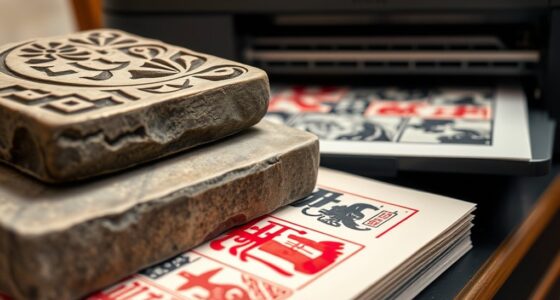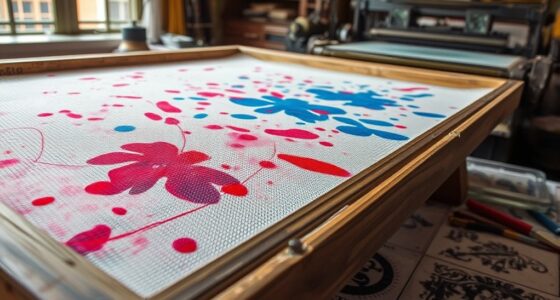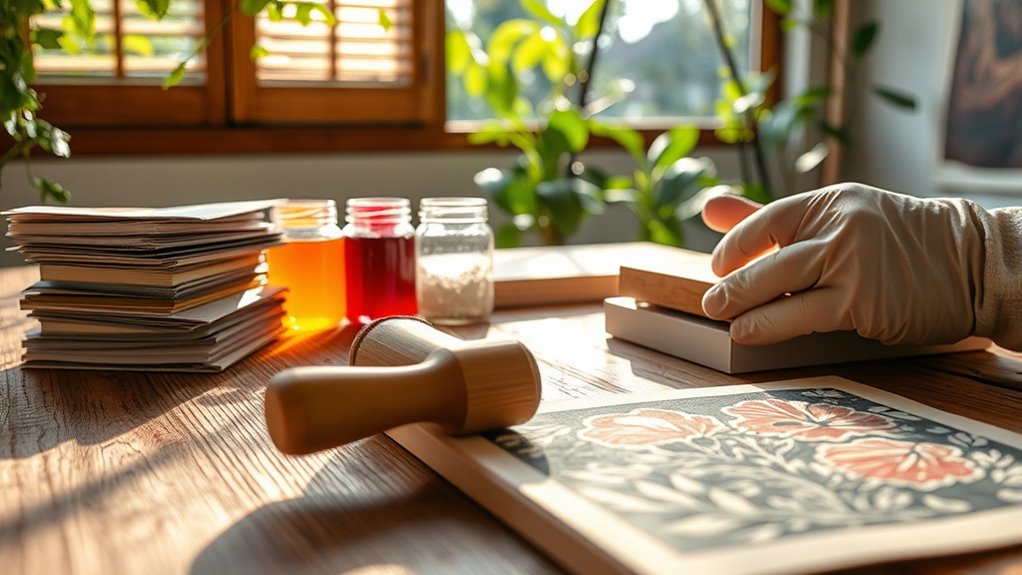

Sustainable printmaking uses eco-friendly materials and processes to create vibrant art while reducing environmental harm. You can choose biodegradable inks that break down naturally and emit fewer VOCs, along with renewable paper sourced from responsibly managed forests or recycled materials. These alternatives perform as well as traditional options and support eco-conscious practices. By adopting these materials, you show your commitment to sustainability and leave a positive impact. If you keep exploring, you’ll discover more ways to enhance your eco-friendly art journey.

Get art and craft supplies delivered free — and shop member deals
- Fast, free delivery on millions of items
- Access to Prime Big Deal Days deals on October 6–7
- Prime Video, Amazon Music and more included
Key Takeaways
- Utilize biodegradable inks derived from plant-based components to reduce pollution and VOC emissions.
- Opt for renewable paper sourced from sustainably managed forests or recycled materials.
- Ensure eco-friendly printmaking practices that match traditional quality, supporting environmental standards and transparency.
- Transition gradually to sustainable materials, adjusting workflows to minimize environmental impact.
- Promote eco-conscious art by integrating sustainable materials, demonstrating responsibility, and inspiring community engagement.

Sustainable printmaking is gaining momentum as artists and printers seek environmentally friendly ways to create their work. You’re probably exploring options that reduce your ecological footprint, and one of the most effective steps is choosing materials that support this goal. Biodegradable inks, for instance, are a game-changer. Unlike traditional petroleum-based inks, biodegradable inks break down naturally over time, minimizing pollution and toxic waste. They often contain plant-based components, which means you’re supporting renewable resources rather than depleting finite oil supplies. When you opt for biodegradable inks, you can produce vibrant, high-quality prints without compromising your commitment to sustainability. These inks also tend to emit fewer volatile organic compounds (VOCs), improving air quality in your workspace and making your process safer.
Biodegradable inks support sustainability by reducing pollution and toxic waste in eco-friendly printmaking.
Another indispensable aspect of eco-friendly printmaking is the paper you select. Renewable paper is an excellent choice because it’s sourced from sustainably managed forests or made from recycled materials. Using renewable paper means you’re supporting forest conservation efforts and reducing the environmental impact associated with traditional paper production. This type of paper often has certifications like FSC or SFI, which guarantee responsible sourcing. When you incorporate renewable paper into your practice, you’re not only reducing deforestation but also promoting responsible resource management. Additionally, many renewable papers are processed with environmentally friendly methods, avoiding the use of harsh chemicals and excessive water. Eco-friendly materials are increasingly available, making it easier than ever to align your art with your values.
Transitioning to biodegradable inks and renewable paper isn’t just about reducing harm; it often enhances your artistic process. These materials usually perform on par with conventional options, offering excellent color fidelity and durability. Plus, they align with a growing audience that values sustainability, giving your work an eco-conscious appeal. It’s essential to research and select suppliers who prioritize transparency and environmental standards, ensuring your materials genuinely support your sustainability goals.
Incorporating biodegradable inks and renewable paper into your printmaking practice requires some planning, but it’s a worthwhile investment. It may involve adjusting your techniques or experimenting with new materials, but the environmental benefits outweigh these initial efforts. Over time, you’ll develop a workflow that’s both artistically satisfying and environmentally responsible. Making these conscious choices demonstrates your commitment to sustainability and can inspire others in your community to follow suit. Ultimately, sustainable printmaking is about creating beautiful work while respecting and protecting the planet for future generations.
As an affiliate, we earn on qualifying purchases.
Frequently Asked Questions
What Are the Most Affordable Eco-Friendly Printmaking Supplies?
You can find affordable eco-friendly printmaking supplies like recycled paper and biodegradable inks at local art stores or online. Recycled paper is often cheaper and readily available, making it a great option for your projects. Biodegradable inks are increasingly affordable and easy to use, providing an eco-friendly alternative without breaking the bank. By choosing these materials, you reduce environmental impact while keeping costs low, making sustainable printmaking accessible and budget-friendly.
How Can I Reduce Waste During Printmaking Processes?
If you want to master waste reduction in printmaking, just pretend you’re a recycling superhero! Use recycling techniques like reusing paper scraps and leftover inks, and adopt waste management strategies such as composting paper waste. Clean your tools efficiently to minimize excess waste, and plan your projects carefully to avoid overproduction. By making these small habits second nature, you’ll cut down waste, save money, and save the planet—one print at a time.
Are There Sustainable Alternatives to Traditional Inks?
Yes, you can switch to sustainable alternatives like biodegradable inks and vegetable-based dyes. These options reduce environmental impact because they break down naturally and use renewable resources. By choosing biodegradable inks, you prevent harmful chemicals from polluting waterways. Vegetable-based dyes offer vibrant colors without relying on synthetic chemicals. Incorporating these eco-friendly materials into your printmaking process helps you create art that’s both beautiful and environmentally responsible.
How Do Eco-Friendly Materials Affect Print Quality?
Imagine a time-traveling printer, and you’ll see eco-friendly materials don’t compromise your print quality. They often enhance the environmental impact by reducing toxic emissions and waste. Plus, these sustainable options tend to have good material durability, ensuring your prints last without fading or cracking. While some eco-friendly inks and papers might behave differently initially, many now deliver vibrant, crisp results that meet professional standards.
What Certifications Should I Look for in Eco-Friendly Printmaking Products?
You should look for certification standards like FSC, Green Seal, or PEFC to guarantee eco-friendly printmaking products meet recognized sustainability criteria. These certifications provide assurance of responsible sourcing and environmentally friendly processes. Additionally, seek out eco label recognition, which verifies that products adhere to strict environmental and social standards. Choosing certified products helps you support sustainable practices while maintaining high print quality and reducing your ecological footprint.
As an affiliate, we earn on qualifying purchases.
Conclusion
Just as the Earth whispers its needs, you can make a difference through sustainable printmaking. By choosing eco-friendly materials and mindful processes, you become part of a larger story—one that echoes the harmony of nature and art. Like a gentle wave shaping the shoreline, your conscious efforts ripple outward, inspiring change. Embrace these practices, and let your work stand as a demonstration to creativity rooted in respect for our planet’s future.
eco-friendly printmaking supplies
As an affiliate, we earn on qualifying purchases.
As an affiliate, we earn on qualifying purchases.
sustainable printmaking materials
As an affiliate, we earn on qualifying purchases.
As an affiliate, we earn on qualifying purchases.
Fall Picks
fall essentials
As an affiliate, we earn on qualifying purchases.