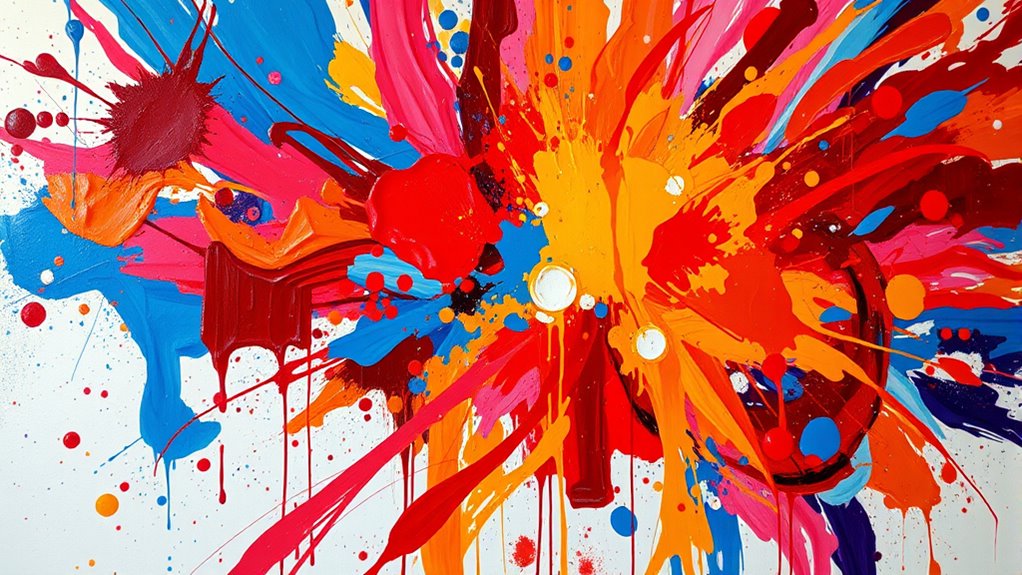

Abstract Expressionism, especially through Action Painting and Color Fields, invites you to experience raw emotion firsthand. You’ll see artists use spontaneous gestures like splatters, drips, and bold brushstrokes to channel their feelings directly onto the canvas. Vibrant colors heighten this emotional impact, creating a visceral connection between artist and viewer. As you explore further, you’ll discover how movement and color combine to produce powerful, unfiltered expressions that evoke intense personal reactions.
Key Takeaways
- Action painting emphasizes spontaneous, vigorous gestures like dripping, splattering, and sweeping to express raw emotion.
- Movement and physicality are central, capturing the artist’s energetic act of creation.
- Color fields utilize bold, vibrant colors to evoke intense emotional responses from viewers.
- The process of painting is as significant as the finished work, highlighting spontaneity and emotional release.
- Both techniques encourage viewers to connect with the visceral, unfiltered energy conveyed through gestures and color.
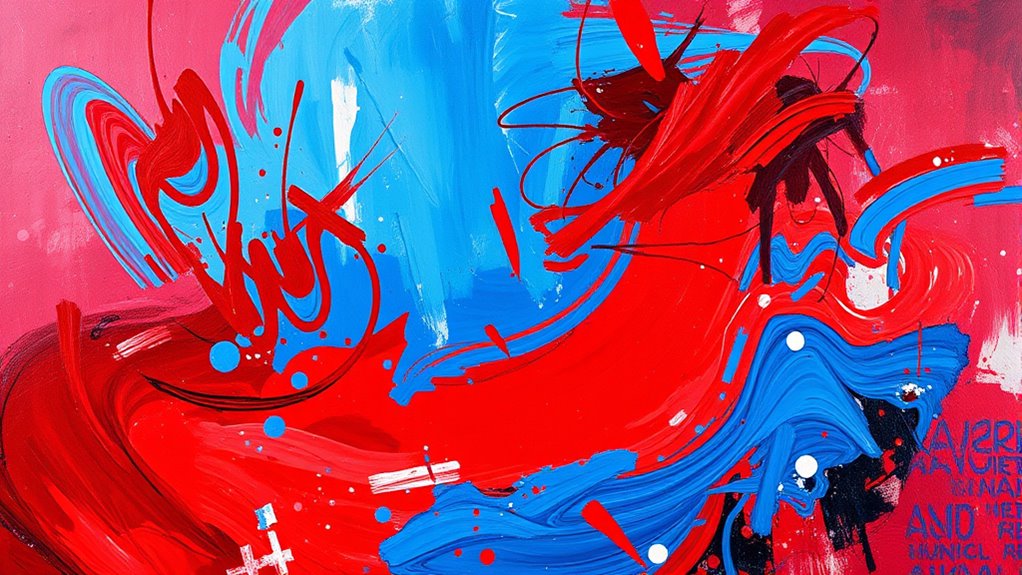
Have you ever wondered how artists convey raw emotion directly onto the canvas? In Abstract Expressionism, particularly through action painting, this question becomes central. Artists don’t rely on detailed forms or realistic representations; instead, they channel their feelings through spontaneous, vigorous gestures. These gestural techniques are the core of the movement, allowing artists to translate their emotional intensity into physical movement and mark-making. When you see a canvas brimming with sweeping brushstrokes, drips, and splatters, know that each mark reflects a moment of visceral expression. The act of painting becomes an extension of inner feelings—an unfiltered dialogue between the artist and the canvas.
In action painting, the emphasis is on the process as much as the product. The artist’s movements—whether frantic, deliberate, or meditative—are captured in the artwork’s energetic flow. This approach highlights the importance of spontaneity and physicality, with the artist often working on the canvas in a direct, often aggressive manner. The act of pouring, dripping, or flicking paint onto the surface isn’t just about creating an image; it’s about embodying emotion and allowing those feelings to surface freely. This method invites viewers to experience the painting’s emotional intensity firsthand, as if they’re witnessing a raw, unfiltered emotional release. The energy, chaos, and improvisation in these paintings serve as visual representations of inner tumult or exuberance.
Moreover, the use of bold, vibrant colors in Abstract Expressionism enhances the emotional impact. Artists select hues not for their symbolic meanings alone but for their capacity to evoke feelings. Bright reds, intense blues, and luminous yellows heighten the emotional intensity, drawing viewers into a visceral experience. These color fields and gestural marks work together to create a sense of immediacy and personal expression that feels both powerful and intimate. When you stand before such works, you can almost feel the artist’s heartbeat, their tension, or their joy pulsating through the strokes.
Ultimately, Abstract Expressionism’s focus on gestural techniques and emotional intensity pushes art beyond mere representation. It invites you to connect with raw human emotion, experienced directly through the physical act of painting. This movement challenges you to see beyond the surface, to feel the energy conveyed through every movement and color choice, making the act of viewing as emotionally charged as the act of creating.

SENNELIER Abstract Innovative Heavy Body Acrylic Paint, 120ml Pouch, Primary Color Set of 5
Heavy body multi-media acrylic paint with high pigment concentration
As an affiliate, we earn on qualifying purchases.
As an affiliate, we earn on qualifying purchases.
Frequently Asked Questions
How Did Abstract Expressionism Influence Contemporary Art Movements?
Abstract Expressionism influences contemporary art by emphasizing emotion and spontaneity, encouraging artists to explore personal expression freely. You see this impact in the way modern artists prioritize artistic innovation, using bold techniques and improvisation. This movement’s focus on raw emotion inspires your own creative process, fostering a sense of authenticity and pushing boundaries. It’s a proof to how expressive, spontaneous art continues to shape and challenge contemporary artistic practices.
What Are the Key Differences Between Action Painting and Color Field Painting?
Imagine a thunderstorm of color and movement — that’s the difference. Action painting emphasizes gestural emphasis, where your brushstrokes are wild, energetic, and spontaneous, capturing the artist’s physical act. Color field painting, on the other hand, is like a calm ocean, where color dominance takes center stage with large, smooth expanses that evoke emotion through tranquil, immersive hues. Both styles celebrate emotion but in vastly different visual storms.
Who Were the Leading Artists Associated With Abstract Expressionism?
You should know that famous artists like Jackson Pollock, Willem de Kooning, and Mark Rothko led the artistic styles of Abstract Expressionism. They pioneered innovative techniques, with Pollock famous for his drip paintings and Rothko for his luminous color fields. These artists revolutionized modern art, emphasizing spontaneous expression and emotional intensity. Their work remains influential, representing the bold, dynamic spirit of Abstract Expressionism’s key artistic styles.
How Did Abstract Expressionism Reflect Post-World War II Cultural Shifts?
Imagine you’re an artist after WWII, channeling your post-war anxieties into bold strokes and vibrant colors. Abstract Expressionism reflects this shift by emphasizing individual expression, allowing artists to confront chaos and uncertainty. This movement embodies the desire for personal liberation and emotional honesty, mirroring society’s search for meaning amid upheaval. Your work becomes a visual dialogue with the tumult of the post-war world, expressing deep internal and external struggles.
What Techniques Are Commonly Used in Abstract Expressionist Artworks?
You’ll notice that abstract expressionist artworks often use energetic brushwork techniques, like vigorous, spontaneous strokes that convey emotion. Artists also experiment with color application methods, applying paint thickly or layering it to create texture and depth. These techniques emphasize individual expression and the physical act of painting, making each piece feel dynamic and personal. Your focus on brushwork and color application helps capture the raw intensity characteristic of this movement.

ESRICH Stretched Canvas for Painting 24×36 Inch, 3Pack Large Canvas for Painting, Primed Acid-Free Cotton Blank Canvases, Art Paint Canvases for Oil Paint,Watercolor,Acrylic Paint,Gouache and Tempera.
Paint Canvas: The paint canvases for painting set comes with 3 pack 24×36 large canvas value pack for…
As an affiliate, we earn on qualifying purchases.
As an affiliate, we earn on qualifying purchases.
Conclusion
You’ve seen how Abstract Expressionism revolutionized art with its bold, emotional strokes and vibrant color fields. Did you know that during the 1950s, this movement accounted for over 40% of all modern art sales? This statistic shows just how influential and popular it became worldwide. Embrace the energy and passion behind action painting and color fields—these techniques continue to inspire artists and viewers alike, proving that raw emotion can create timeless masterpieces.

30 Pcs Round Sponges Brush Set, Round Sponge Brushes for Painting, Paint Sponges for Acrylic, Painting Tools for Kids Arts and Crafts (4 Sizes)
WHAT YOU GET: The package includes a total of 30 pieces of wooden handle round sponge brushes For…
As an affiliate, we earn on qualifying purchases.
As an affiliate, we earn on qualifying purchases.

Color Palettes For Artists, Graphic Designers, Interior Designers & Coloring Enthusiasts: 64 Beautiful Color Combinations With Hex Codes To Spark Creativity Vol. 1
As an affiliate, we earn on qualifying purchases.
As an affiliate, we earn on qualifying purchases.