To create camera-less photographs using photogram techniques, you directly expose light-sensitive materials like photographic paper to light and objects placed on or above them. Control exposure by adjusting light intensity and time, or by shielding parts of the surface to achieve desired contrast and detail. Your material choice affects texture and overall aesthetic, while mastering light control helps reveal textures and forms. Keep exploring to discover more ways to craft compelling images without a camera.
Key Takeaways
- Photograms are created by placing objects directly on light-sensitive materials and exposing them to light without a camera.
- Controlling exposure time and light intensity is essential to achieve desired contrast and detail in camera-less images.
- Material choice, such as photographic paper or lithographic film, influences the tonal range and texture of the final photogram.
- Using diffusers, shields, or multiple exposures allows artists to manipulate light and achieve specific visual effects.
- Mastery of light exposure and material selection enables the creation of textured, nuanced, and compelling camera-less photographs.
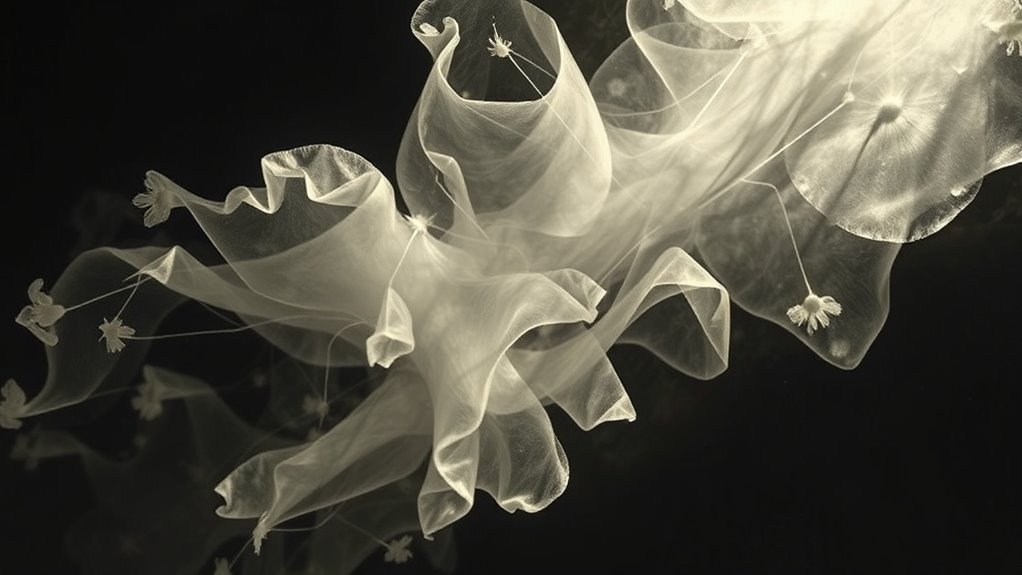
Photogram techniques are powerful tools for capturing and analyzing images to extract accurate spatial information. When you set out on creating camera-less photographs, understanding how light exposure plays a pivotal role is essential. Unlike conventional photography, where you rely on a camera to control light, photogram techniques require you to manipulate light directly onto your chosen material. The amount of light exposure determines the level of detail and contrast in your final image. Too much exposure can cause overexposure, washing out details, while too little results in underexposure, obscuring finer features. Striking the right balance involves experimenting with exposure times and light intensity, ensuring your material receives adequate but not excessive light. This control over light exposure is crucial because it influences the tonal range and the overall clarity of your image, especially when working with materials sensitive to light. Additionally, understanding the characteristics of different light-sensitive materials helps you tailor your approach for optimal results.
Material selection is equally critical in photogram techniques. The type of material you choose impacts how light interacts with it and, consequently, the quality of your image. You might opt for photographic paper, lithographic film, or other light-sensitive surfaces, each offering unique responses to exposure. Some materials produce sharp, high-contrast images, while others yield softer, more nuanced tones. Your choice depends on the desired aesthetic and the subject matter you aim to capture. Additionally, the physical properties of the material—such as thickness, texture, and chemical composition—affect how well it records light patterns. For example, smoother surfaces tend to produce cleaner images, while textured or uneven materials can add interesting effects. Selecting the right material also involves considering its durability and ease of handling, especially if you plan to make multiple exposures or experiment with different techniques.
Once you’ve chosen your material, adjusting light exposure becomes a matter of controlling how long and how intensely the light hits your surface. You may need to shield certain areas or use diffusers to soften the light, depending on your artistic intent. The process often involves trial and error, but understanding how different materials respond to varying exposure levels allows you to fine-tune your approach. As you gain experience, you’ll learn to predict how specific materials will react, enabling you to create precise, intentional images without the need for a camera. Ultimately, mastering light exposure and material selection empowers you to craft compelling camera-less photographs that reveal hidden textures, forms, and spatial relationships, pushing the boundaries of traditional imaging.

Koala Glossy Inkjet Photo Paper 8.5X11 Inches 48lb 100 Sheets Professional Glossy Photographic Paper Compatible with Inkjet Printer Use DYE INK 180GSM
Perfect work with inkjet printers and Dye Ink. Fast Dry, No Smudging, No Smearing, Scratch Resistant
As an affiliate, we earn on qualifying purchases.
As an affiliate, we earn on qualifying purchases.
Frequently Asked Questions
What Materials Are Best for Creating Photograms?
You should choose materials like black and white photographic paper or transparency film for creating photograms. Material selection is key because different objects block light differently, creating unique shadows. Use darkroom techniques to carefully position your objects on the paper, then expose it to light. Avoid transparent or shiny objects that might reflect light unexpectedly. With practice, you’ll master how material choice influences your photogram’s contrast and detail, achieving compelling camera-less images.
How Long Does the Exposure Process Typically Take?
Creating a photogram is like baking—timing is everything. Typically, your exposure duration ranges from a few seconds to several minutes, depending on your materials and light conditions. You need to take timing considerations carefully; too short, and details might not develop fully, too long, and the image could overexpose. Experimenting helps find the perfect balance, allowing you to control the image’s contrast and detail effectively.
Can Digital Tools Enhance Traditional Photogram Techniques?
Yes, digital tools can definitely enhance traditional photogram techniques. You can use digital manipulation and software enhancement to refine your images, add details, or experiment with textures that aren’t easily achieved manually. These tools allow you to push your creative boundaries, improve contrast, and correct imperfections, making your camera-less photographs more striking and expressive. Embracing digital technology helps you explore new artistic possibilities while preserving the essence of traditional photogram methods.
What Are Common Mistakes to Avoid in Photogram Creation?
You might accidentally overlap images or rush the process, which can ruin your artistic expression. To avoid this, plan your experimental approaches carefully and pay attention to detail. Make sure your materials are clean and your exposures are accurate. Don’t forget to review your work before finalizing. By staying mindful and methodical, you prevent common mistakes, allowing your creative vision to shine through in your photogram creations.
How Do Different Light Sources Affect the Final Image?
Different light source variations considerably impact your final image by affecting contrast and shadow detail. Strong, direct light creates sharp contrasts, while diffused light softens shadows and highlights. Experiment with various sources to see how they influence your composition, and use contrast manipulation to emphasize certain areas. Adjusting light intensity and type helps you achieve the desired mood and depth, making your photogram more dynamic and visually compelling.

Torjim Softbox Photography Lighting Kit, 16'' x 16'' Professional Softbox Lighting Kit with 85W 3000-7500K LED Bulbs, Studio Lights for Photography/Video Recording/Live Streaming/Portraits Shooting
【Illuminate Your Creativity】 Torjim softbox lighting kit is made of high-quality PET fabric and a foldable nylon cover,…
As an affiliate, we earn on qualifying purchases.
As an affiliate, we earn on qualifying purchases.
Conclusion
You now hold the power to transform ordinary objects into breathtaking art without a camera. With photogram techniques, you can access a universe of endless creativity, turning simple shadows and shapes into stunning masterpieces. Imagine the possibilities—your hands shaping visions so vivid they seem to leap off the paper and into reality. Embrace this camera-less art form, and watch as your world becomes an extraordinary canvas where imagination knows no bounds.

K&F CONCEPT 24" x36”(60x90cm) 5-in-1 Oval Foldable Reflector with Carrying Bag, Gold, Silver, Black, White Reflective Fabric and Translucent Soft Fabric for Studio Lighting
5 IN 1 Collapsible Reflector: The 24"x36” (60x90cm) oval reflector has five different effect reflectors with gold, silver,…
As an affiliate, we earn on qualifying purchases.
As an affiliate, we earn on qualifying purchases.
exposure control tools for photogram
As an affiliate, we earn on qualifying purchases.
As an affiliate, we earn on qualifying purchases.