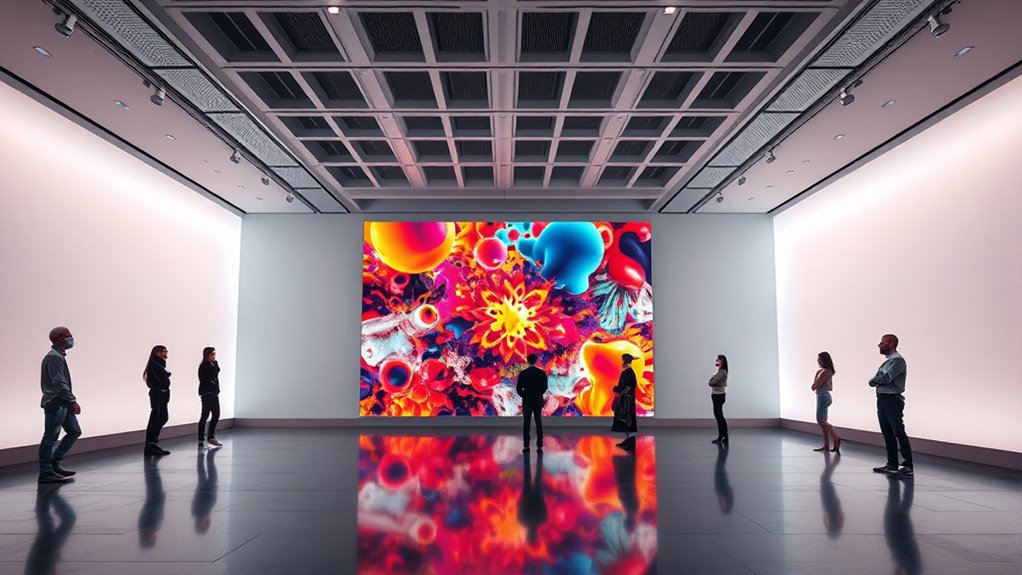
Generative Adversarial Networks (GANs) are transforming creative expression by letting you generate realistic images, music, and art with AI. They help artists craft visuals that mimic human-made works or create entirely new styles, opening up fresh possibilities for innovation. GANs also make art more accessible and encourage collaboration between humans and machines. If you’re curious about how these tools shape the future of creativity, exploring further will reveal even more exciting developments.

Get art and craft supplies delivered free — and shop member deals
- Fast, free delivery on millions of items
- Access to Prime Big Deal Days deals on October 6–7
- Prime Video, Amazon Music and more included
Key Takeaways
- GANs enable machines to generate realistic art, music, and literature, expanding creative possibilities.
- They facilitate rapid content creation, democratizing access to professional-quality artistic tools.
- GANs foster collaboration between algorithms and artists, pushing aesthetic innovation.
- They raise ethical concerns over authorship, intellectual property, and potential misuse like deepfakes.
- Responsible use and transparency are essential to balance creative potential with societal and ethical considerations.
Generative Adversarial Networks (GANs) are transforming how artists and creators produce innovative works by enabling machines to generate realistic images, music, and even literature. This technology has opened new horizons for AI driven art, allowing creators to collaborate with algorithms, pushing the boundaries of traditional aesthetics. As you explore this domain, you’ll find that GANs can craft stunning visuals that mimic human-made paintings, compose complex musical pieces, and generate compelling narratives, all within seconds. This rapid creation process not only accelerates artistic workflows but also democratizes art, giving more people access to tools that can produce professional-quality content. Furthermore, the integration of remote hackathons can foster collaboration among artists, programmers, and researchers worldwide to develop and refine AI art tools. However, with these incredible capabilities come pressing ethical implications that you can’t ignore. The rise of AI driven art prompts questions about authorship: who owns a piece generated by an algorithm—the artist, the programmer, or the machine itself? This ambiguity challenges existing intellectual property laws and raises concerns over originality, especially when GANs are trained on vast datasets of existing artworks or media. You might also worry about the potential for misuse, such as creating deepfakes or misleading images that can deceive viewers, eroding trust in visual media. Additionally, the proliferation of AI-generated art could threaten traditional artists’ livelihoods, as machines produce work at a fraction of the cost and time, possibly saturating the market with synthetic content. There’s also the issue of bias embedded within training data, which can lead to skewed or stereotypical outputs, raising questions about fairness and representation. As a creator or consumer, you need to navigate these ethical considerations carefully. While GANs empower you to experiment and innovate, they also demand responsibility to ensure that art remains authentic and respectful of societal norms. Transparency becomes crucial—being clear about what was generated by AI versus human hands helps maintain integrity. You should advocate for regulations that protect creators’ rights and prevent the misuse of AI tools. Ultimately, embracing AI driven art with a conscious approach means appreciating its potential for inspiring new forms of expression while remaining vigilant about the ethical landscape it shapes. This balance ensures that the evolution of GANs enhances creativity without compromising core values of honesty, fairness, and respect in the arts.
Top picks for "generative adversarial network"
As an affiliate, we earn on qualifying purchases.
Frequently Asked Questions
Can GANS Fully Replace Human Artists in Creative Fields?
No, GANs can’t fully replace human artists in creative fields. While they generate impressive images, they lack machine originality and the emotional depth that comes from authentic human experience. Artistic authenticity involves personal expression, intuition, and cultural context that GANs can’t replicate. You’ll find that human artists bring unique perspectives and emotional nuance that machines simply can’t match, making their work irreplaceable in meaningful creative expression.
What Are the Ethical Implications of Ai-Generated Art?
You should consider that AI-generated art raises ethical concerns like authenticity and cultural appropriation. People might question if the art is truly original or just mimicking existing styles. You could unintentionally adopt cultural elements without understanding their significance, leading to disrespect or misrepresentation. It’s important to reflect on these issues, ensuring respect and transparency in your creative process, and acknowledging AI’s role without overshadowing human originality.
How Do GANS Learn to Create Original Artwork?
You might be surprised to learn that GANs generate art after a training process involving two neural networks competing. These networks, a generator and a discriminator, learn from vast datasets, refining their skills through feedback. This process fosters creative diversity, allowing GANs to produce original artwork by understanding patterns and variations. Ultimately, their ability to learn and adapt enables them to create images that feel fresh and innovative.
Are There Copyright Issues With Ai-Created Images?
You might face copyright concerns and ownership disputes with AI-created images. Since AI models learn from existing artworks, questions arise about who owns the final piece—the creator, the user, or the AI itself. It is crucial to understand that legal frameworks are still evolving, so you should be cautious about intellectual property rights. Always check licensing terms and consider potential disputes before sharing or commercializing AI-generated images.
What Are the Limitations of GANS in Creative Applications?
You might find GANs limited in creative applications because they often struggle with maintaining artistic originality, as they tend to replicate familiar patterns learned from training data. Technical constraints also affect your work, such as generating high-resolution images or nuanced details. These limitations mean you may need to refine outputs manually or combine GANs with other tools to achieve your creative vision effectively.
Conclusion
You now see how GANs revolutionize creative expression, how they push boundaries and challenge conventions. You witness how they inspire innovation, provoke imagination, and redefine artistry. You understand how GANs transform creators into explorers, tools into partners, and ideas into realities. Embrace the power of GANs to reveal your potential, to ignite your creativity, and to shape the future of art. With GANs, your creative journey is limitless, your possibilities endless, and your impact profound.
Fall Picks
fall essentials
As an affiliate, we earn on qualifying purchases.